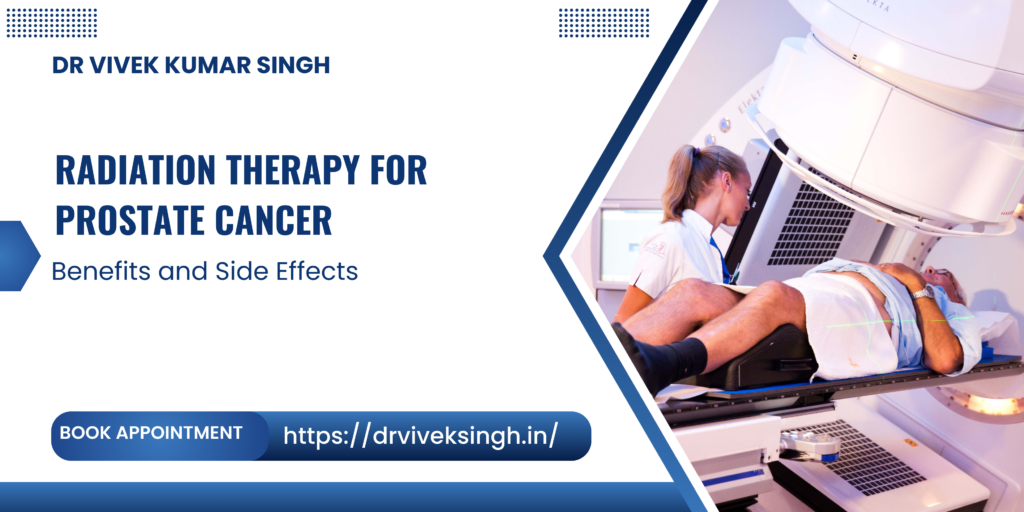
Prostate cancer accounts for the majority of the cancers that men develop, especially as they age. There are now many effective treatment options that have been developed through advancements in medical science: surgery, hormonal therapy, chemotherapeutic agents, and radiation therapy for prostate cancer. Radiation therapy offers an important opportunity to men, either as a stand-alone treatment or in conjunction with other therapies.
This blog discusses how radiation therapy for prostate cancer works and what it can do, what types of benefits and side effects may occur, and what a patient can expect during and after treatment.
Understanding Radiation Therapy for Prostate Cancer
There are two main types of radiation therapy used in prostate cancer treatment:
Radiation therapy is the use of high energy rays and/or particles to destroy prostate cancer cells and/or inhibit the growth of prostate cancer cells. The radiation destroys the DNA of prostate cancer cells and inhibits these cells from replicating. As a result of this, the prostate cancer tumor will decrease in size and/or completely disappear over time.
There are many uses for Radiation Therapy for Prostate Cancer:
- The primary treatment for prostate cancer in the early stages
- The primary treatment used in conjunction with Hormonal Therapy to treat Prostate Cancer that is classified as Intermediate Stage or High Stage/High Risk
- After Surgical removal of the Prostate to treat remaining cancer in the area or recurrences
- To alleviate symptoms of more advanced and metastatic prostate cancer
Radiation Therapy for Prostate Cancer is performed with careful planning in order to focus on the prostate while limiting damage to the surrounding healthy tissues such as the bladder and rectum.
Types of Radiation Therapy for Prostate Cancer
There are two main types of radiation therapy used in prostate cancer treatment:
1. External Beam Radiation Therapy (EBRT)
This is the most commonly used method. An external machine sends targeted radiation to the prostate. More advanced treatment techniques, including IMRT (Intensity Modulated Radiation Therapy) and IGRT (Image Guided Radiation Therapy) provide greater precision and reduced side effects.
2. Brachytherapy (Internal Radiation)
With this type of therapy, very small amounts of radiation are placed very close to the actual prostate itself to deliver radiation directly to the cancer. This method is recommended for men diagnosed with early-stage or low-risk prostate cancer.
Benefits of Radiation Therapy for Prostate Cancer
1. Effective Cancer Control
When early detection allows for early use of radiation therapy, many men have the ability to completely control their cancer for the rest of their life or have a complete remission with nothing more than radiation, or a combination of radiation and hormone therapy.
2. Non-Invasive Treatment Option
Unlike surgical treatment, patients do not need to stay in the hospital and their external radiation treatments do not require incisions. Most patients receive their treatments in an outpatient environment, which means they can continue their normal everyday lives with minimal interruption.
3. Suitable for Different Stages
Conventional Radiation Therapy has been extensively tested in treating early stage as well as late stage prostate cancer. It can also be helpful in reoccurring prostate cancer as well, so it is very adaptable to the different stages of prostate cancer.
4. Organ Preservation
Conventional Radiation Therapy will also keep the prostate gland in place and potentially be a beneficial alternative to surgical treatment for some patients, especially those patients that are not healthy enough or do not have enough life left to recover from the surgery.
5. Precision and Safety
Modern Radiation Treatments have been designed to direct radiation directly to the Cancer Cells while providing as many protective measures as possible for the surrounding healthy tissues and organs. Being able to direct the Radiation and provide maximum protection to surrounding tissues and organs minimizes complications and maximizes outcomes from treatment.
Side Effects of Radiation Therapy for Prostate Cancer
Radiation therapy can cause side effects similar to most other forms of treatment for cancer due to varying doses and types of radiation, health conditions, and other factors;
Short-Term Side Effects
most side effects take 1 to 3 weeks following receipt of the treatment. Symptoms associated with side effects include: Fatigue-Increased tiredness; Urinary Problems- More frequent visits to the restroom, urgency, burning sensation, or weak flow of urine; Changes in the Bowel- Diarrhea, discomfort in the rectal area, or very mild bleeding; Effects on the Skin- Allergic reactions to various chemicals associated with skin care products used on the area being treated. Most short-term side effects can be treated effectively using medicines, appropriate clothing, and other preventive measures.
Long-Term Side Effects
There are some side effects that could occur months or years later following treatment:
– Erectile Dysfunction – Radiation can damage nerves and blood vessels that are responsible for causing an erection.
– Ongoing Urinary Problems – Long-term urinary incontinence and/or irritation is typically rare but should still be considered.
– Problems with Bowel Function – Chronic rectal bleeding and discomfort in the bowels are both rare but may happen.
– Infertility – Radiotherapy for prostate cancer may impair sperm production.
It is very important to speak to your physician about any long-term risks associated with treatment prior to beginning treatment.
Managing Side Effects Effectively
Patients are monitored closely by their physicians for side effects associated with radiation treatment, and supportive measures are provided to alleviate these effects. Commonly used support measures include:
- Medication for urinary or bowel problems
- Diet changes to help reduce bowel irritation
- Pelvic exercises to manage bladder control
- Managing fatigue with rest and light exercise.
Patients who maintain close communication with their physician and other members of their healthcare team will be able to identify and effectively treat side effects early on.
What to Expect During Radiation Therapy
Radiation treatment for prostate cancer typically lasts several weeks; each appointment is a short appointment lasting only a few minutes, and there is no pain involved in the process. Before treatment begins, imaging tests will be conducted to accurately identify the specific area of radiation therapy target.
Through precise positioning, patients will be positioned correctly for each session, which allows for a more accurate treatment process. After treatment, a patient will typically leave and return home on the same day.
Final Thoughts
Radiation therapy for prostate cancer is an effective and widely available treatment, which provides excellent levels of control over the disease, with manageable side effects. Radiation therapy is now safer and more accurate, giving the patient an improved quality of life throughout and after treatment, due to advances in technology.
Once a patient or loved one has received a diagnosis of prostate cancer, he/she should see a qualified professional who will be able to determine if radiation therapy is the correct course of action. Treatment of prostate cancer relies heavily on timely diagnosis, careful planning, and skilled professionals.