Do you have a tree in your area that looks lifeless or bare? It’s normal for trees to get dormant sometimes. It’s when trees conserve energy by resting, shedding leaves, and slowing their activity to prepare for new growth in spring or through the winter.
For non-experts, it can be challenging to distinguish between a dead tree and one that is dormant, especially just by looking at it. Unfortunately, it’s essential to know whether a tree is dead or just dormant because dead trees pose a danger to other species and your property.
In this article, we’ll discuss some ways to tell whether a tree is dead or just dormant.
1. Check the Flexibility of the Branches
One of the easiest ways to tell whether a tree is dead or dormant is to check the flexibility of the branches. You can do this by conducting a bend test. It’s when you select a few small branches from different parts of the tree and bend them. If the branches are flexible and can bend slightly before breaking, the tree is simply dormant. At the same time, you can observe green tissue inside and moisture once the branch breaks.
On the other hand, if the branch snaps without revealing moisture, and it’s brittle and dry, it means that the tree is dead. But ensure to check some more samples before making conclusions.
2. Look for Green Beneath the Bark
Another thing you can do is the scratch test. You can use a knife or your fingernails to perform the scratch test. It’s when you gently scratch a small part of the bark of a branch or a twig. After scratching, you can either observe green and moist or dry and brittle.
If you see green and moisture, it’s a sign that the tree is just dormant. On the other hand, if you observe that the bark is dry, brown, and brittle, this means that the tree is dead. Again, try testing some branches from different parts of the tree for a more accurate observation.
3. Examine the Trunk and Bark Condition
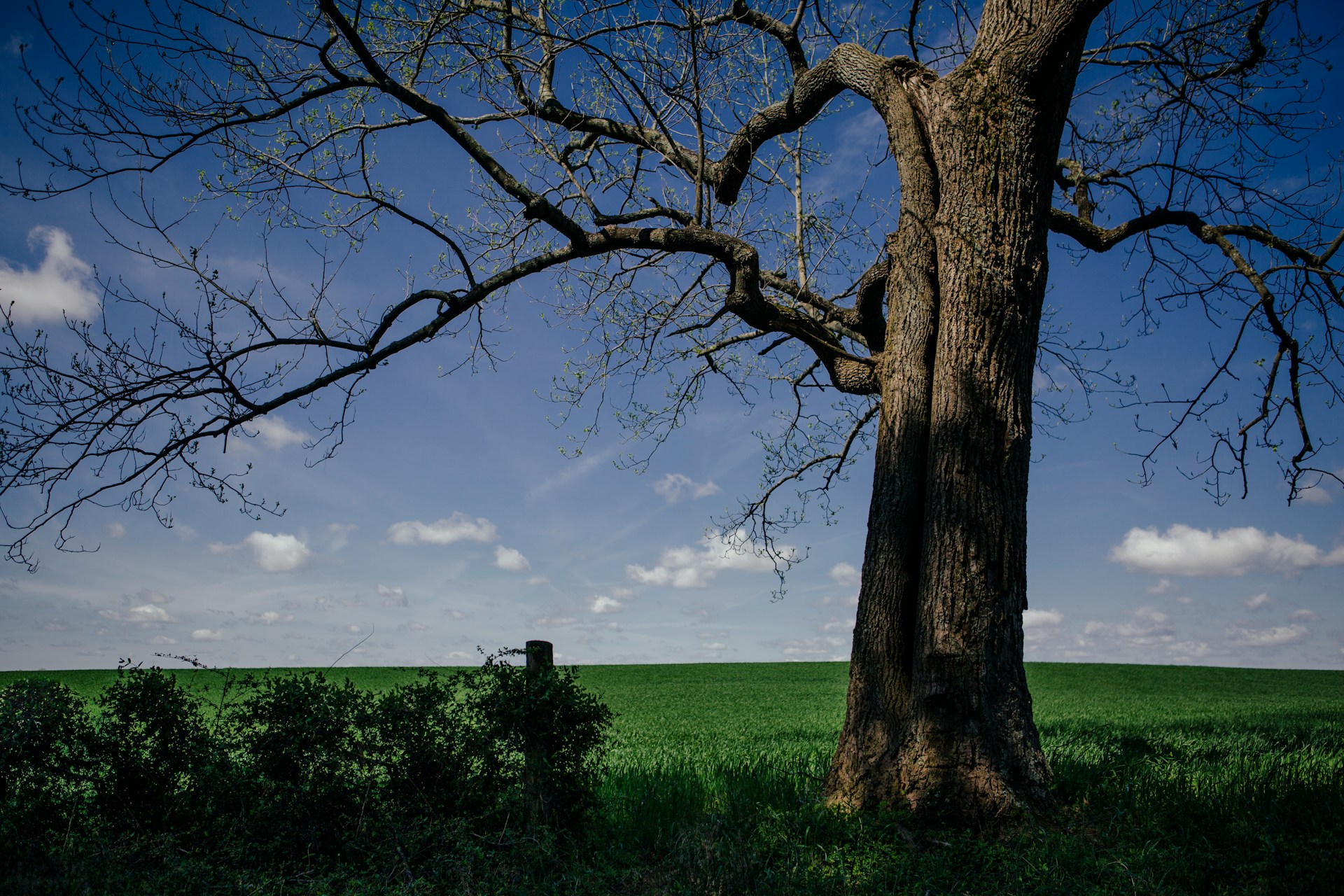
The trunk and bark of a tree can reveal a lot about its condition. Usually, a healthy tree may shed some bark, but immediately replace it with fresh layers. On the other hand, dying or dead trees lose some bark, but are no longer able to replace it. In addition, the bark is also drier than the bark that live trees shed.
You can also observe bare wood, deep cracks, or large mission pieces, which means that the tree can no longer provide enough nutrients for most of its parts.
4. Check for Buds or Leaf Growth
Since dormancy happens around spring or winter, another indicator you can rely on when figuring out whether a tree is dead or dormant is by checking for buds or tree growth. Even when a tree is dormant, you can still see some small buds that are ready to bloom. Usually, these buds are pliable and firm to the touch.
However, if you see some buds, but they’re brittle, dry, or shrivelled, or there are no buds at all, it can be a sign that a tree is dead.
5. Inspect the Roots and Base
If the tree has been dead for a while, you can observe some clear signsjust by looking at it. Usually, you may notice some fungal growth, mushrooms, and soft, spongy wood near the roots. This means that the inside of the tree is already decaying. Since these fungi feed on decomposing wood, you can easily spot them, which is the reason why the tree’s structure is gradually weakening.
Since the tree’s structure starts to weaken, you should also watch out for raised soil and a sudden leaning of the entire tree.
6. Observe Seasonal Patterns
If you or your tree has been in the property for a while now, you can also observe the seasonal patterns. In doing so, you can just compare its regrowth or leaf drops. If there’s a constant pattern that you can still observe today, there’s a high chance that the tree is just dormant.
Meanwhile, even if some trees get delayed with waking up, if there is a significant delay with the new growth during spring, it can be a strong indicator that the tree is already dead.

7. Let an Arborist Assess the Tree
When in doubt, you can always hire a professional assessment. If it’s for household trees, a certified arborist can handle everything. However, if you’re dealing with a lot of trees in an urban setting or a farm, hiring an AQF Level 5 Arborist is recommended because they are experts in identifying the best solution for your tree problems.
Final Thoughts
While there’s no harm when trees become dormant, it’s still necessary to check whether a tree is just dormant or there are other signs indicating that it may be dead. By considering the simple ways of checking the current situation of the trees, you can easily save other trees from getting sick or infected.