Introduction:
In today’s competitive digital age, Digital Marketing for Startups is more important than ever. Startups face unique challenges that require a fresh approach to marketing. Whether it’s building brand awareness or generating sales, digital marketing offers startups a cost-effective way to reach their target audience. This guide will help startups understand the significance of digital marketing and provide actionable strategies to ensure business growth.
What is Digital Marketing?
Digital marketing encompasses all marketing efforts that use the internet or electronic devices to connect with potential customers. It includes a variety of strategies such as search engine optimization (SEO), content marketing, social media marketing, and email marketing.
For startups, digital marketing allows businesses to compete with larger, more established brands without breaking the bank.
Importance of Digital Marketing for Startups
When starting a new business, having a robust digital presence is essential. It helps startups:
- Reach a global audience without the need for a large marketing budget.
- Build brand awareness from scratch by leveraging social media and content platforms.
- Target niche markets with precision, ensuring the right message reaches the right audience.
- Measure marketing efforts through analytics, making it easier to optimize strategies and maximize ROI.
Common Challenges Faced by Startups in Digital Marketing
While the benefits of digital marketing are clear, startups often face several challenges. These include:
- Limited Budget: Many startups struggle to allocate significant funds to marketing efforts.
- Lack of Expertise: Marketing strategies are constantly evolving, making it difficult for startups to keep up.
- Finding the Right Tools: With so many options available, it can be overwhelming for startups to choose the best digital marketing tools.
II. Understanding the Digital Marketing Landscape
Overview of Digital Marketing Channels
Startups have access to numerous digital marketing channels. The key channels for Digital Marketing for Startups include:
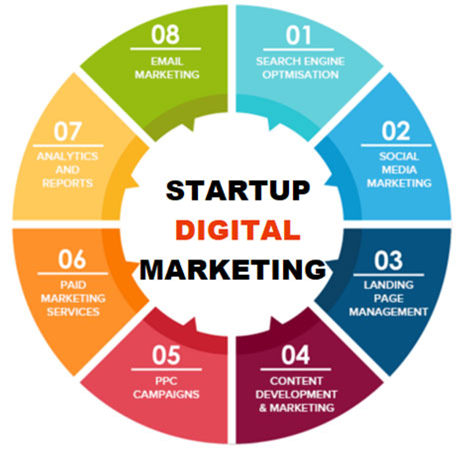
- Search Engine Optimization (SEO): Optimizing your website and content to rank higher on search engine results pages (SERPs).
- Social Media Marketing: Platforms like Facebook, Instagram, LinkedIn, and Twitter are crucial for connecting with potential customers.
- Email Marketing: Building and maintaining a relationship with your audience by sending regular emails.
- Content Marketing: Creating valuable content that speaks to the pain points and needs of your audience.
How Startups Can Leverage Digital Platforms
Startups can leverage digital platforms by:
- Targeting specific demographics using social media ads or Google Ads.
- Building a community on social media channels to foster brand loyalty.
- Utilizing SEO to make your business discoverable through organic search results.
- Using content marketing to establish authority in your industry by providing valuable information to your audience.
Building a Digital Marketing Foundation
The foundation of a successful digital marketing strategy begins with a clear understanding of your audience. Start by defining:
- Your Ideal Customer: Identify demographics, behaviors, and preferences.
- Goals and Objectives: What do you want to achieve through digital marketing? Whether it’s increasing traffic, generating leads, or boosting sales.
- Budget: Set a budget that aligns with your marketing goals.
III. Key Digital Marketing for Startups
Content Marketing for Startups
One of the most effective Digital Marketing for Startups strategies is content marketing. Creating high-quality, informative, and engaging content helps startups build trust with their audience. Types of content include:
- Blog posts
- Infographics
- Videos
- Webinars
Consistent and valuable content positions your startup as an authority in your field, driving traffic and encouraging engagement.
Social Media Marketing: Best Platforms for Startups
Social media is an essential part of Startup Marketing Strategies. The best platforms for startups include:
- Instagram (ideal for visual products or services)
- LinkedIn (for B2B startups and professionals)
- Facebook (for building a community and targeting ads)
- Twitter (for quick updates and engaging with a younger audience)
By targeting the right platforms, startups can engage with their audience effectively and grow their brand presence.
Email Marketing: Building and Nurturing Your Startup’s Audience
Email marketing remains one of the most powerful tools for startups. Through email marketing, businesses can:
- Send personalized messages to their audience.
- Nurture leads and turn them into loyal customers.
- Announce promotions, new products, or services to subscribers.
By segmenting your email list, you can target the right messages to the right people, enhancing conversion rates.
Paid Ads: A Quick Way to Gain Traction for Your Startup
While organic growth is essential, paid ads can give your startup an immediate boost. Platforms like Google Ads, Facebook Ads, and Instagram Ads allow you to target specific demographics with tailored messages, bringing in quick traffic and potential leads.
IV. Building Your Digital Marketing for Startups Plan
Identifying Your Target Audience
Knowing your target audience is crucial for Digital Marketing for Startups. Conduct market research to understand the pain points, needs, and behaviors of your audience. This ensures that your marketing efforts resonate with them.
Setting Measurable Goals
To gauge the success of your Startup Marketing Strategies, set specific, measurable goals. These could include:
- Increasing website traffic by a certain percentage.
- Generating X number of leads within a specific time frame.
- Achieving a certain ROI on advertising spend.
Setting clear goals helps you track progress and adjust your strategy as needed.
Creating a Budget for Digital Marketing
Your budget will dictate how far your Digital Marketing for Startups efforts can go. Prioritize spending on the most effective channels, such as SEO and social media advertising, based on your audience and goals.
V. Tools and Resources for Digital Marketing Success
Essential Tools for Startups (SEO tools, Analytics, Automation)
Several tools can help startups implement their digital marketing strategies efficiently. These include:
- SEO Tools: Google Analytics, Moz, Ahrefs
- Social Media Management Tools: Buffer, Hootsuite, Sprout Social
- Email Marketing Tools: Mailchimp, Constant Contact
- Automation Tools: HubSpot, Zapier
Using the right tools can streamline your efforts and improve the effectiveness of your marketing campaigns.
Resources to Learn and Stay Updated on Digital Marketing
As digital marketing evolves, it’s essential to stay updated. Resources such as blogs, online courses, webinars, and industry news sites help startups keep up with the latest trends and strategies.
VI. Common Mistakes to Avoid in Digital Marketing for Startups
Overlooking Analytics and Metrics
Startups often neglect to track their digital marketing performance. By ignoring key metrics, businesses miss out on valuable insights into what’s working and what’s not.
Mismanaging Ad Spend
While paid ads can be effective, mismanaging ad spend can drain resources quickly. Startups should monitor ad performance closely and adjust their budget and targeting as needed to avoid unnecessary costs.
Ignoring SEO Fundamentals
SEO is a long-term strategy that provides sustained benefits. Startups must focus on SEO fundamentals, such as keyword research, on-page optimization, and link building, to rank higher in search engines.
VII. How to Measure Success in Digital Marketing
Key Performance Indicators (KPIs) for Startups
Startups must track the right KPIs to measure the effectiveness of their Digital Marketing for Startups efforts. Key metrics include:
- Website traffic
- Conversion rates
- Lead generation
- Customer acquisition cost (CAC)
Tracking ROI: How to Know if Your Digital Marketing Strategy is Working
Tracking ROI helps startups understand if their digital marketing efforts are generating value. If your ROI is positive, your strategy is working, but if it’s negative, it’s time to reevaluate.
VIII. Conclusion
Digital Marketing for Startups is not just a trend but a necessity for growth. By focusing on the right strategies and tools, startups can create a powerful digital presence that drives success. Remember, digital marketing is a journey that requires patience, learning, and constant adaptation.
FAQs:
- What are the best digital marketing strategies for startups?
The best strategies include SEO, content marketing, social media marketing, and email marketing. - How can startups grow their brand with limited budgets?
Startups can leverage cost-effective digital marketing strategies like organic social media, content creation, and influencer partnerships. - Is email marketing effective for startups?
Yes, email marketing helps startups nurture leads and build relationships with customers, providing a high ROI. - How can startups measure success in digital marketing?
Startups should track KPIs like website traffic, conversion rates, and ROI to measure the success of their digital marketing campaigns. - What tools can startups use for digital marketing?
Startups can use tools like Google Analytics, Moz for SEO, Hootsuite for social media management, and Mailchimp for email marketing.