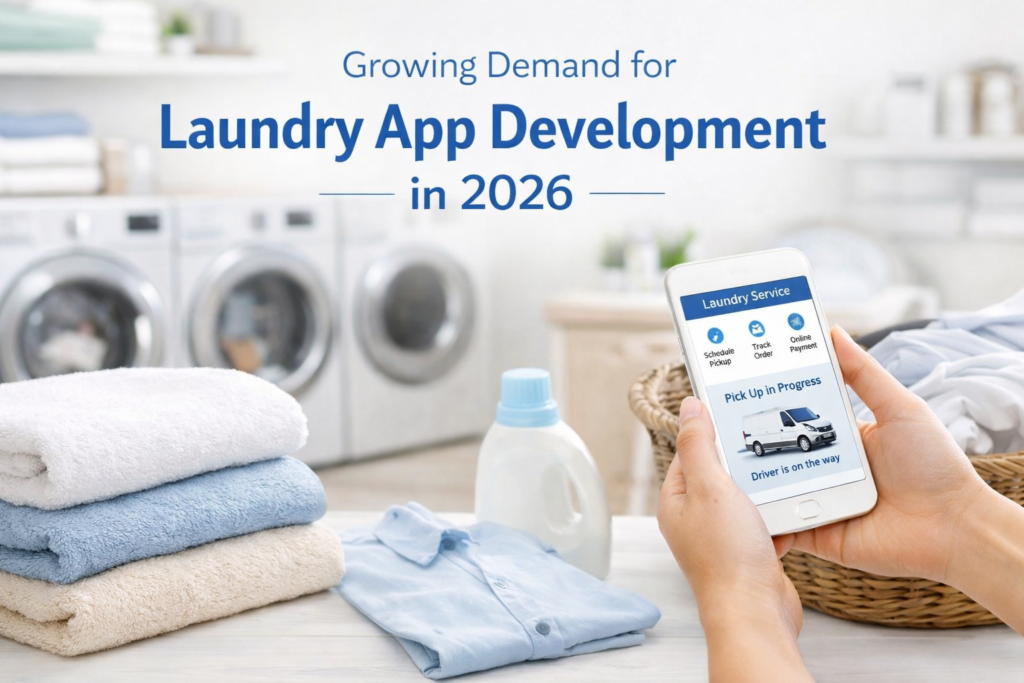
The service economy is evolving rapidly and by 2026, convenience-driven digital platforms will dominate how people access everyday services. Among these, laundry services are experiencing a strong transformation. What was once a traditional, offline business is now becoming a tech-enabled, on-demand model. This shift is fueling the growing demand for on-demand laundry app development, especially among businesses looking to modernize operations and meet rising customer expectations.
Consumers today are accustomed to booking services instantly, tracking progress in real time and making cashless payments. Laundry is no longer an exception it is becoming an essential on-demand service. For entrepreneurs, laundry chains and app development companies, this evolution represents a long-term opportunity backed by recurring demand and scalable business potential.
Why Laundry Services Are Rapidly Moving Toward App-Based Models
Laundry services fit naturally into the on-demand ecosystem because they solve a universal problem: saving time. As urban lifestyles become busier, people are actively seeking ways to outsource routine tasks without compromising quality.
Several factors are accelerating this transition:
- Increasing working population and dual-income households
- A growing number of students and renters in urban areas
- Limited in-home laundry facilities in apartments
- High dependency on smartphones for service bookings
Instead of managing pickups through calls or walk-ins, users prefer apps that offer clarity, speed and reliability. A well-designed laundry app allows customers to schedule pickups, select services, track orders and receive notifications all from one interface.
From a business perspective, apps reduce dependency on manual coordination. Orders flow digitally, staff assignments become easier and delivery logistics are better managed. This efficiency is one of the main reasons why on-demand laundry app development is gaining traction across both emerging startups and established laundry brands.
Market Trends Driving Laundry App Demand Through 2026
The rising popularity of laundry apps is not accidental. It aligns closely with larger digital and consumer trends that are expected to strengthen by 2026.
Mobile-First Consumer Behavior
Users increasingly prefer apps over websites for repeat services. Apps offer faster access, better personalization and push-based engagement. Laundry businesses with dedicated mobile apps benefit from higher customer retention and stronger brand recognition.
Subscription-Based Laundry Services
Monthly and weekly laundry subscriptions are becoming a preferred option for regular users. These plans provide predictable pricing and consistent service, while businesses benefit from recurring revenue. Apps make it simple to manage subscriptions, pause services, or customize plans.
Sustainability-Focused Service Choices
Eco-friendly washing methods, reduced water usage and biodegradable detergents are influencing purchasing decisions. Laundry apps allow businesses to showcase sustainable practices, helping attract environmentally conscious customers.
Faster Delivery Expectations
With improvements in local delivery infrastructure, customers expect quicker turnaround times. Apps that support real-time tracking and automated notifications help set realistic expectations while improving transparency.
What Users Expect From Laundry Apps in 2026
As on-demand platforms mature, user expectations continue to rise. Laundry apps must meet the same usability standards as food delivery or ride-hailing applications.
Key expectations include:
- Simple onboarding and quick registration
- Transparent pricing before order confirmation
- Flexible pickup and delivery scheduling
- Live order tracking with status updates
- Multiple secure payment options
Beyond these basics, personalization has become a differentiator. Users appreciate apps that remember fabric preferences, detergent choices, or previous orders. This reduces friction during repeat bookings and enhances the overall experience.
In 2026, successful laundry apps will not just facilitate transactions they will actively improve customer convenience through smart design and thoughtful user journeys.
Business Benefits of Investing in On-Demand Laundry Apps
For service providers, the value of a dedicated laundry app extends far beyond customer convenience. It directly impacts growth, efficiency and profitability.
Some major business advantages include:
- Streamlined operations: Automated workflows reduce human error and processing time.
- Customer retention: Push notifications, offers and loyalty programs encourage repeat usage.
- Data-driven decisions: Analytics reveal demand patterns, peak hours and customer preferences.
- Brand ownership: Direct customer relationships without third-party commission losses.
Unlike aggregator platforms, owning an app gives laundry businesses full control over pricing, service quality and customer communication. This independence becomes increasingly important as competition intensifies in the on-demand service market.
Development Approach: Building for Scale and Longevity
Developing a laundry app requires careful planning and technical foresight. Businesses must balance speed-to-market with long-term scalability.
Many companies begin with a core feature set to validate demand quickly. This phased approach allows faster launches while gathering real user feedback. Development strategies inspired by MVP delivery app development are particularly effective for startups entering competitive markets.
Backend architecture is another critical consideration. Laundry apps rely on real-time coordination between customers, service staff and delivery teams. A stable and scalable backend ensures smooth performance during peak usage periods.
The overall mobile app development timeline depends on factors such as platform selection, feature complexity and third-party integrations. Proper planning helps avoid delays and ensures consistent performance post-launch.
Security and compliance also play a vital role. Protecting user data, securing payments and maintaining system reliability are essential for building trust in service-based applications.
Why 2026 Is a Strategic Opportunity for Laundry App Development
By 2026, on-demand services will be deeply embedded in daily life. However, many regional and local laundry businesses are still in the early stages of digital transformation. This creates a strong opportunity for innovation and market entry.
Key reasons why 2026 stands out:
- Growing acceptance of app-based household services
- Lower development costs due to mature cloud infrastructure
- Increased competition is pushing businesses toward digital adoption
- Untapped markets beyond major metropolitan areas
For entrepreneurs, this is an ideal time to launch or scale digital-first laundry platforms. For development companies, offering specialized on-demand laundry app development services positions them as industry experts rather than generic solution providers.
Conclusion
The growing demand for laundry app development in 2026 reflects a broader shift toward convenience, automation and digital trust. Laundry is no longer viewed as a manual chore; it is becoming a fully on-demand service shaped by technology and user expectations.
For businesses, investing in on-demand laundry app development is a future-focused strategy that enables operational efficiency, brand growth and customer loyalty. For technology providers, this space offers consistent demand and room for specialization.
As competition increases, success will depend on delivering not just functional apps, but seamless, user-centric experiences supported by scalable technology. Those who invest early and strategically will lead the next phase of digital laundry services.
FAQs
Are laundry apps profitable in the long term?
Yes. Laundry services have recurring demand and apps improve efficiency, customer retention and scalability, which supports long-term profitability.
Can traditional laundromats benefit from mobile apps?
Absolutely. Apps help traditional businesses modernize operations, attract younger users and compete with digital-first brands.
What features matter most for customer retention?
Ease of use, reliable scheduling, transparent pricing, real-time updates and responsive support are critical for retention.