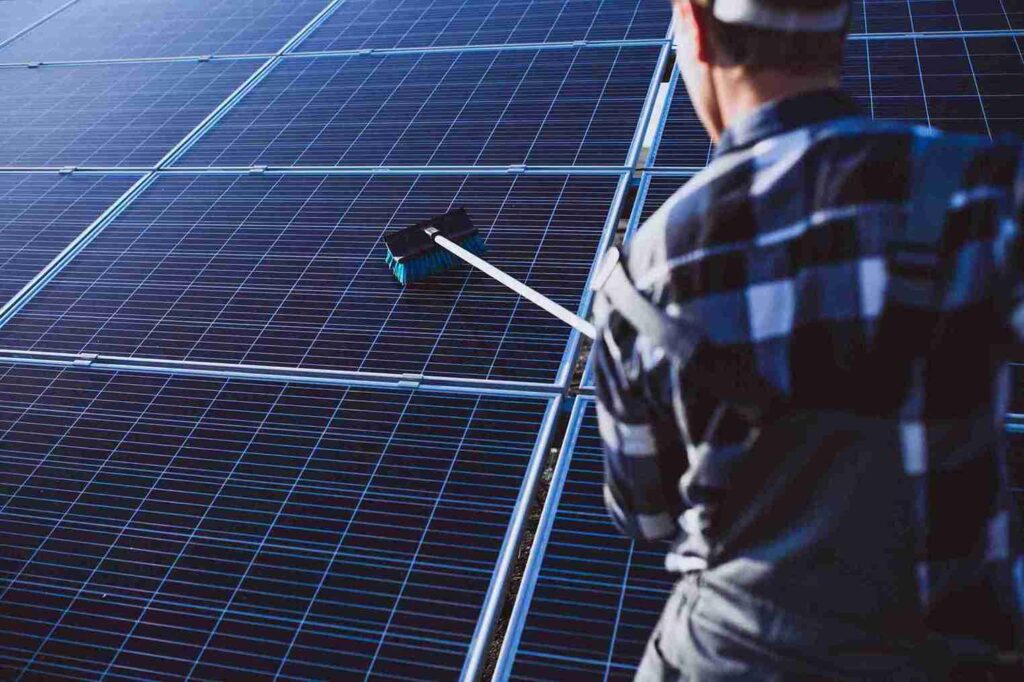
Solar panels in Askari usually collect more than ordinary dust. Fine road grit, dry leaves, bird droppings, construction residue, and Lahore’s long dry spells can form a stubborn film on the glass. Learning how to clean solar panel glass properly helps homeowners protect production without turning a simple wash into an expensive scratch or electrical problem.
The goal is to remove light-blocking dirt gently, avoid thermal stress, and leave no mineral residue behind. This guide covers the safest home method, useful tools, and the point where a professional visit makes more sense than a risky DIY attempt.
Why Solar Panel Glass Needs a Careful Approach
Solar panel glass is tough, but it is not a floor tile. It has a protective surface and sits directly above sensitive photovoltaic cells, so aggressive scrubbing, harsh chemicals, or sharp tools can create damage that is easy to miss from ground level. Clean solar panel glass means removing contamination without scratching the surface, loosening seals, or forcing water into electrical connections.
In Askari, the usual issue is dry dust mixed with moisture from early-morning humidity or light rain. That mixture can dry into a thin grey layer that reduces the sunlight reaching the cells. Bird droppings are more serious because they create small shaded spots, and shade can affect a panel disproportionately compared with ordinary dust.
Do not judge cleanliness by colour alone. Check from a safe viewing point after several dry weeks for streaks, uneven patches, or droppings around the lower glass edge.
Check Safety, Weather, and Access Before Touching the Panels
Start only when the panels are cool. Early morning is usually the practical choice in Lahore because roof surfaces heat quickly once direct sun hits them. Never pour cold water over panels that have been baking in midday heat; sudden temperature change can stress the glass and frame.
Switch off the solar system only if your inverter instructions require it for cleaning or if you need to work near cables. For a light surface wash, the biggest safety issue is usually not electricity. It is slipping on a dusty roof, stepping on a panel, or leaning too far over an edge. Askari homes often have water tanks, parapet walls, narrow service passages, and uneven roof finishes, all of which can make access more awkward than it looks from downstairs.
Before you begin, inspect from the ground or a secure roof position. Stop if you see cracked glass, damaged frames, loose wiring, exposed connectors, nests, or an edge that requires unsafe reaching. This is where a solar cleaning company in Askari can help: safe access matters as much as washing the glass.
Use low-mineral water where possible. Bore water can leave white deposits in hot weather, while filtered or soft water reduces spotting.
A Safe Seven-Step Method for Washing the Glass
To clean solar panel glass safely, use a slow, light, and boring method. Most damage happens when someone speeds up with pressure, force, or the wrong tool.
- Choose a cool, calm morning. Avoid strong wind, direct afternoon sun, and rainy conditions. A cool panel surface reduces the risk of rapid drying and streak marks.
- Remove loose dust first. Use a soft, dry microfiber mop or a soft-bristle brush with an extendable handle. Do not drag gritty dust across the glass with pressure; lift it away gently.
- Wet the surface lightly. Apply clean water with a low-pressure spray, a soft hose flow, or a damp microfiber pad. The purpose is to soften stuck-on dirt, not blast the panel.
- Use a mild cleaning mix only when needed. For droppings or greasy residue, add a very small amount of mild, non-abrasive soap to water. Avoid bleach, strong detergents, acid-based cleaners, glass polish, and abrasive powders. These products can leave films or affect seals and frame finishes.
- Wipe with a soft microfiber tool. Work from the upper side toward the lower edge using straight, gentle passes. Do not scrub in tight circles. If a spot does not lift easily, soak it again for a few minutes rather than pressing harder.
- Rinse until no soap remains. Soap residue attracts dust, so a clean rinse matters more than people expect. Use enough water to carry loosened particles away without flooding the panel edges or electrical parts.
- Let the panels air-dry. Do not use rough towels, newspaper, metal squeegees, or a power blower. A clean final rinse should dry naturally with minimal marks.
For ground-level arrays or wide flat rooftops, a solar panel cleaning machine can reduce manual effort, but it is not automatically safer. Cheap spinning brushes, high-pressure attachments, or poorly adjusted rollers can push grit across the glass. It helps only when the brush, water flow, reach, and control suit the panel layout.
What Should Never Touch Your Solar Panels
Avoid pressure washers, steel wool, kitchen scouring pads, razor blades, abrasive sponges, and concentrated glass-cleaning chemicals. They may remove dirt quickly, but they can also scratch the glass, strip protective coatings, bend a panel frame, or drive water where it should not go.
Hard tap water can dry into cloudy mineral spots that block light and make the panel look dirty again. In Lahore’s warmer months, water evaporates quickly, so use a low-mineral final rinse and do not let soapy water dry on the surface.
Never walk on the panels, sit tools on them, or use the panel frame as a handhold. Solar modules are engineered to carry weather loads, not repeated point loads from shoes, knees, ladders, or buckets. A hidden microcrack can later show up as lower output, moisture ingress, or an intermittent electrical fault.
How Often Should Askari Households Clean Their Panels?
Most Askari households should inspect panels every two to four weeks and clean them every two to three months during dry, dusty conditions. How often you clean solar panel glass depends on traffic, construction, trees, pigeons, roof dust, and residue between rain events.
A home near an active plot, busy road, or open dusty area may need a monthly light clean in summer. Use inverter data to compare output on similarly clear days before and after cleaning. A noticeable lift means your interval is too long.
Searching for solar panel cleaning near me becomes sensible when the system is difficult to access, panels sit above a steep roof section, or you have a large array that cannot be cleaned safely from a stable surface. Household cleaning is fine for simple, reachable installations. It is not worth gambling on balance, cables, or roof edges to save a routine service cost.
AfinitySolar sees the same pattern across Lahore: regular light cleaning is safer than waiting until the surface looks neglected. Small sessions prevent dirt from baking onto the glass and reduce aggressive scrubbing later.
Create a Simple Panel-Cleaning Routine That Works
Keep a short record of the date, weather, visible dirt level, and inverter output before and after each wash. Over a few months, it shows whether your home needs monthly attention, seasonal cleaning, or occasional spot removal.
Keep the kit separate from general household tools. A soft microfiber mop, clean bucket, mild soap, low-pressure water source, extendable handle, and rubber-soled footwear cover most safe jobs. Keep paint brushes, masonry tools, harsh detergents, and worn cloths out of it.
Pay attention after dust storms, nearby construction, long rainless spells, and periods of heavy bird activity. These events matter more than a calendar reminder. A panel that stays clean for six weeks may need attention after one windy day carrying fine dust across the roof.
Final Thoughts
Clean panels work best when the glass is clear, the surface is treated gently, and roof safety comes first. Use cool morning conditions, soft tools, clean water, and patient wiping. Skip the macho pressure-washer nonsense.
For Askari homeowners, inspect often, clean lightly, and stop whenever access becomes unsafe. Many solar panel cleaning services include an inspection, but homeowners should still know what safe cleaning looks like. That protects both solar output and the people on the roof.
Frequently Asked Questions
Can I Use Dishwashing Liquid on Solar Panel Glass?
Yes, but only a very small amount of mild dishwashing liquid diluted in clean water for stuck residue. Use it sparingly, then rinse thoroughly so no soap film remains to catch dust. Do not use strong degreasers, bleach, or abrasive cleaners.
Is Rain Enough to Clean Solar Panels in Askari?
Rain can rinse off loose dust, but it rarely removes bird droppings, dried mud, oily residue, or mineral spots. After a light Lahore rain, panels can even dry with streaks if the surface was already dusty. Inspect rather than assuming rain solved the problem.
Can I Clean Panels While the Solar System Is Producing Electricity?
For surface cleaning, the main issue is safe access and keeping water away from connectors, inverter equipment, and damaged cables. Check the manufacturer or installer guidance for your system before working near electrical components. Do not attempt any cleaning if wiring or panel glass appears damaged.
What Is the Safest Water Pressure for Solar Panel Cleaning?
Use a gentle hose flow, spray bottle, or low-pressure pump sprayer. Water should loosen dirt, not strike the glass like a pressure washer. High pressure can force water around seals and push grit across the panel surface.
Why Do My Panels Still Look Cloudy After Cleaning?
Cloudiness usually comes from mineral deposits, dried soap, fine dust streaks, or marks that were wiped while the glass was hot. Rinse again with low-mineral water on a cool morning and use a clean microfiber tool. If the haze does not improve, it may be surface damage rather than dirt.