Denim Tears: The Story Behind Streetwear's Most Meaningful
Denim Tears: The Story Behind Streetwear’s Most Meaningful Brand
If you’ve scrolled past a cotton wreath print on a pair of jeans or a Chuck 70 and wondered why it stopped you mid-scroll, you’ve already felt what Denim Tears is designed to do. This isn’t a brand chasing hype for hype’s sake. It’s a label built by a Black American designer who decided that a hoodie could carry the same weight as a history lecture — and somehow made that idea cool enough to sell out in minutes.
Here’s everything worth knowing about Denim Tears: who’s behind it, what the cotton wreath actually means, which collaborations matter, and how to buy the real thing without getting burned.
Who Founded Denim Tears?
Denim Tears was founded in 2019 by Tremaine Emory, a designer with roots that read like a streetwear resume before streetwear had a name. Born in Georgia and raised in Queens, New York, Emory got his start on the sales floor at J.Crew before working retail for Marc Jacobs. In 2010 he moved to London and co-founded the multidisciplinary creative studio No Vacancy Inn with collaborator Ade “Acyde” Odunlami, working across fashion, music, art, and nightlife. From there he became art director-at-large for Stüssy, and in 2022 he took an even bigger swing: creative director of Supreme, following the brand’s acquisition by VF Corp. He left that role in 2023, but Denim Tears has remained his primary focus and, by most accounts, the label now does tens of millions of dollars in annual sales.
What sets Emory apart from most streetwear designers is that he treats clothing as a research project. He’s described Denim Tears as “African-American sportswear,” and every collection functions like a chapter in an ongoing book about Black American history and the African diaspora.
The Cotton Wreath: What It Actually Means
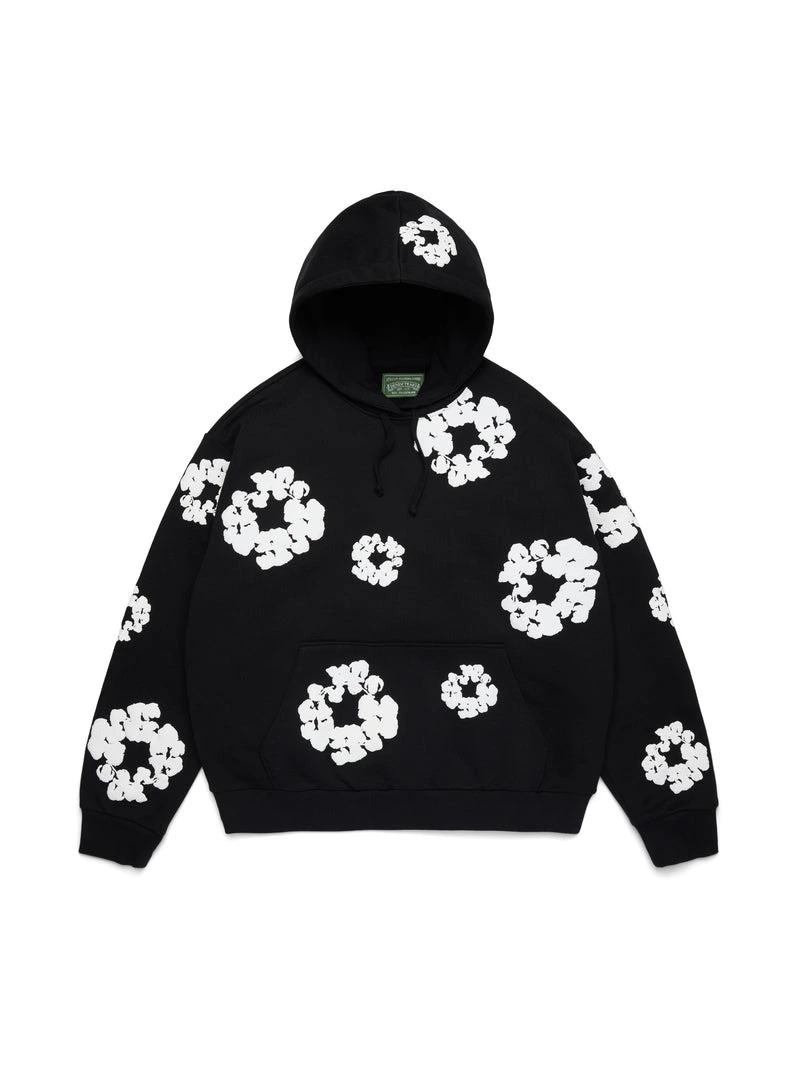
The image most people associate with Denim Tears Clothing— a wreath made of cotton flowers, sometimes styled as a peace sign — debuted on the brand’s very first collection, released to mark the 400th anniversary of the start of American slavery. Cotton wreaths were printed onto Levi’s 501 jeans, trucker jackets, and hats, alongside graphic tees showing black-and-white photos of cotton fields.
Emory has said the symbol is a “talisman for America” — meant to hold both the suffering of forced labor and the resilience and cultural contributions that grew out of it. It’s not decoration. It’s a deliberate collision of something beautiful and something painful, worn in plain sight.
Interestingly, Emory has never fought hard against the flood of cotton-wreath bootlegs that followed. In interviews, he’s said the message travels further because of them — he’s mentioned running into bootleg versions as far away as Nairobi. For a brand built on storytelling, that reach matters more to him than protecting margins.
Denim Tears’ Biggest Collaborations
Emory rarely designs in a vacuum — most Denim Tears drops are partnerships with brands that already carry cultural or historical weight of their own. The standouts:
- Levi’s — The brand’s longest-running and most significant partnership, starting with the original 2019 cotton wreath 501s and continuing across multiple seasonal collections, including a 2025 release honoring New Orleans’ Black Masking Indian tradition and Big Chief Demond Melancon.
- Converse — The 2020 Chuck 70 collaboration reimagined the sneaker’s upper in the red, black, and green of the Pan-African flag.
- Dior — A high-fashion crossover that signaled Denim Tears had moved beyond streetwear into the luxury conversation.
- Stüssy, Dr. Martens, UGG, Champion, ASICS, Pyrex, Corteiz, Readymade — A rotating list of collaborators across footwear, outerwear, and accessories.
The Levi’s partnership in particular has become a recurring, multi-season story rather than a one-off drop, with newer collections continuing to spotlight specific, often overlooked pieces of Black American history.
Where the Brand Stands Now
Denim Tears T-Shirt has kept building on its founding idea rather than reinventing itself every season. Recent collections have operated under the umbrella phrase “African Diaspora Goods,” with Emory revisiting the cotton wreath and other recurring motifs not as repetition, but as continued inquiry into stories he feels deserve more than a single mention. Campaigns have leaned further into cultural storytelling too — one recent season featured musician Lauryn Hill and her family, and the brand has commissioned public performances, including a stilt-dancing activation across New York tied to West African and Caribbean carnival traditions.
The label has also picked up institutional recognition along the way, with pieces referenced in conversations around New York’s Costume Institute — a sign that what started as a small, personal project has become part of the broader fashion history it draws from.
Why Denim Tears Resonates With So Many People
Streetwear has always borrowed the language of subculture, but Denim Tears Jacket flips that formula. Instead of using culture to sell clothes, Emory uses clothes to make people sit with culture. A trucker jacket becomes a way to talk about the cotton industry. A sneaker becomes a flag. That’s a different kind of value proposition than “limited drop, buy now” — and it’s part of why the brand has held cultural relevance for years instead of fading after a single viral moment.
There’s also an authenticity factor that’s hard to fake. Emory isn’t an outside creative director assigned to a “diversity” project — this is his own family history, his own hometown, his own grandmothers’ stories about picking cotton, translated into clothing he designed himself. That personal thread is why the brand keeps getting invited into serious cultural conversations rather than being treated as another streetwear label chasing a trend cycle.
How to Buy Authentic Denim Tears
Because of the brand’s popularity, counterfeit cotton-wreath merchandise is everywhere. If you’re buying for the first time:
- Buy directly from denimtears.com or from Levi’s, Converse, and other confirmed collaborator sites for co-branded pieces.
- Check stitching quality and print placement against official product photos — bootleg wreaths often look slightly warped or off-center.
- Use verified resale platforms (StockX, GOAT, or vetted consignment shops) rather than social media marketplaces for past-season pieces.
- Watch official drop calendars, since most releases sell out fast and rarely restock at retail price.
Top 10 Denim Tears FAQs
Who founded Denim Tears?
Tremaine Emory founded Denim Tears in 2019 as a personal exploration of Black American history through clothing.
What does the cotton wreath symbol mean?
It represents both the suffering of slavery-era cotton labor and the resilience and cultural contributions of the African diaspora.
When did Denim Tears first release?
The debut collection dropped in 2019 to mark the 400th anniversary of the start of American slavery.
Is Denim Tears a luxury brand?
It sits between streetwear and luxury, with pricing that ranges from accessible tees to premium collaborative pieces with brands like Dior.
What is Denim Tears’ most famous collaboration?
Its ongoing partnership with Levi’s, starting with the 2019 cotton wreath 501 jeans, is widely considered its signature collab.
Did Denim Tears collaborate with Converse?
Yes, the 2020 Chuck 70 collaboration featured Pan-African flag colors on the upper.
Is Tremaine Emory still involved with Supreme?
No, he served as Supreme’s creative director from 2022 to 2023 and has since returned to focusing on Denim Tears.
How can I tell if Denim Tears merchandise is authentic?
Buy from the official site or verified retailers and compare stitching and print detail against official product images.
Why are there so many Denim Tears bootlegs?
The cotton wreath’s cultural recognition has made it one of the most widely bootlegged symbols in streetwear, something Emory has said he doesn’t mind.
Where can I buy Denim Tears in the USA?
Directly through denimtears.com, select Levi’s stores, and authorized streetwear retailers across the US.
Denim Tears isn’t trying to be the loudest name in streetwear — it’s trying to be the one people still talk about a decade from now. Given how consistently Emory has turned personal and national history into wearable design, that goal looks well within reach.