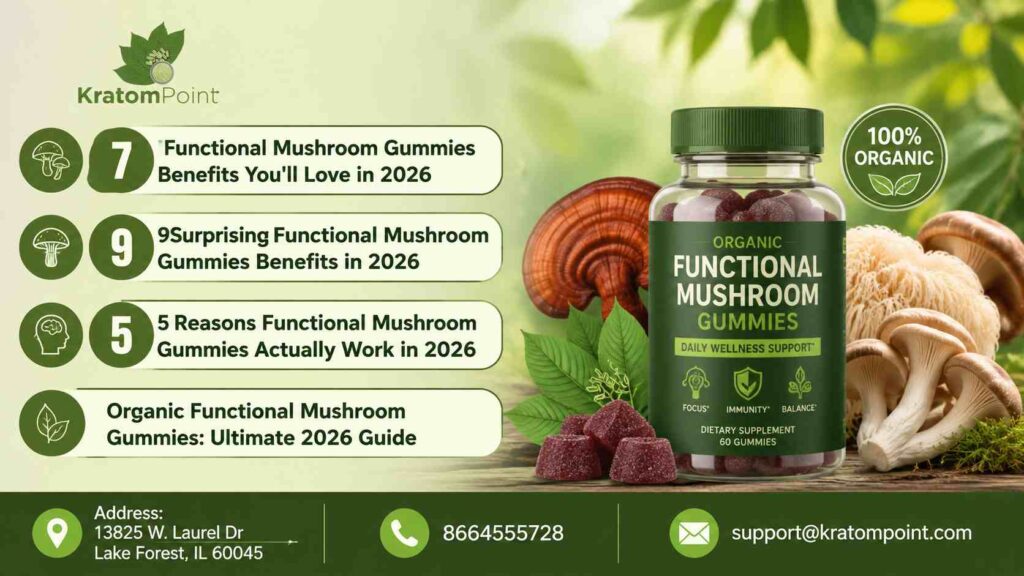
Functional Mushroom kratompoint.com
If you’ve scrolled through wellness shelves lately, you’ve probably noticed mushrooms popping up everywhere that isn’t a pizza topping. Reishi lattes, lion’s mane capsules, chaga tea, the fungi wellness trend isn’t slowing down in 2026, and one product format is leading the charge: the humble gummy. A functional mushroom gummy takes the adaptogenic and immune-supporting properties of medicinal mushrooms and packages them into something that actually tastes good and fits in your pocket.
This guide walks you through what functional mushrooms are, why gummies have become the preferred delivery method, which strains do what, and how to pick a quality product without falling for marketing fluff. Whether you’re brand new to fungi-based wellness or looking to switch from capsules to something easier to stick with, you’ll walk away knowing exactly what to look for.
What Is a Functional Mushroom, Exactly?
A functional mushroom is a type of fungus prized for benefits that go beyond basic nutrition. Unlike the button mushrooms in your stir-fry, functional varieties, think lion’s mane, reishi, cordyceps, chaga, and turkey tail, contain compounds like beta-glucans, triterpenes, and polysaccharides that researchers have linked to immune modulation, stress response, and cognitive support.
These mushrooms have roots in traditional Chinese and Japanese medicine going back centuries, but they’ve only recently entered mainstream American wellness routines. The shift happened as more people started looking for plant- and fungi-based alternatives to synthetic supplements, and as scientific interest in adaptogens grew alongside consumer demand.
Why “Functional” Matters as a Label
Not every mushroom qualifies. The term specifically refers to species studied for a defined physiological effect, calming the nervous system, sharpening focus, or supporting the gut-immune connection. That distinction matters when you’re shopping, since it separates genuinely researched species from generic “mushroom blend” products with vague claims.
Why People Are Switching to Mushroom Gummies
Powders and tinctures have been around for years, so why the sudden gummy boom? A few practical reasons stand out.
- No earthy aftertaste. Mushroom powders can taste bitter or dirt-like; gummies mask that completely.
- Easy dosing. No scoops, no scales, just grab and go.
- Better daily consistency. People are far more likely to stick with a supplement routine when it feels like a treat instead of a chore.
- Portability. A gummy jar travels better than a jar of loose powder or a glass tincture bottle.
This convenience factor is a big reason organic and functional mushroom gummies have become one of the fastest-growing categories in the U.S. wellness supplement space heading into 2026.
Functional Mushroom Gummies Benefits: What the Research Says
When people ask about functional mushroom gummies benefits, they’re usually looking for one of four things: energy, focus, immune support, or stress relief. Here’s how the most common species break down.
Lion’s Mane for Cognitive Support
Lion’s mane is the most talked-about species for brain health. Early research suggests compounds in the mushroom may support nerve growth factor production, which has generated interest in its potential role in memory, focus, and mental clarity.
Reishi for Stress and Sleep
Known as the “calming mushroom,” reishi has a long history of traditional use for relaxation. Many people incorporate reishi gummies into an evening routine rather than a morning one, pairing it with wind-down habits like reduced screen time.
Cordyceps for Energy and Endurance
Cordyceps has built a reputation among athletes and active individuals for its potential to support oxygen utilization and stamina. It’s a popular pre-workout alternative to caffeine-heavy products, especially for people sensitive to stimulants.
Chaga and Turkey Tail for Immune Support
Both chaga and turkey tail are rich in beta-glucans, compounds studied for their role in supporting a healthy immune response. These two often appear together in blended formulas marketed toward year-round immune maintenance.
Fungi Mushroom Gummies vs. Traditional Supplements
If you’re deciding between capsules, powders, or gummies, it helps to compare them side by side.
Capsules: Precise dosing, no taste, but require water and can be harder to remember.
Powders: Highly versatile for smoothies and coffee, but taste and texture aren’t for everyone.
Fungi mushroom gummies: Pleasant flavor, consistent daily habit-forming, and easy to dose accurately, though you’ll want to check sugar content and extract concentration carefully.
The bottom line: gummies aren’t automatically “better,” but for the average person trying to build a sustainable habit, they tend to win on adherence, and adherence is what actually produces results over time.
How to Choose High-Quality Organic Functional Mushroom Gummies
Not all gummies are created equal, and the functional mushroom space has its share of low-quality products riding the trend. Here’s what actually separates a good product from a weak one.
Look for Fruiting Body, Not Just Mycelium
This is the single most important thing to check. Many cheap products use mycelium grown on grain, which dilutes the concentration of beneficial compounds. Look for labels that specifically state “fruiting body” extract.
Check for Third-Party Testing
Reputable brands test for potency and contaminants and make those results available. If a company won’t share testing data, that’s a red flag.
Confirm Organic Certification
USDA Organic certification means the mushrooms were grown without synthetic pesticides or fertilizers, an important consideration since mushrooms are known to absorb compounds from their growing environment.
Watch the Sugar Content
Since gummies need a flavor base, sugar is unavoidable to some degree. Look for lower-sugar formulations or those sweetened with alternatives, especially if you’re taking them daily.
Consider the Brand’s Transparency
Brands like Gruns Nutrition functional mushroom gummies have gained attention for combining mushroom blends with broader whole-food nutrient profiles, which appeals to shoppers looking for a multi-benefit product rather than a single-strain supplement. When comparing brands, look at ingredient sourcing, dosage per serving, and whether the company publishes lab results, not just marketing copy.
How to Incorporate Mushroom Gummies Into Your Daily Routine
Consistency is what makes functional mushrooms effective, since many of their benefits build gradually rather than hitting instantly like caffeine.
- Morning: Cordyceps or lion’s mane gummies pair well with breakfast for sustained energy and focus.
- Midday: Immune-support blends (chaga, turkey tail) work well with lunch.
- Evening: Reishi gummies fit naturally into a wind-down routine.
Most brands recommend one to two gummies daily, but always follow the specific product’s label, since potency varies by brand and extraction method.
Frequently Asked Questions
What do functional mushroom gummies actually do? They deliver concentrated compounds from medicinal mushroom species, like beta-glucans and triterpenes, that are studied for supporting immune function, cognitive clarity, stress response, and energy levels.
Are mushroom gummies safe to take daily? For most healthy adults, daily use of quality functional mushroom gummies is considered safe when taken as directed. As with any supplement, check with a healthcare provider first, especially if you’re pregnant, nursing, or taking medication.
Do functional mushroom gummies contain psychoactive compounds? No. Functional mushrooms like lion’s mane, reishi, cordyceps, and chaga are entirely different from psychoactive mushroom species and contain no hallucinogenic compounds.
How long until I notice benefits? Most users report noticing effects, like improved focus or reduced stress, within two to four weeks of consistent daily use. Functional mushrooms tend to work cumulatively rather than immediately.
What’s the difference between fruiting body and mycelium gummies? Fruiting body extracts come from the mature mushroom and generally contain higher concentrations of active compounds. Mycelium is the root-like structure and, when grown on grain, often contains more starch than beneficial compounds, so fruiting body is the better choice.
Final Thoughts
Functional mushroom gummies have earned their spot in the 2026 wellness conversation because they solve a real problem: making a genuinely beneficial supplement category easy to stick with. Whether you’re drawn to lion’s mane for focus, reishi for calm, or a blended formula for all-around immune support, the key is choosing organic, fruiting-body-based, third-party-tested products from brands that are transparent about sourcing.
Ready to build your own functional mushroom routine? Browse KratomPoint curated selection of mushroom gummies, coffee, and tea to find the blend that fits your goals, and check out our blog for more deep dives into functional wellness.