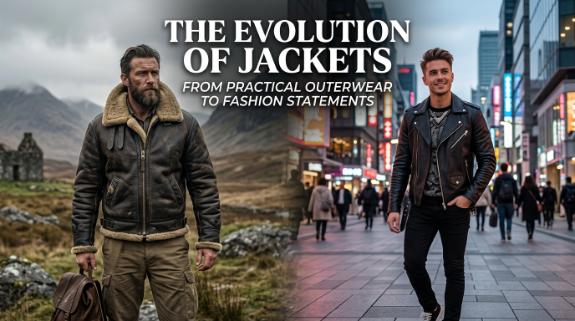
The Evolution of Jackets From Practical Outerwear to Fashion Statements
Jackets have come a long way from their original purpose of protecting people from cold, wind, rain, and demanding outdoor conditions. Today, a jacket can be just as much a reflection of personality as it is a practical layer. From rugged workwear and military garments to luxury tailoring and celebrity-inspired streetwear, jackets have continually adapted to changing lifestyles and cultural movements.
The remarkable thing about the jacket is its ability to balance function and expression. A well-designed piece can provide insulation on a winter morning, durability during physical work, or weather protection while simultaneously communicating a particular aesthetic. Over generations, designers and consumers have transformed the humble outer layer into one of fashion’s most versatile categories.
Understanding this evolution reveals why jackets remain such a powerful part of contemporary wardrobes. Their history is essentially a story of innovation, changing social attitudes, subcultures, entertainment, and the constant desire to combine comfort with individual style.
Where the Jacket Began: Function Before Fashion
Early outerwear was primarily designed around survival and practicality. People needed garments that could withstand exposure to harsh weather while allowing enough freedom of movement for work, travel, hunting, and military activities. Heavy wool, leather, canvas, and tightly woven textiles became valuable materials because they could provide warmth and resist wear.
Unlike many modern fashion garments, early jackets were rarely created simply to make a visual statement. Their construction reflected the demands of the wearer. Strong seams, durable fasteners, roomy pockets, reinforced panels, and protective collars were functional features rather than decorative details.
Military clothing played an especially important role in the development of modern jackets. Service members required garments that offered protection without severely restricting movement. This encouraged the development of structured silhouettes, practical pockets, weather-resistant materials, and standardized designs that could later influence civilian fashion.
Workwear produced another major influence. Mechanics, railroad workers, construction employees, pilots, and outdoor laborers needed garments that could tolerate repeated use. The resulting chore coats, bomber-style silhouettes, denim jackets, and canvas layers eventually moved beyond the workplace and into everyday wardrobes.
Industrial Innovation Changed Outerwear Forever
The Industrial Revolution and subsequent advances in textile manufacturing dramatically expanded what jackets could do. As factories became more sophisticated, manufacturers gained access to new weaving methods, improved dyes, stronger fasteners, and increasingly specialized fabrics.
Water-resistant treatments and synthetic fibers eventually allowed designers to create lightweight jackets capable of performing in challenging conditions. Nylon and polyester, for example, opened new possibilities for sportswear and travel apparel because they could be lighter, easier to maintain, and more adaptable than traditional heavy fabrics.
These developments also changed consumer expectations. People no longer had to choose between a garment that looked good and one that performed well. Increasingly, they expected both.
| Jacket Era | Primary Purpose | Popular Materials | Modern Influence |
|---|---|---|---|
| Early Utility | Protection and warmth | Wool, leather, canvas | Heritage and workwear fashion |
| Military Expansion | Durability and mobility | Cotton, wool, nylon | Bomber, field, and flight jackets |
| Industrial Sportswear | Performance and weather protection | Nylon, polyester, technical fabrics | Outdoor and athleisure styles |
| Modern Streetwear | Comfort and self-expression | Fleece, denim, blends, synthetics | Oversized and layered fashion |
| Contemporary Fashion | Style plus performance | Technical and premium textiles | Hybrid luxury and lifestyle outerwear |
Military Jackets Become Cultural Icons
Few categories demonstrate the transformation from function to fashion as clearly as military-inspired jackets. Garments initially developed for pilots, soldiers, and field personnel eventually became recognizable style symbols.
The bomber jacket is one of the best examples. Designed around the needs of military aviation, its compact silhouette, ribbed cuffs, and practical construction made it useful in demanding environments. Decades later, the same basic characteristics became associated with youth culture, music, cinema, and street fashion.
Field jackets followed a similar path. Their abundance of pockets and durable construction made them practical, but their distinctive proportions eventually attracted designers looking for garments with character. What began as functional equipment became a visual shorthand for ruggedness and independence.
This transition demonstrates an important principle in fashion: functionality can become an aesthetic language. A pocket does not have to be necessary to be visually appealing. A durable fabric does not have to be used for heavy labor to communicate strength. Once a garment develops cultural meaning, consumers may value its symbolism as much as its original practical benefits.
Leather Jackets and the Rise of Rebellion
The leather jacket created another major turning point. Originally valued for durability and protection, leather outerwear became deeply connected with ideas of independence, rebellion, and youthful confidence.
Motorcycle culture helped establish the leather jacket as a recognizable symbol. Its association with riders gave the garment an unmistakable identity, while Hollywood amplified that image by placing leather-clad characters at the center of memorable films.
Rock musicians later reinforced the association. The jacket became a natural complement to denim, boots, graphic shirts, and other elements of rebellious fashion. Over time, designers began experimenting with cuts, colors, finishes, hardware, and silhouettes, allowing leather jackets to move into premium and luxury markets.
What makes the leather jacket particularly interesting is its ability to retain its original visual attitude while continuously changing shape. A classic biker silhouette communicates something different from a minimalist leather overshirt or a tailored leather blazer, even though all belong to the same broad category.
Denim Jackets Bridge Workwear and Everyday Style
Denim jackets occupy a special position in the evolution of outerwear because they combine durability, familiarity, and versatility. Denim was already strongly associated with labor and rugged everyday clothing before the jacket became a widespread fashion staple.
As casual dressing became increasingly accepted, denim jackets moved comfortably between different social settings. They could be worn over a simple T-shirt, paired with trousers, layered beneath a heavier coat, or incorporated into a more deliberately styled outfit.
The jacket’s appeal also benefited from its ability to age. Fading, creasing, and wear can give denim a unique appearance, meaning that two jackets made from similar fabric can eventually develop completely different visual identities.
Contemporary designers have continued to reinterpret denim through oversized fits, cropped cuts, patchwork, embroidery, distressed finishes, unusual washes, and collaborations. This constant experimentation has ensured that the denim jacket remains relevant despite its long history.
Sportswear and the Jacket’s New Definition of Comfort
The growth of athletic and leisure clothing introduced another major shift. Consumers increasingly wanted garments that could move between exercise, travel, casual social activities, and everyday errands.
Technical jackets answered this demand with lightweight insulation, breathable fabrics, stretch construction, water resistance, adjustable hoods, and ergonomic paneling. Meanwhile, fleece and other soft materials brought a different kind of comfort to casual outerwear.
As sportswear entered mainstream fashion, the boundary between athletic clothing and streetwear became increasingly blurred. Jackets were no longer restricted to specific activities. A performance-inspired layer could become part of an everyday outfit, while casual pieces could incorporate technical design principles.
This crossover helped establish athleisure as a long-term fashion movement. The modern consumer often expects clothing to perform multiple roles, and jackets are particularly well suited to that expectation because they can be easily added or removed as conditions change.
Celebrity Culture and the Jacket as a Fashion Statement
Music, film, television, and celebrity culture have accelerated the jacket’s transition into a statement piece. When influential artists and performers wear a particular silhouette, consumers often become interested not only in the garment itself but in the lifestyle and identity it represents.
Modern streetwear illustrates this phenomenon particularly well. Oversized proportions, coordinated outfits, distinctive graphics, and relaxed layering have transformed casual outerwear into a central part of contemporary visual culture.
Music-driven fashion can turn relatively simple garments into recognizable style markers. A hoodie layered beneath a jacket, a coordinated tracksuit, or an oversized outer layer can communicate a connection to a particular musical scene or cultural moment. For consumers, these garments become more than clothing; they can represent familiarity with an artist, movement, or aesthetic.
One example of the celebrity-driven sportswear aesthetic can be seen in pieces associated with modern hip-hop and contemporary street style, where coordinated athletic silhouettes have become part of everyday fashion. The maduro nike tech aesthetic reflects how streamlined sportswear can cross into lifestyle fashion, particularly when comfort, recognizable design language, and cultural influence intersect.
Hoodies Change the Meaning of Layering
Although the hoodie is technically different from a traditional jacket, its influence on modern outerwear is impossible to overlook. Hooded garments have become essential components of layered outfits, often worn underneath bomber jackets, denim layers, coats, and technical shells.
The hoodie has also helped make relaxed proportions more acceptable across mainstream fashion. Where tailored clothing once dominated ideas of polished appearance, modern consumers increasingly appreciate oversized silhouettes, soft fabrics, dropped shoulders, and relaxed construction.
Music culture has been instrumental in this development. Artists have used hoodies to create visual identities that feel accessible, understated, and contemporary. The garment can look casual on its own while becoming a sophisticated styling component when paired with premium outerwear and carefully selected accessories.
Celebrity fashion also demonstrates how a hoodie can become a recognizable part of an artist’s image. The drake hoodie represents this broader connection between music merchandise, personal branding, and streetwear culture, showing how artist-associated apparel can move from promotional clothing toward collectible fashion.
Contemporary Streetwear Makes Layering a Creative Tool
Modern streetwear has effectively transformed layering into a form of personal styling. Instead of treating outerwear as a final protective layer, consumers use jackets, hoodies, overshirts, vests, and coats to construct an outfit visually.
This approach encourages experimentation with:
- Oversized and relaxed silhouettes
- Contrasting textures and fabrics
- Layered hooded garments
- Graphic prints and embroidered details
- Neutral palettes mixed with bold accent colors
- Vintage-inspired washes and finishes
- Technical fabrics combined with casual pieces
The result is a more flexible definition of fashion. A jacket does not necessarily have to be fitted, formal, or conventionally elegant. It can be oversized, athletic, distressed, utilitarian, minimalist, or deliberately unconventional.
From Sports Teams to Lifestyle Fashion
Another important development has been the movement of team-inspired apparel into everyday wardrobes. Sports culture has always influenced fashion, but contemporary consumers increasingly wear athletic-inspired garments regardless of whether they are attending a game or participating in a sport.
Hoodies, varsity jackets, track jackets, windbreakers, and coordinated athletic pieces can now function as lifestyle clothing. The appeal comes partly from recognizable visual codes: team colors, collegiate references, athletic typography, embroidered emblems, and relaxed proportions.
This trend also illustrates the growing importance of identity in fashion. Consumers often choose clothing because it communicates something about their interests, communities, or cultural affiliations. A garment can therefore operate simultaneously as functional apparel and a social signal.
The modern coach hoodie fits naturally into this broader evolution, where athletic and casual references are adapted for everyday streetwear. Its appeal reflects the way sports-inspired clothing has become embedded in contemporary fashion rather than remaining limited to training environments.
How Modern Designers Balance Function and Fashion
Today’s most successful jackets often combine several characteristics that were once considered separate. Consumers want protection from the elements, but they also care about fit, color, texture, branding, comfort, and versatility.
Designers therefore approach outerwear through a much broader set of considerations. A modern jacket might incorporate technical waterproof fabric, ergonomic construction, recycled insulation, oversized proportions, premium hardware, and subtle branding within a single design.
The development process increasingly focuses on the complete user experience. Weight, breathability, storage, movement, maintenance, durability, and styling potential can all influence whether a jacket succeeds in the market.
For brands, this creates both an opportunity and a challenge. A visually attractive jacket that performs poorly will struggle to generate repeat customers. Likewise, an exceptionally functional jacket with little aesthetic distinction may have difficulty standing out in a crowded market.
A Step-by-Step Look at the Evolution of a Jacket
The journey from practical garment to fashion statement can be understood through several key stages:
- Identify a practical need: The original garment is created to solve a problem such as cold, rain, wind, physical wear, or restricted movement.
- Improve construction: Manufacturers refine fabrics, seams, closures, insulation, pockets, and other functional components.
- Develop a recognizable silhouette: Repeated use creates a distinctive visual shape that consumers begin to associate with a particular activity or group.
- Adopt the garment into subcultures: Musicians, athletes, workers, performers, and other communities give the garment additional cultural meaning.
- Enter mainstream fashion: Designers reinterpret the original form through new materials, colors, proportions, and styling techniques.
- Become a personal statement: Consumers wear the garment not merely for its function but because it expresses identity, taste, lifestyle, or cultural affiliation.
Why Jackets Continue to Dominate Modern Wardrobes
The jacket’s enduring popularity comes from its remarkable versatility. Unlike many garments that are closely tied to one season or activity, jackets can be adapted to countless situations.
A lightweight layer can work during transitional weather, while insulated outerwear becomes essential in winter. A denim jacket can provide a casual finishing touch, whereas a tailored jacket can elevate an outfit. Technical shells suit outdoor activities, and streetwear-inspired layers can define an urban look.
Jackets also provide an unusually large design surface. Designers can experiment with collars, sleeves, pockets, zippers, panels, graphics, patches, embroidery, hardware, and fabric combinations. This gives brands substantial creative freedom.
For consumers, that means there is almost always a jacket capable of fitting a particular lifestyle. For brands, it means outerwear remains an attractive category for innovation and differentiation.
The Future of Jackets: Performance, Sustainability, and Identity
The next stage of jacket evolution is likely to focus on the intersection of advanced performance, responsible production, and personal expression. Consumers are becoming more interested in where their clothes come from, how long they will last, and whether they can serve multiple purposes.
Sustainable materials, recycled fibers, lower-impact dyeing, repairable construction, and longer product lifecycles are increasingly relevant considerations. At the same time, technological developments are creating opportunities for lighter insulation, improved weather resistance, adaptive fabrics, and smarter garment construction.
Customization is another important direction. Digital manufacturing, limited-edition collaborations, personalization, and small-batch production allow brands to create products that feel more distinctive. The jacket’s future is therefore unlikely to be defined by one universal style. Instead, its strength will continue to come from its ability to adapt.
Frequently Asked Questions (FAQs)
When did jackets become fashion items?
Jackets gradually became fashion items as functional garments from military, workwear, sports, and outdoor environments were adopted by different cultural groups and eventually reinterpreted by mainstream designers. The process developed over many decades rather than beginning at one specific point.
Why are military jackets so influential in fashion?
Military jackets often combine distinctive silhouettes with practical features such as multiple pockets, durable fabrics, structured construction, and recognizable closures. Their strong visual identity made them particularly easy for designers and subcultures to reinterpret.
How did celebrity culture influence jacket trends?
Artists, actors, and athletes can turn specific garments into recognizable style symbols. When audiences associate an outerwear silhouette with a popular figure or cultural movement, demand can extend beyond the original functional purpose of the garment.
Why are jackets considered versatile fashion pieces?
Jackets can be layered, removed, dressed up, or dressed down depending on the occasion. Their wide range of materials, silhouettes, weights, and construction techniques allows them to work across different climates, lifestyles, and fashion aesthetics.
What is the future of jacket design?
Future jacket design is likely to continue combining performance, comfort, sustainability, and visual identity. Advances in textiles and manufacturing should give designers more opportunities to create outerwear that serves practical needs while remaining highly distinctive.
Embrace the Jacket’s Next Fashion Chapter
The history of the jacket is ultimately a history of adaptation. What began as protection from the elements evolved through military innovation, industrial manufacturing, workwear, sports, music, cinema, and street culture into one of fashion’s most expressive categories.
Today, jackets can communicate heritage, rebellion, athleticism, luxury, minimalism, or individuality while still performing the practical job for which outerwear was originally created. That combination of purpose and personality explains why the jacket has survived countless changes in fashion.
For consumers, the next jacket is an opportunity to express personal style while adding function to an outfit. For brands and designers, it is an opportunity to reinterpret familiar forms and create the next generation of outerwear. The evolution is far from finished—and the most interesting chapter may be the one being designed now.