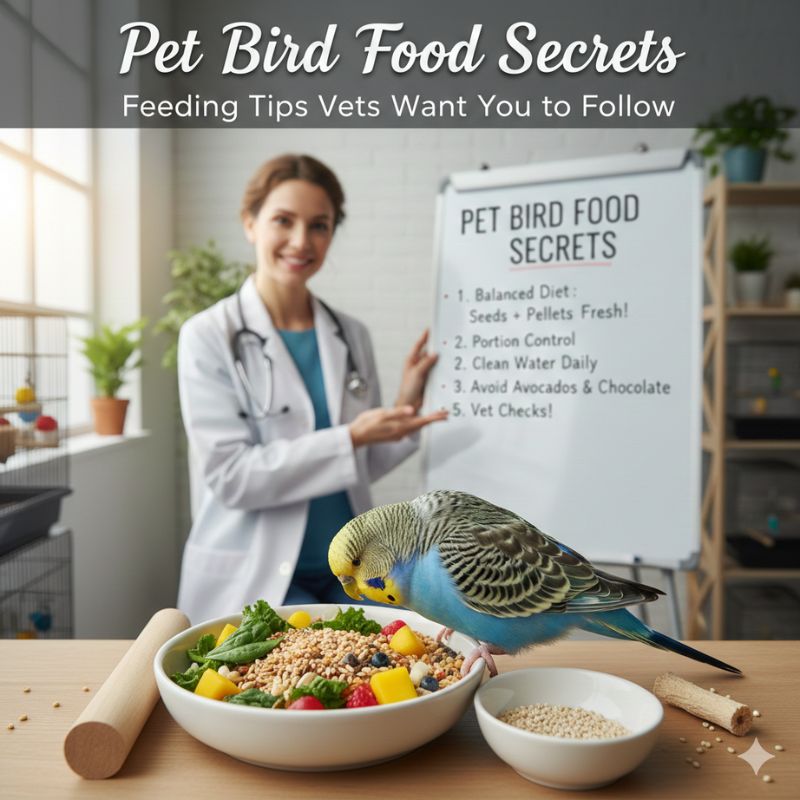
Feeding your bird may seem simple, but veterinarians agree—it’s one of the most important factors affecting a bird’s health, lifespan, and behavior. Many common feeding habits unintentionally lead to nutritional deficiencies, obesity, or stress. Understanding the secrets behind proper pet bird food can help you give your feathered companion a longer, happier, and healthier life.
In this guide, we’ll share vet-approved feeding tips and explain how choosing the right food for pet birds supports growth, immunity, and overall well-being.
Why Pet Bird Food Is More Important Than You Think
Birds have fast metabolisms and sensitive digestive systems. Feeding low-quality or unbalanced pet bird foods may keep them full but won’t give them the nutrients they truly need. Vets frequently see health problems linked directly to poor diet choices.
A well-planned bird pet food routine:
- Supports strong bones and muscles
- Boosts immune system function
- Improves feather quality and color
- Reduces stress and behavioral issues
Secret #1: Seeds Alone Are Not a Complete Diet
One of the biggest myths vets want bird owners to stop believing is that seeds are enough. While birds love seeds, seed-only diets lack essential vitamins and minerals.
What vets recommend instead:
- A balanced mix of pellets, seeds, fruits, and vegetables
- Species-specific pet bird food formulas
- Controlled portions of seeds as treats, not staples
Seeds should complement the diet—not dominate it.
Secret #2: Pellets Should Be the Foundation of Pet Bird Foods
Veterinarians often recommend pellets as the base of food for pet birds because they’re nutritionally complete and prevent selective eating.
Benefits of pellet-based bird pet food:
- Ensures consistent nutrient intake
- Reduces vitamin and mineral deficiencies
- Helps maintain healthy weight
High-quality pellets combined with fresh foods create a balanced and safe feeding plan.
Secret #3: Fresh Foods Make a Huge Difference
Fresh fruits and vegetables provide natural vitamins, antioxidants, and hydration that packaged pet bird foods may lack.
Vet-approved fresh foods include:
- Leafy greens (spinach, kale, romaine)
- Vegetables (carrots, broccoli, bell peppers)
- Fruits (apples without seeds, berries, papaya)
Adding fresh options to your pet bird food routine keeps meals exciting and nutritionally rich.
Secret #4: Portion Control Matters More Than You Realize
Overfeeding is a common issue, especially with calorie-dense bird pet food. Obesity can lead to liver disease, joint problems, and reduced lifespan.
Smart feeding tips from vets:
- Measure daily food portions
- Remove uneaten fresh food within a few hours
- Avoid constant refilling of seed bowls
Balanced portions of food for pet birds support healthy energy levels without weight gain.
Secret #5: Variety Prevents Nutritional Gaps and Boredom
Just like humans, birds benefit from variety. Feeding the same pet bird foods every day can lead to nutrient gaps and boredom.
How to add safe variety:
- Rotate fruits and vegetables weekly
- Mix textures (pellets, chopped produce, soft foods)
- Use healthy treats during training
A varied bird pet food plan keeps birds mentally stimulated and physically healthy.
Secret #6: Clean Feeding Practices Protect Bird Health
Even the best pet bird food can become harmful if feeding dishes aren’t clean. Bacteria and mold can grow quickly.
Vet-approved hygiene tips:
- Wash food and water bowls daily
- Store bird food in airtight containers
- Discard expired or damp food immediately
Clean feeding habits are just as important as the food itself.
Final Thoughts
Veterinarians agree that the right pet bird food is the foundation of lifelong bird health. By choosing balanced food for pet birds, offering fresh ingredients, controlling portions, and maintaining hygiene, you can avoid many common health problems.
Following these vet-approved feeding secrets ensures your bird stays active, vibrant, and happy—today and for years to come.
FAQs
1. What is the best pet bird food recommended by vets?
Most vets recommend a pellet-based diet supplemented with fresh fruits, vegetables, and limited seeds.
2. Can I feed my bird only homemade food?
Homemade food can support a diet but should not replace balanced pet bird foods unless guided by an avian vet.
3. How often should I change my bird’s food?
Fresh foods should be replaced daily, while pellets and dry bird pet food should be checked and refreshed as needed.
4. Are treats part of healthy food for pet birds?
Yes, but treats should be occasional and healthy, not sugary or artificial.
5. Does diet affect bird behavior?
Absolutely. Proper pet bird food supports better mood, reduced stress, and improved social behavior.