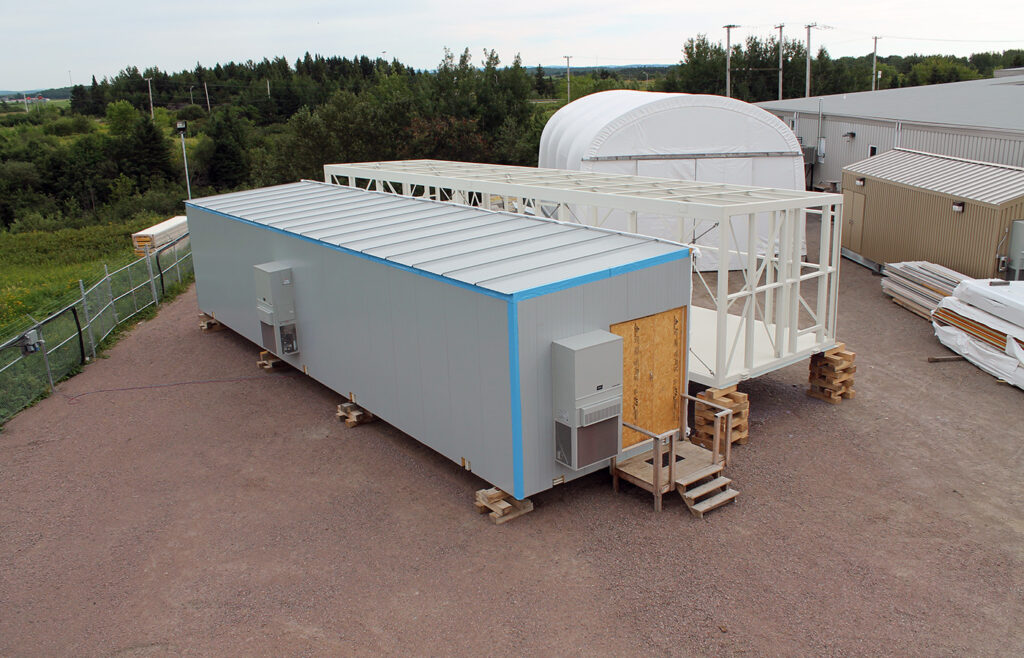
E House Manufacturer: A Practical Guide to Modular Electrical Power Infrastructure
An E House, or electrical house, is a prefabricated modular building designed to accommodate electrical distribution, control, protection, and supporting systems in a controlled enclosure. Instead of constructing an electrical room entirely at the project site, major components can be assembled, wired, inspected, and tested in a manufacturing facility before transportation. This approach can simplify project coordination, reduce site work, and make commissioning more predictable. For industries where reliable power distribution is essential, selecting the right e house manufacturer means looking beyond the enclosure itself and evaluating engineering capability, equipment integration, testing procedures, environmental design, and long-term maintainability.
What Is an E-House?
An E-House is essentially a purpose-built electrical room manufactured as a modular structure. Depending on the project, it can accommodate medium-voltage and low-voltage switchgear, motor control centres, transformers or auxiliary systems, protection relays, PLC or SCADA equipment, batteries, UPS systems, cable management, lighting, HVAC, fire detection, and other electrical auxiliaries.
The main advantage is integration. Rather than treating the building, electrical equipment, cabling, ventilation, and safety systems as completely separate packages, an E House can be engineered around the actual electrical and environmental requirements of the project. Ecotone Systems applies this integrated approach to engineered electrical-house solutions, with attention to site conditions and system layout.
Why E Houses Are Used in Modern Projects
Industrial projects often operate under strict schedules. Conventional electrical rooms can require substantial civil construction, equipment installation, field wiring, and sequential testing. A modular E House allows a significant portion of this work to take place away from the final site.
This can create a more controlled manufacturing environment and allow some site preparation activities to proceed in parallel with factory fabrication. It may also reduce exposure to weather, congested work areas, and variations in field workmanship. For remote facilities, renewable-energy installations, process plants, and infrastructure projects, these benefits can be particularly useful.
Key Features to Evaluate in an E House Manufacturer
A capable e house manufacturer should be assessed on more than fabrication quality. The engineering process is equally important. The manufacturer should understand electrical loads, voltage levels, equipment clearances, heat dissipation, cable routing, access requirements, structural loading, and the environmental conditions expected at the installation site.
The enclosure itself should be designed for the relevant climatic and operational conditions. Insulated wall and roof systems, weather protection, suitable coatings, ventilation, HVAC, lighting, emergency systems, and fire protection may all form part of the design. Where a project presents additional risks, special structural, blast-resistant, arc-resistant, or hazardous-area requirements may also need to be considered.
Electrical Equipment Integration
The value of an E House comes from how effectively its systems work together. Depending on the application, the module may contain MV switchgear, LV switchboards, MCCs, variable-frequency drives, protection relays, control panels, UPS systems, battery banks, transformers, and automation equipment.
Cable trays and internal routing should be planned so that power, control, and communication circuits remain accessible and properly separated where required. Equipment arrangement should also support safe operation, maintenance access, heat management, and future modifications. A manufacturer with strong integration experience can identify these requirements early, reducing avoidable changes during installation.
Factory Testing and Quality Control
Factory testing is one of the important reasons organizations consider modular electrical buildings. When equipment is assembled and wired before shipment, inspections and functional checks can be carried out in a controlled environment. Factory Acceptance Testing can help verify wiring, equipment interfaces, control functions, protection settings, alarms, and communication points before the module reaches the site.
Ecotone Systems emphasizes engineered and factory-tested E House solutions as part of its modular power +infrastructure offering. A structured quality process helps project teams identify issues earlier, when corrections are generally easier than after transportation and site installation.
Applications Across Industries
E Houses are suitable for many sectors where compact, reliable electrical infrastructure is required. Power-generation facilities can use them for switchgear and auxiliary systems. Oil and gas and petrochemical projects may require specially engineered modules for demanding operating environments. Renewable-energy projects can use modular electrical buildings around solar, wind, and battery-storage systems.
Other applications include mining, metals, steel, cement, rail and metro infrastructure, ports, airports, and data centres. The exact configuration varies according to the electrical load, equipment selection, site climate, access limitations, and safety requirements.
How to Select the Right E House Partner
Before appointing an e house manufacturer, project teams should review engineering capabilities, manufacturing facilities, quality systems, testing procedures, material specifications, documentation, and previous experience with comparable applications. It is also useful to clarify responsibilities for equipment integration, transportation, installation, commissioning, and after-sales support.
The manufacturer should be able to translate project data into a practical layout rather than simply supplying a standard enclosure. Factors such as future expansion, maintenance access, transport dimensions, lifting arrangements, foundation interfaces, and environmental protection should be addressed during design rather than after fabrication has started.
Conclusion
An E House is more than a prefabricated steel building. It is an integrated electrical infrastructure solution in which enclosure design, electrical equipment, controls, safety systems, environmental
protection, testing, and site requirements need to work together. Choosing an experienced e house manufacturer can therefore influence not only installation speed but also reliability, maintainability, and project coordination.
For organizations evaluating modular electrical rooms, Ecotone Systems provides an engineering-led approach focused on customized E House solutions for industrial and infrastructure applications. The right solution should always be developed around the project’s electrical requirements, site conditions, operational risks, and future needs rather than relying on a one-size-fits-all design.