In today’s competitive marketplace, businesses need more than quality products to attract and retain customers. Presentation, convenience, and brand identity also influence purchasing decisions. Packaging connects all these elements by providing a practical way to protect products while communicating a company’s personality.
From small online stores to established retail businesses, companies are paying greater attention to how their products are packaged. A carefully selected box can make products easier to handle, improve shelf presentation, and create a consistent experience for customers. This is why packaging has become an important part of business planning rather than simply an afterthought.
Packaging Is More Than a Product Container
A packaging box has several responsibilities. It holds a product, provides space for important information, and helps businesses create a recognizable presentation. Its structure and appearance can also influence how customers interact with the product.
For example, a gift box with an attractive opening style can make a purchase feel more special. A retail box with clear branding can help customers identify a product quickly. Similarly, a properly sized shipping box can make order preparation and transportation more organized.
Businesses should therefore consider packaging as part of their complete product strategy. The right design should support both practical requirements and the brand’s overall image.
Understanding Different Packaging Needs
Not every business requires the same packaging style. Product dimensions, weight, sales channels, and customer expectations all influence the choice of box.
Packaging for Online Stores
E-commerce businesses need packaging that is convenient to store, assemble, and prepare for delivery. Mailer boxes and shipping boxes are commonly used for this purpose. Their dimensions should be appropriate for the products being shipped, while additional protective materials may be needed for delicate items.
Branded packaging can also make online orders more recognizable. Including a logo, coordinated colors, or a simple printed message can create a consistent presentation when customers receive their purchases.
Packaging for Luxury Products
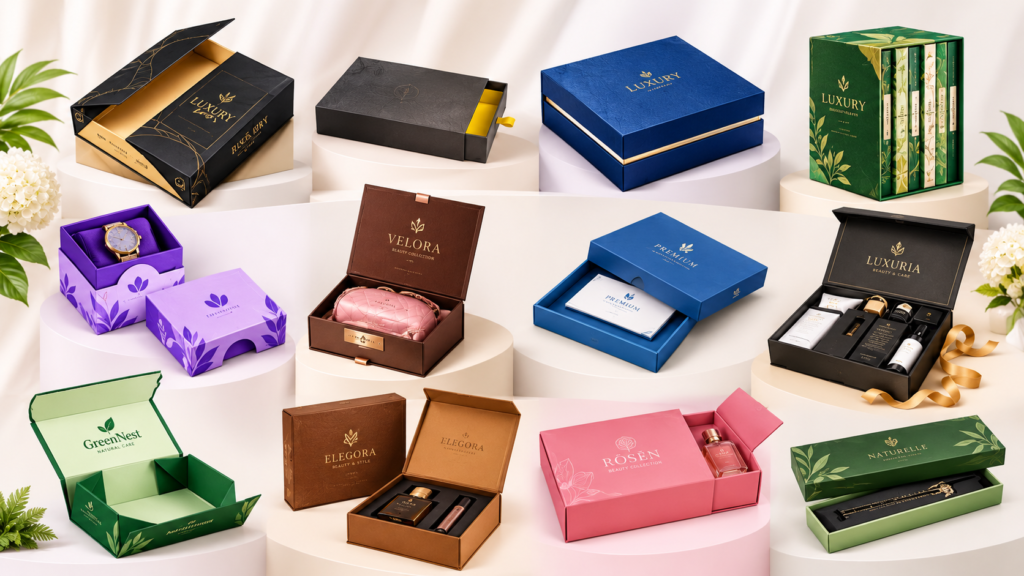
Luxury products often require packaging that reflects their premium positioning. Rigid boxes are a popular choice because their thick paperboard construction helps maintain a firm shape.
These boxes can be designed with magnetic closures, removable lids, custom inserts, and decorative finishes. They are commonly considered for jewelry, watches, premium gifts, and selected cosmetic products.
Packaging for Retail Displays
Retail packaging needs to balance appearance and functionality. Products displayed on shelves should have packaging that fits the available space and communicates relevant information clearly.
Businesses can use custom shapes, printed artwork, and different finishes to create packaging that matches their product categories. Clear branding and readable information are especially important in busy retail environments.
Packaging for Gifts and Special Occasions
Gift packaging is useful for seasonal promotions, celebrations, corporate events, and special product collections. Businesses can choose different box structures, colors, and decorative features depending on the occasion.
Custom inserts can help arrange multiple products, while coordinated printing can create a unified look for gift sets.
How Packaging Design Influences Customer Decisions
Customers often notice packaging before examining a product in detail. A clean design, suitable colors, and professional printing can help create a positive first impression.
Although attractive packaging cannot replace product quality, it can support how a business communicates its value. Consistent visual elements also make it easier for customers to recognize a brand across different products.
Some important design considerations include:
- Color selection: Choose colors that match the brand’s personality and product category.
- Typography: Use readable fonts for product information and branding.
- Logo placement: Position brand elements where customers can notice them easily.
- Box structure: Select an opening style that suits the product and customer experience.
- Finishing details: Use decorative effects carefully to create a balanced appearance.
A successful packaging design does not need to be complicated. Sometimes a simple layout with consistent branding can create a stronger impression than excessive decoration.
Selecting Materials That Match Product Requirements
Packaging materials influence both appearance and performance. Businesses should evaluate their product requirements before choosing a material.
Paperboard is frequently used for lightweight retail boxes and printed packaging. Corrugated cardboard is often selected for shipping because its layered construction provides structural support. Rigid board is suitable for premium packaging that needs a more substantial structure.
Material selection should take several factors into account, including product weight, dimensions, storage conditions, transportation, and printing requirements.
For products that require special handling, businesses should also consider whether additional inserts, protective layers, or separate outer packaging are necessary. The objective is to choose a suitable combination of material and structure rather than relying on appearance alone.
Customization Options for a Professional Brand Image
Customization gives businesses the flexibility to create packaging that matches their products and marketing goals. Instead of using the same standard design for every item, companies can select different structures and finishes for individual product categories.
Common customization options include:
Custom dimensions: Boxes can be designed around the product’s measurements to improve fit and presentation.
Printed branding: Logos, company colors, and artwork can create a consistent visual identity.
Special finishes: Matte, gloss, foil stamping, embossing, and debossing can add distinctive details.
Custom inserts: Compartments and inserts can help organize products inside the box.
Unique closures: Tuck ends, magnetic closures, and lid-and-base structures offer different opening experiences.
Choosing the right combination of these features can help businesses develop packaging that is practical, attractive, and recognizable.
Why Businesses Explore Customized Packaging Solutions
As product lines expand, packaging needs often become more varied. A company may need retail boxes for everyday products, gift boxes for seasonal collections, and shipping boxes for online orders.
Having access to multiple packaging styles can help businesses maintain a consistent brand appearance across different sales channels. It can also make it easier to select packaging according to specific product dimensions and presentation requirements.
The Premium Boxes offers businesses an opportunity to explore different packaging styles and customization possibilities. Companies looking for gift boxes, retail packaging, mailer boxes, rigid boxes, and other packaging options can discover solutions that suit their products and branding preferences.
For more information about available packaging styles, visit The Premium Boxes and explore options for different business and product requirements.
Sustainable Packaging and Responsible Design
Many businesses are considering how packaging choices affect material use and waste. Practical design decisions can help reduce unnecessary packaging components while maintaining suitable product presentation.
Right-sized boxes, paper-based materials, and reusable packaging designs are among the options companies may evaluate. However, the environmental performance of a package depends on its complete construction, including coatings, adhesives, inks, and local recycling facilities.
Businesses should review material specifications before making environmental claims. Selecting packaging that meets product requirements while avoiding unnecessary material use is a sensible starting point.
Planning Packaging for Long-Term Business Growth
Packaging decisions should support both current operations and future business needs. Companies should consider their expected order quantities, product range, storage capacity, and delivery arrangements before selecting a packaging solution.
It is also useful to request samples, review printing quality, and check box dimensions before confirming a large order. These steps can help businesses evaluate whether the selected packaging meets their expectations.
A consistent packaging strategy makes it easier to introduce new products without losing the brand’s visual identity. It also helps businesses maintain a professional appearance as their product range and customer base grow.
Conclusion
Modern packaging brings together product presentation, practical functionality, and brand communication. The right box can help businesses organize products, create a recognizable identity, and provide customers with a more professional experience.
By understanding different packaging styles, selecting appropriate materials, and using customization thoughtfully, companies can develop packaging that supports their long-term goals. Exploring the available solutions from The Premium Boxes can be a useful starting point for businesses looking to improve how their products are presented.