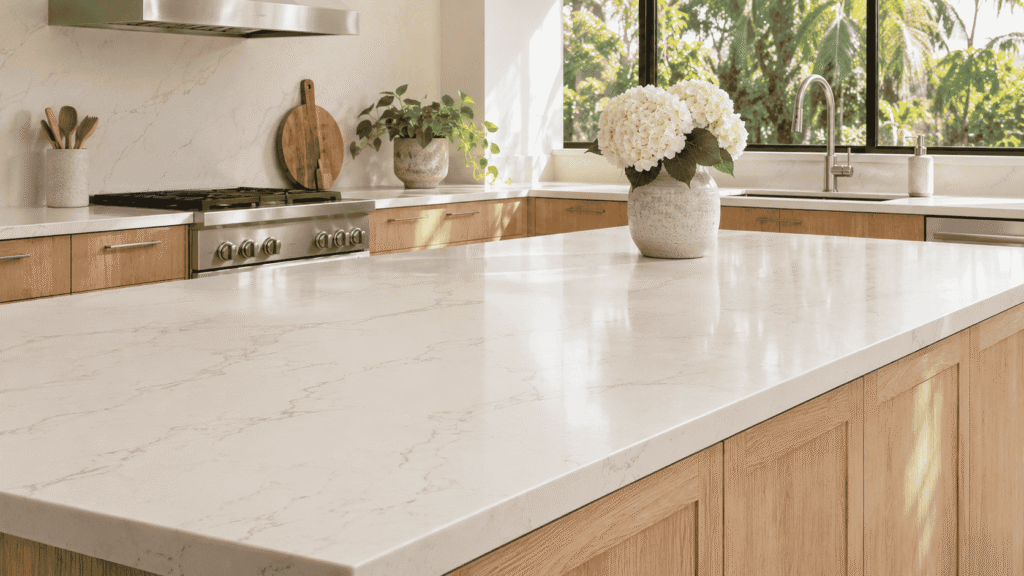
You still like the quartz in your kitchen, but the cabinets underneath it need to go. Keeping the countertop sounds like an easy way to hold on to a part of the room you already love. Before demolition starts, though, find out whether the pieces can come out intact and fit the new layout. If you’re comparing quartz countertop repair, reuse, and replacement in Tampa Bay, have a fabricator look at the existing top while the kitchen is still assembled. What they can see now may affect which cabinets, sink, or appliances you decide to order.
Decide What You Want to Keep
Start with a drawing or a wide photo of the kitchen. Mark each section of countertop and note which ones you hope to reuse. You might want to keep the island top but replace the perimeter, or save the long counter beside the stove while changing the sink run. The fabricator can assess each piece once they know which parts of the kitchen are changing.
Write down what’s driving the cabinet replacement. If the boxes are damaged but you like the layout, tell the cabinet installer you’d like to preserve the footprint where practical. If you’re replacing the cabinets to gain storage or move an appliance, mark those changes first. You may have to choose between keeping a particular piece of quartz and getting the cabinet arrangement you wanted. It’s better to see that conflict on a drawing than after either order has been placed.
Compare the New Footprint With the Existing Pieces
A countertop is made to fit a particular shape. Even if the new cabinet run is about the same length as the old one, look at what happens at its ends. Will an exposed edge still be visible? Will a side panel change how far the counter extends? Will the new cabinets sit in the same position relative to the wall, refrigerator, or doorway?
Ask the cabinet installer and fabricator to review the same drawing. Caesarstone’s installation guidance calls for checking the size, shape, and position of countertop pieces against the cabinets and walls. That’s a useful way to think about reuse. You’re checking whether the existing pieces suit the new room, including the support beneath them. If an island is moving or getting deeper, have the fabricator show whether the old top could fit as planned. A familiar footprint can help, but the finished fit still needs to be checked.
Look Closely at the Sink and Cooktop Openings
Find the model details for the sink, faucet, and cooktop if you have them. If you plan to keep those fixtures, say so before the new cabinets are ordered. Make sure the people doing the work know where the existing openings are and how the fixtures would line up with the new cabinet arrangement.
If you want to change a fixture, ask the fabricator to review the replacement model before buying it. A sink that looks close to the old one may need a different opening or support. A cooktop that fits the cabinet may still need a different cutout. Have the installer explain what can be accommodated and what changes would make reuse impractical. You may decide to keep a fixture you hadn’t planned to save because it works well with the top. Or you may decide the new fixture is important enough to change the countertop plan.
Have a Fabricator Assess the Top Before Anyone Removes It
Show the fabricator the seams, backsplash, and areas around openings. Point out existing chips, cracks, or raised joints. Take pictures so you have a record of the condition before work starts. Ask which pieces they’d attempt to save and what might make removal difficult. A counter that looks like one piece from the doorway may be joined in several places. Some sections may also meet a backsplash or fixture you’d like to keep.
Find out who will remove the top and who will handle any fixtures attached to it. Ask what the crew will do if a piece can’t be removed without damage, and whether they’ll stop to discuss alternatives. Avoid having a demolition crew start on the assumption that the countertop can be lifted out and put back later. You want the people responsible for reuse to review the installation before anyone takes it apart.
Plan Where the Pieces Will Stay Between Visits
If the countertop has to come out before the new cabinets go in, ask the fabricator who will handle and store the pieces. Find out whether the quote includes both removal and return, and what needs to be ready before they come back. Don’t assume the cabinet installer has included that work or that the pieces can simply sit wherever there’s room. Let the fabricator plan how they’ll be handled.
Build that pause into the schedule. You may be without the sink from the day the old top comes out until after the new cabinets, countertop, and plumbing are all back in place. Ask when the fabricator will check the new base and what happens if something doesn’t line up. The cabinet crew may be finished before the countertop is ready to go back. Knowing the sequence will help you plan meals and coordinate the return visits.
Compare Reuse With a Replacement Quote for the Same Area
Ask for a price that covers the complete reuse plan. Check whether it includes removal, handling, any approved adjustments, and reinstallation. If the backsplash or plumbing needs separate work, make that clear in the comparison. Then ask what it would cost to replace the same section with a new top and compare what each proposal would leave you with.
Also check the paperwork for your existing surface. Ask the manufacturer or original seller whether removal or reinstallation affects any coverage that applies to it. Ask the fabricator what, if anything, they cover for their own work. Keep those questions separate from whether the top can physically be reused. A piece may fit the new kitchen while still raising questions about the terms that apply after it’s moved.
Agree on a Backup Before Demolition Starts
Decide what you’ll do if a section can’t be saved. Could you keep the island and replace only the sink run? Would you be happy with a contrasting top in one area, or would you prefer to change both so they match? You don’t need to order extra material before you know what’s needed. You do want a plan for who will call you and what decisions you’ll need to make if the original idea stops being practical.
Keeping quartz you already like can make sense when the pieces suit the new cabinets and the fabricator can explain how they’ll be removed and refitted. Start that conversation while the old kitchen is still together. You’ll have more room to adjust the cabinet plan, decide which fixtures stay, and choose what to replace if one section can’t go back.