Straightening teeth used to mean one thing for most people — metal brackets, wires, and a mouth full of hardware for a year or two. That is still an option, and in some cases the best one, but it is no longer the only path. Clear aligners have changed what orthodontic treatment looks and feels like for millions of people, making it possible to correct alignment issues quietly, comfortably, and without the dietary restrictions and cleaning challenges that come with fixed braces. For adults especially, who often put off orthodontic work because of how conventional braces look in a professional setting, clear aligners have removed the biggest barrier to getting started.
How Clear Aligners Work to Move Your Teeth
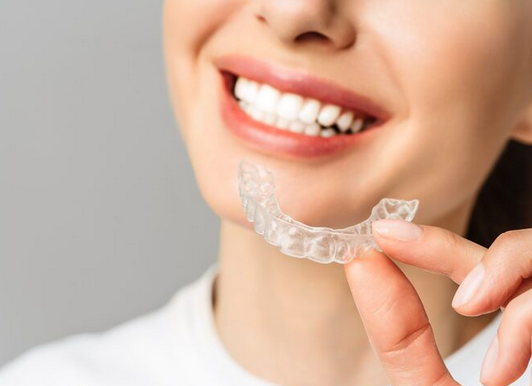
Clear aligners are a series of custom-made plastic trays, each designed to fit snugly over your teeth and apply gentle, controlled pressure to specific points. Each tray in the series moves your teeth a small amount — typically a fraction of a millimeter — and is worn for one to two weeks before being swapped out for the next one in the sequence. Over the course of the treatment, these small incremental shifts add up to significant repositioning of the teeth.
The treatment plan is mapped out digitally before a single tray is produced. Using scans or impressions of your teeth, the dental provider creates a 3D model that plots the movement of each tooth from its current position to its target position. Many providers show patients a digital preview of what their smile will look like at the end of treatment, which gives a concrete picture of the expected result before committing to the process.
What Clear Aligners Can and Cannot Fix
Clear aligners handle a broad range of alignment concerns effectively. Crowded teeth, gaps between teeth, mildly rotated teeth, and several types of bite issues — including overbite, underbite, crossbite, and open bite — can all be addressed depending on the severity. For many patients with mild to moderate concerns, clear aligners deliver results that are comparable to traditional braces.
That said, clear aligners have limitations. Severe bite discrepancies, significant vertical tooth movement, and complex cases involving jaw alignment often require traditional fixed appliances or a combination approach. An honest assessment from a qualified provider will clarify upfront whether clear aligners are genuinely suitable for your specific situation or whether another route would produce better long-term results.
What Daily Life Actually Looks Like During Treatment
One of the most practical advantages of clear aligners is that they are removable. Before eating or drinking anything other than plain water, you take the trays out, which means there are no food restrictions during treatment. You can eat whatever you want without worrying about breaking brackets or getting food caught in wires. After eating, you brush and floss normally, rinse the trays, and put them back in. Cleaning your teeth stays straightforward throughout the process.
The trays need to be worn for 20 to 22 hours per day to stay on schedule. This is the part of clear aligner treatment that requires consistent discipline. Removing the trays more than necessary — leaving them out for several hours at a time regularly — slows progress and can mean additional trays or extended treatment time. Patients who commit to the wear schedule tend to see their results track closely with the original treatment timeline.
Some people notice mild speech changes at the very beginning — a slight lisp or adjustment period while the tongue adapts to the trays. This typically resolves within a few days as you get used to speaking with the aligners in place.
Discomfort, Attachments, and Mid-Course Adjustments
Each time you switch to a new tray, some pressure and mild soreness is normal for the first day or two as the teeth begin responding to the new position. This is not the same as the sharp discomfort some people experience after traditional braces are tightened — it is more of a dull awareness that fades quickly. Over-the-counter pain relievers handle it easily if needed.
Some cases require small tooth-colored attachments bonded to the teeth to give the aligners more grip for certain types of movement. These attachments are subtle and tooth-colored, so they blend in reasonably well, but they are worth knowing about in advance. Mid-treatment refinements — additional trays produced after reviewing progress — are also common and are a normal part of the process rather than a sign that something went wrong.
Keeping the Results After Treatment Ends
Finishing your final tray is not the end of the story. Teeth have a memory and will drift back toward their original positions without retention. A retainer — either a fixed wire bonded behind the teeth, a removable clear retainer, or both — is prescribed after treatment to hold everything in place. Wearing the retainer as directed is what makes the results permanent rather than temporary.
For anyone who has been considering orthodontic treatment but has held off because of how conventional braces would look or feel, clear aligners represent a genuinely different experience — one where treatment fits around your life rather than the other way around. A consultation with a provider experienced in aligner therapy is the clearest way to find out whether this is the right fit for your teeth, your timeline, and your goals.