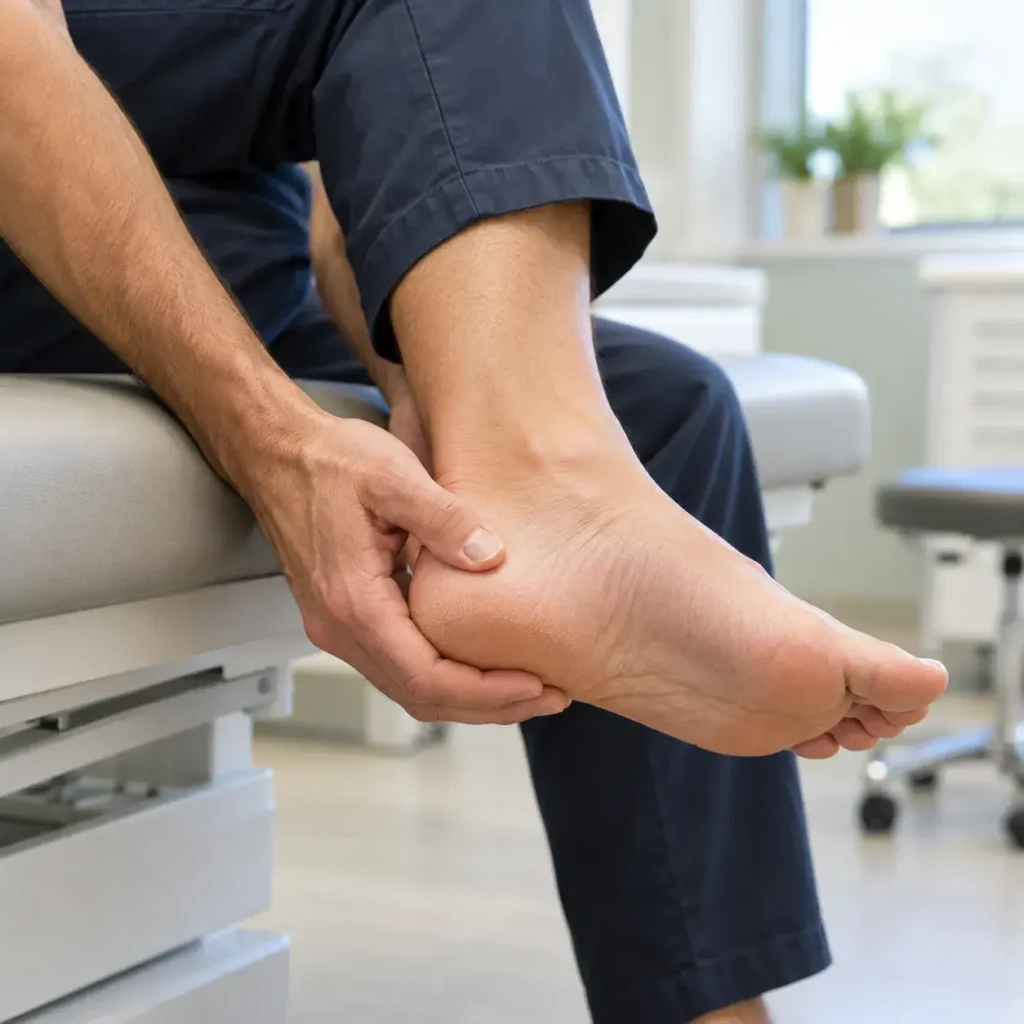
Heel pain can turn simple activities such as walking, standing, exercising, or getting out of bed into uncomfortable experiences. For some people, the discomfort is strongest during the first few steps in the morning. Others notice it after long hours on their feet or following physical activity. Finding the right approach depends on understanding what is causing the pain.
Heel pain chiropractic treatment may be considered as part of a conservative care plan for certain musculoskeletal conditions affecting the feet, ankles, and lower limbs. Depending on the cause, care may include movement assessment, advice about footwear, mobility exercises, and appropriate manual techniques. However, not every case of heel pain responds to the same treatment, and an accurate assessment is important before starting care.
This guide explores common causes of heel pain, how chiropractic care may fit into treatment, and practical steps that can help support recovery.
What Causes Heel Pain?
Heel pain can develop for several reasons. Its location, severity, duration, and relationship to activity can help a healthcare professional determine the likely cause.
Plantar Fasciitis
Plantar fasciitis is a common cause of pain underneath the heel. It involves irritation of the plantar fascia, a strong band of tissue that helps support the arch of the foot.
People with plantar fasciitis often experience pain during their first steps after sleeping or sitting for a while. Symptoms may ease as they move around but return after prolonged standing or walking.
Achilles Tendinopathy
The Achilles tendon connects the calf muscles to the heel bone. Repeated loading, sudden increases in exercise, or inadequate recovery can contribute to pain near the back of the heel.
Discomfort may occur during walking, running, climbing stairs, or pushing off the foot.
Overuse and Footwear Problems
Long periods of standing, increased walking or running, and shoes that do not suit a person’s activity can contribute to heel discomfort. Changes in training intensity or walking surfaces may also place additional stress on the feet.
Other causes include heel bursitis, nerve irritation, stress fractures, and inflammatory conditions. Persistent or severe pain should not automatically be assumed to be plantar fasciitis.
How Heel Pain Chiropractic Treatment May Help
The goal of heel pain care is to identify the source of discomfort and choose appropriate ways to improve comfort, movement, and daily function. Chiropractic treatment may be considered for selected musculoskeletal problems, but evidence specifically supporting chiropractic treatment for heel pain is limited. It should not be presented as a proven cure for every heel condition.
Assessing Foot and Ankle Movement
A chiropractor may assess ankle mobility, foot movement, walking patterns, and the surrounding musculoskeletal system. This assessment can help identify movement limitations that may contribute to discomfort.
If the symptoms suggest a condition requiring a different type of care, the patient may need evaluation by a physician, podiatrist, or another qualified healthcare professional.
Addressing Related Muscle Tightness
Tight calf muscles can place additional tension on the structures around the heel. Depending on the diagnosis, a treatment plan may include gentle mobility work or stretching recommendations.
For plantar fasciitis, the American Academy of Orthopaedic Surgeons recommends stretching the calf muscles and plantar fascia as part of nonsurgical management. AAOS guidance
Supporting Overall Movement
Heel discomfort can change how someone walks. A person may shift weight to the opposite foot or avoid putting pressure on the painful area. Over time, these adjustments can affect other parts of the lower body.
An appropriate care plan can address movement habits while avoiding techniques that aggravate the injury. Treatment should be adjusted according to symptoms and clinical findings.
Practical Ways to Manage Heel Pain at Home
Home care can play an important role in recovery, particularly for common overuse conditions such as plantar fasciitis.
Consider these practical steps:
- Wear supportive shoes: Choose comfortable footwear with suitable cushioning and support. Avoid walking barefoot on hard surfaces if it increases pain.
- Modify aggravating activities: Temporarily reduce running, jumping, or prolonged standing when these activities worsen symptoms.
- Try gentle stretching: Calf and plantar fascia stretches may help when appropriate for the condition.
- Apply cold therapy: A cold pack wrapped in a towel for up to 20 minutes may help relieve discomfort.
- Increase activity gradually: Avoid suddenly increasing walking distance, running intensity, or time spent standing.
- Consider heel pads or insoles: These may improve comfort for some people, although the best option depends on the cause of the pain.
These measures are consistent with general heel-pain guidance from the NHS. Stop any exercise that causes sharp or worsening pain, and seek professional advice if symptoms persist.
When Should You Seek Medical Attention?
Persistent heel pain should not be ignored. A healthcare professional can help distinguish common overuse problems from conditions that require different treatment.
Arrange an assessment if pain is severe, keeps returning, interferes with normal activities, or does not improve after about two weeks of appropriate home care.
Seek urgent medical attention if heel pain follows a significant injury, you cannot walk, the foot becomes visibly deformed, or there is substantial swelling or bruising. People with diabetes should also seek professional advice promptly about new foot pain.
Early assessment is especially important when symptoms include numbness, tingling, fever, or increasing redness and warmth.
How Wang Family Chiropractic Fits Into a Care Plan
People in Naperville looking for help with musculoskeletal discomfort may consider Wang Family Chiropractic as one potential starting point for discussing their symptoms and care options.
The most appropriate next step depends on the cause of the heel pain. A responsible treatment approach should include an assessment, realistic expectations, and referral to another healthcare professional when needed. Chiropractic care may be considered alongside suitable stretching, footwear changes, activity modification, or other treatments recommended for the diagnosed condition.
Conclusion
Heel pain chiropractic treatment may be considered as part of a broader conservative care plan for selected musculoskeletal concerns, but the first priority is identifying the actual cause of the pain. Plantar fasciitis, Achilles tendinopathy, overuse, and other conditions can produce similar symptoms while requiring different approaches.
Supportive footwear, appropriate stretching, activity modification, and professional evaluation are important elements of heel pain management. Chiropractic care may have a role for some patients, although evidence specific to heel pain remains limited and treatment outcomes vary.
For individuals in Naperville, consulting an appropriately qualified healthcare professional can help determine the most suitable next steps. With an accurate assessment and a plan tailored to the underlying condition, patients can work toward more comfortable movement and a safe return to daily activities.
Frequently Asked Questions
1. Can chiropractic treatment help with heel pain?
It may be considered as part of a conservative care plan for selected musculoskeletal problems. However, evidence specifically supporting chiropractic treatment for heel pain is limited, and suitability depends on the diagnosis.
2. Can a chiropractor help with plantar fasciitis?
A chiropractor may assess foot and ankle movement and discuss appropriate conservative strategies. Stretching, activity modification, and supportive footwear are commonly recommended for plantar fasciitis. Persistent symptoms may require evaluation by a physician or podiatrist.
3. What is the most common cause of heel pain?
Plantar fasciitis is a common cause of pain underneath the heel, particularly pain that is worse during the first steps in the morning or after sitting for a while. Other conditions can cause similar symptoms.
4. What exercises may help relieve heel pain?
Depending on the diagnosis, gentle calf stretches and plantar fascia stretches may help. Exercises should be performed carefully and stopped if they increase pain. A healthcare professional can recommend suitable movements for the specific condition.
5. When should I see a healthcare professional for heel pain?
Seek an assessment if the pain is severe, worsening, recurrent, or interfering with normal activities. Urgent evaluation is needed after a significant injury or when you cannot walk. People with diabetes should seek prompt professional advice for new foot pain.