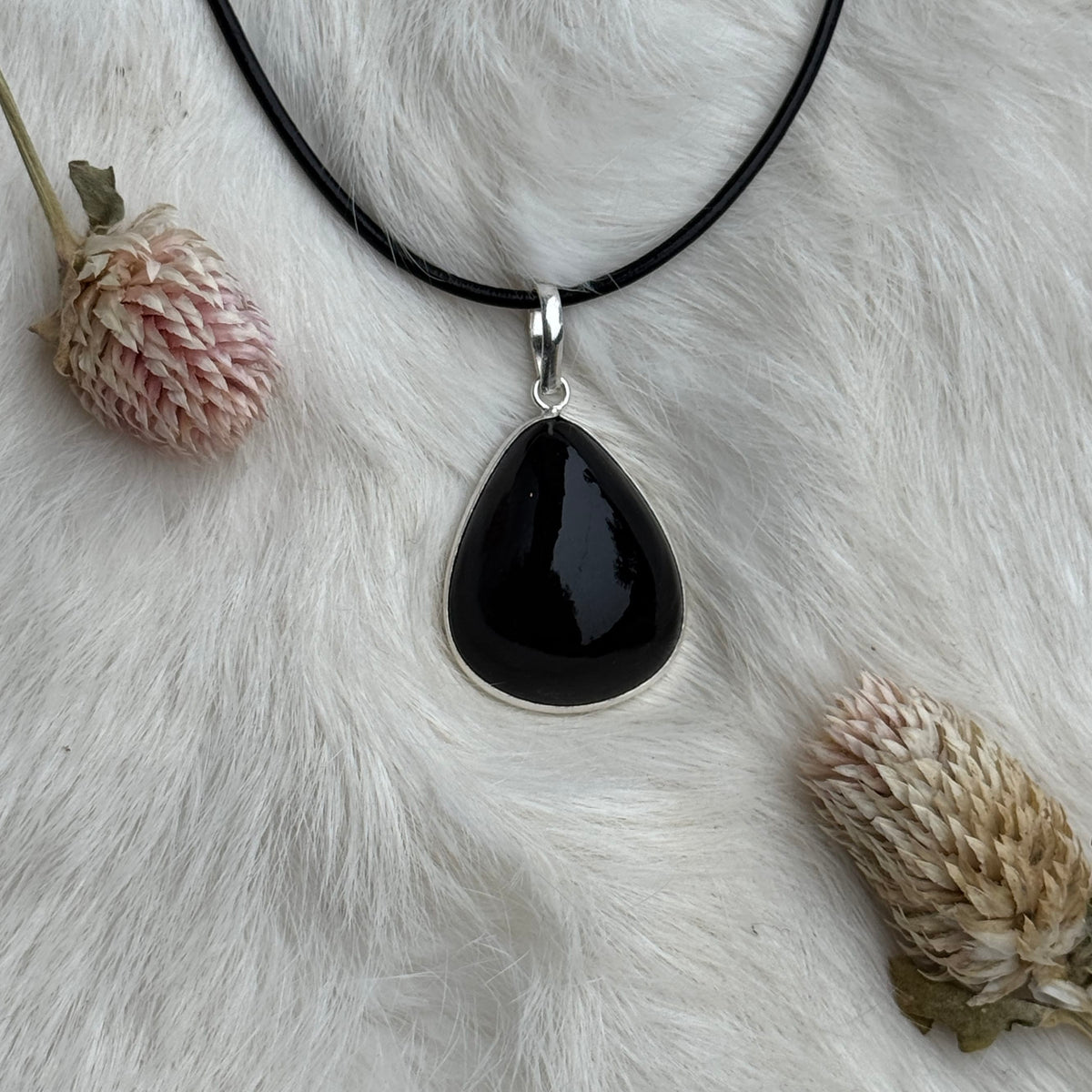
You see one for $12 online and another for $400 in a boutique, and both claim to be real obsidian. So what should a fair price look like? A genuine black obsidian necklace can cost almost anything, because the stone itself is inexpensive while the metal, craftsmanship, and brand change the total. This guide breaks down typical US prices, what drives them, and how to avoid paying silver prices for glass.
What Buyers in the US Typically Pay
Most genuine obsidian necklaces sold in the US land between about $15 and $200. Pieces above that range exist, but they usually owe their price to a designer name, handmade work, or precious metal rather than to the stone.
The low end is crowded with mass-produced listings. One marketplace seller offers a natural obsidian gemstone pendant necklace for about US $15. At that price, the chain is often plated rather than precious metal, and the listing may say little about where the stone came from.
In the middle, prices become easier to justify. An independent jeweler lists a polished obsidian pendant with a sterling silver bail, on a sterling chain, for $99. On an international design marketplace, a 925 silver obsidian pendant sells for about US$86, with the chain sold separately.
Prices also shift with timing and location. Currency conversion, sales tax, shipping, and seasonal sales can all change the final amount, so treat every figure here as a starting point and check current listings before you buy.
Why the Stone Is the Cheapest Part of the Necklace
Obsidian is volcanic glass. It forms when silica-rich lava cools rapidly after an eruption. Because many volcanic regions produce it, supply is rarely a problem. Retail bead listings name Mexico, the USA, Iceland, Japan, and Armenia among its typical origins. One guide also notes that the stone is neither especially rare nor expensive.
That abundance explains why a necklace’s price says little about the stone’s value. A $15 pendant and a $99 pendant may hold nearly identical pieces of obsidian. The difference lies in the setting, the finishing, the chain, and the seller’s overhead.
Hardness plays a role as well. Obsidian measures between 5 and 5.5 on the Mohs scale, so jewelers recommend protective bezel settings over prongs. Makers who protect the stone and finish its edges carefully spend more time on each piece, and you pay for that time.
What Pushes the Price Up or Down
Metal, Chain, and Clasp
Metal is usually the biggest variable. A plated chain costs very little, while sterling silver (925) raises both the material cost and the perceived quality. One buying guide advises comparing the silver weight against the asking price to judge whether a price is fair.
Details matter here. The $99 pendant mentioned earlier lists a 1.25 mm sterling chain and a lobster clasp. A thin chain with a weak clasp can fail long before the stone does.
Gold changes the picture entirely. Dealers such as 1stDibs list antique pieces with obsidian set in 9k gold. Those belong in a separate pricing category from everyday silver jewelry.
Bead Size, Cut, and Carving
A strand of small round beads is the simplest format and generally the cheapest. Larger beads, evenly matched sizing, and polished pendants with clean edges require more material and more finishing.
Carving raises the price further. 1stDibs, for instance, lists a one-of-a-kind hand-carved obsidian pendant inspired by a scarab design. In a piece like that, you are paying for hours of labor rather than for raw stone.
Obsidian Varieties
Plain black is the most affordable variety. Patterned types, such as silver sheen obsidian, are often listed separately and can cost more in finished silver jewelry.
Treat brightly colored “obsidian” with suspicion. Imitations made from manufactured glass or slag commonly appear in vivid shades such as blue, green, red, and purple. A vivid color at a bargain price is a warning sign rather than a deal.
Brand, Maker, and Vintage Value
Designer labels add design work, packaging, warranties, and retail margin. One European fashion jewelry brand lists a necklace of 7 mm matte obsidian beads in blackened sterling silver at €279. Another obsidian meditation necklace from the same brand is listed at $429 before VAT. The stone in both is ordinary obsidian. The price reflects the design and the brand.
Handmade artisan work follows the same logic. Pieces such as Navajo-made obsidian and sterling silver pendants sold by specialty dealers are priced for craft and provenance, not for the stone.
Obsidian Necklace Price Tiers at a Glance
The table below groups typical offerings into four tiers. The ranges are estimates based on the listings reviewed for this article, not fixed prices, and individual sellers will vary.
| Tier | Approximate US Price | What You Usually Get | What to Check Before Buying |
|---|---|---|---|
| Budget | Under $30 | Marketplace pendants or bead strands, often with plated or base-metal chains | How the seller describes the stone, return policy, chain material |
| Entry silver | $30–$120 | Small sterling silver pendants or silver-accented necklaces from independent sellers | 925 hallmark, bezel quality, whether a chain is included |
| Mid-range | $120–$250 | Sterling pendant on a sterling chain, larger polished stones, fashion-brand beaded styles | Silver weight, clasp strength, warranty terms |
| Premium | $250 and up | Designer-label, handmade artisan, gold-set, or antique pieces | Maker’s mark, provenance, appraisal for vintage items |
Most shoppers will find the best balance in the entry silver and lower mid-range tiers. One buying guide makes a similar point, describing the mid-range as where authenticity and reasonable cost tend to meet. Budget pieces can be perfectly good for occasional wear, but they leave you doing more of your own verification.
Making Sure the Price Reflects a Real Stone
A low price is not the only thing to watch. The most common imitation is also glass, which makes verification harder than it sounds. Natural obsidian is glass formed by nature, and even gem professionals may struggle to separate it from manufactured glass without additional tools.
Simple Checks You Can Do Yourself
Start with color and light. Hold the piece up to a bright light. Natural black obsidian stays dark, while some glass imitations show green, amber, or purple tones when backlit. Large, round air bubbles also suggest manufactured glass, although tiny flaws are not unusual in natural stone.
Hardness tests exist, since obsidian sits at 5 to 5.5 on the Mohs scale. However, scratching a finished necklace can permanently damage it. Use that test on loose stones, not on jewelry you plan to wear.
For an expensive purchase, ask an independent gemologist to examine the piece. The fee is small compared with overpaying for glass.
Listing Red Flags
Some warning signs appear in the listing itself. A missing hallmark, vague wording such as “natural black stone,” and absent seller contact details are all flagged as red flags in one buying guide.
Be careful with blanket phrases like “100% genuine” that never name the stone, its treatment, or the metal. A trustworthy seller tells you what the piece is made of and answers direct questions about it. If a seller refuses to say whether the stone is natural obsidian, walk away.
What Ownership Costs After the Purchase
The purchase price is not the only cost. Obsidian’s moderate hardness means it needs gentler handling than quartz or sapphire. Care guidance for obsidian is simple: mild soap, a soft cloth, and careful handling.
Storage matters too. Keep obsidian away from harder materials in a jewelry box to prevent scratching. A small pouch or a lined compartment solves the problem for a few dollars.
Sterling silver adds one more chore, because it tarnishes over time. A polishing cloth keeps the metal bright. Overall, upkeep is cheap, but a chipped stone usually means replacing the pendant, which is why sturdier construction can save money on pieces you wear often.
How to Set a Budget and Shop With Confidence
Start by deciding how you will wear the piece. A pendant for occasional outfits can sit comfortably in the budget or entry tier. A necklace you plan to wear daily deserves sturdier construction: a sterling chain, a secure clasp, and a bezel that protects the stone’s edges.
Next, compare listings by specifics rather than photos. Look for the stone named as natural obsidian, the metal described as 925 sterling silver, the pendant dimensions, the chain length, and the clasp type. The $99 listing mentioned earlier is a good model, since it gives the pendant diameter, thickness, chain width, and clasp style. A listing that offers none of that gives you nothing to hold the seller to.
Then check the policies. A clear return window and a warranty are worth real money on a piece you cannot inspect in person. Overseas sellers add shipping time, possible import fees, and currency conversion, so the cheapest sticker price is not always the cheapest total.
Finally, avoid chasing the lowest price or the highest. In the middle of the market, where independent jewelers and small studios work, you typically get genuine stone, real silver, and a seller who can answer questions. For most buyers, that is where the value sits.
Conclusion
A genuine obsidian necklace can cost anywhere from about $15 to several hundred dollars, and the stone accounts for only a small part of that spread. Metal, craftsmanship, brand, and seller reliability decide the rest. Match the price tier to how you plan to wear the piece, read listings for specifics, and treat vague descriptions or unusual colors with caution. Spend a little more for sterling silver and clear return terms if you want daily wear. Whatever you choose, ask questions before you pay.
Frequently Asked Questions
1. Is a cheap obsidian necklace always fake?
No. Obsidian is an inexpensive stone, so a low price alone does not prove a fake. The concern is a low price paired with a vague description, vivid colors, or a seller who will not name the material.
2. How much should a sterling silver obsidian necklace cost?
Based on the listings reviewed here, a small sterling silver pendant on a sterling chain from an independent seller was about $99, and a pendant alone was about $86. Expect roughly $80 to $150 for a typical piece, with variation by weight and finish.
3. Does obsidian scratch easily?
It can. Obsidian rates 5 to 5.5 on the Mohs scale, so harder materials such as quartz can mark it. Store it separately and clean it with mild soap and a soft cloth.
4. Can I tell real obsidian from glass at home?
Not reliably. Both are glass, and even professionals may need extra tools. Backlighting, bubble size, and color give clues, but a gemologist’s opinion is safer for costly purchases.
5. Is a designer obsidian necklace worth the extra money?
It depends on what you value. You are paying for design, packaging, and warranty rather than a better stone. If those matter to you, the premium can make sense. If you want the stone itself, an independent jeweler offers better value.