The question of wired or wireless nurse call systems is common to every hospital administrator who plans a new ward or renovates an old one. Either way. Both ring when a patient pushes a button at the nurse station. But they are suitable for very different buildings, budgets and timeframes, and choosing the wrong one creates problems that last for years.
I have seen both choices go right and both go wrong after more than two decades of installing hospital infrastructure across India. This is how I tell hospitals to decide.
What does every nurse call system do?
Take away the brochures and a nurse call system has five parts:
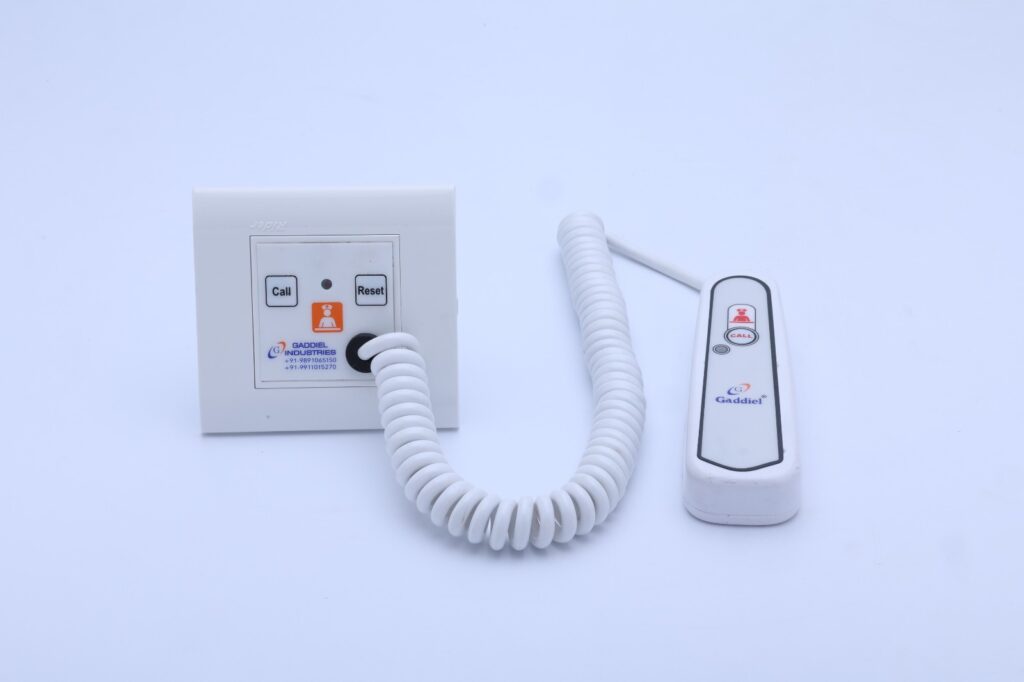
- Bedside calling unit with a patient handset allowing the patient to call without getting up.
- Toilet emergency unit with a pull cord. The bathroom is the most common place for a patient to fall when alone.
- A corridor or door light outside each room so a nurse walking by knows which room she needs to go to.
- Central screen at the nurse station showing the bed number with a sound alert.
- Bedside reset, so that a call is cleared only when a nurse has actually reached the patient.
The last point is more important than people think. The ability to clear the system from the nurse’s station encourages staff to silence calls without answering them. The built-in bedside reset creates accountability.
When wired is the right choice
A wired system connects each unit to a central hub by cable. It is the natural choice for new construction, where conduits can be laid during civil works and hidden in walls or bed-head panels.
Obvious strengths of wired systems:
- No need to change batteries. Each unit is powered by low voltage from the hub.
- No interference: Signals do not interfere with medical devices, mobile phones or Wi-Fi.
- Long lifespan: Once correctly installed, a wired system can last 10 to 15 years with regular maintenance.
- Additional features: More sophisticated wired models include Code Blue, a “additional help” button, and large monitor displays that show several calls at once.
The trade-off is installation. Cable has to be designed in at the planning stage and adding beds later means pulling new cable.
When Wireless Is the Better Choice?
A wireless system uses battery-powered units for the bed and toilet that send a radio signal to a receiver that displays the call on a tablet, LCD or smart TV. Repeaters give extra range over several floors.
Wireless is often the best choice when:
- Operating hospitals that cannot close wards or tear down walls for wiring.
- Heritage or rented buildings where chasing walls is not permitted.
- Sudden expansions, like converting a floor into a makeshift ward.
- Smaller nursing homes that want a system up and running in days.
Battery management and range planning are the trade-offs. There must be a battery replacement schedule and a site survey should check signal strength in every room, even toilets, which are often behind extra walls.
A Simple Guide to Making Decisions
Situation Best option
New hospital, wiring can be installed during construction: Cabled
The running of the hospital wards cannot be closed. Wireless ICU, HDU or critical care floors Wired (or wired backbone).
Fast-track or temporary wards Wireless
Very large campus with many blocks: wired per block, or wireless with repeaters after a survey
Many hospitals end up with both. Wired in the new tower, wireless in the old building. That makes perfect sense as long as the nurse stations display calls the same way so staff doesn’t have to learn two habits.
Questions to ask any vendor
Ask before you sign a purchase order:
- Can calls only be answered at the bedside?
- Can the pull cord be reached from the floor on the toilet unit?
- How are multiple simultaneous calls represented?
- What is the battery life of wireless units and who changes them?
- Service and spares locally available and AMC?
- Can the system scale from 20 beds to 200 without changing the core?
A good supplier will ask you questions too. How many beds? How many toilets? Where do the nurse stations sit? How far does each corridor run? Beware if you get the quote without a site visit.
Final Thought
There is no better technology. Good planning is rewarded in new buildings by wired systems; running hospitals are rescued from disruption by wireless systems. The right choice depends on your building, your timeline and who will be maintaining the system after handover.
If you are comparing options for your hospital you can see the components of a nurse call system for hospitals in both wired and wireless versions and plan from there.
Mr S.V. Singh has over 22 years of experience in hospital infrastructure, including modular operation theatres, medical gas pipeline system and nurse call system. He is the head of Gaddiel Industries, Ghaziabad.