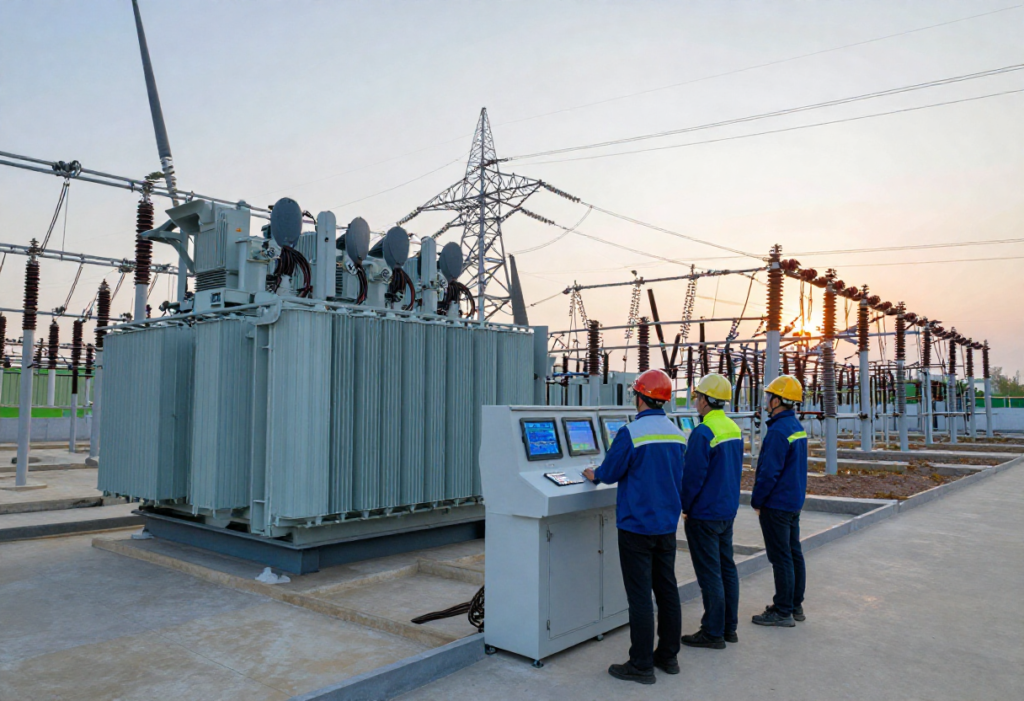
Power systems across the world are rapidly evolving to meet increasing electricity demand, renewable energy integration, and the need for greater grid reliability. One of the most important developments supporting this transformation is the emergence of digital substations. By combining advanced communication technologies, intelligent devices, and automation systems, digital substations are reshaping how power networks are designed and operated.
Modern electrical substation design now focuses not only on delivering power safely but also on improving data communication, automation, and operational efficiency. For utilities and industries moving toward smart grids, digital substations provide the foundation for a more intelligent and flexible power infrastructure.
The Shift from Conventional to Digital Substations
Traditional substations rely heavily on copper wiring, electromechanical relays, and manual monitoring systems. While these systems have served the power industry for decades, they often lack the flexibility and data visibility required for modern grid management.
Digital substations replace conventional wiring with fiber-optic communication networks and intelligent electronic devices (IEDs). These devices collect real-time operational data and communicate with control systems through standardized protocols such as IEC 61850. This approach reduces physical wiring complexity while enabling faster and more reliable communication between equipment.
For engineers involved in substation engineering design, this transition represents a major opportunity to create systems that are more scalable, automated, and easier to maintain.
Role of Intelligent Electronic Devices (IEDs)
At the heart of digital substations are Intelligent Electronic Devices. These smart components perform multiple tasks, including protection, control, monitoring, and automation of electrical equipment.
IEDs continuously collect operational data such as voltage, current, and equipment status. This data is transmitted across a digital communication network where it can be analyzed in real time. As a result, grid operators gain better visibility into system performance and can respond more quickly to potential faults or disruptions.
In modern substation design & engineering, the integration of IEDs significantly improves fault detection, reduces outage times, and supports predictive maintenance strategies.
IEC 61850: The Backbone of Digital Substations
One of the most significant innovations enabling digital substations is the IEC 61850 communication standard. This global standard defines how devices communicate within a substation, ensuring interoperability between equipment from different manufacturers.
IEC 61850 introduces the concept of process bus and station bus communication. Instead of transmitting analog signals through copper wiring, digital signals are sent over fiber-optic networks. This reduces installation costs, improves data accuracy, and simplifies system expansion.
By adopting IEC 61850, engineers can design substations that are more flexible, modular, and easier to upgrade as grid requirements evolve.
Improved Safety and Operational Efficiency
Digital substations offer major safety advantages compared to traditional systems. With fewer copper connections and increased use of fiber optics, there is a significant reduction in electromagnetic interference and electrical hazards.
Automation also minimizes the need for manual intervention during system monitoring and maintenance. Operators can remotely analyze equipment conditions and make adjustments without physically accessing high-voltage areas.
Additionally, digital monitoring systems provide detailed diagnostics that help identify potential equipment failures before they occur. This predictive approach not only improves reliability but also reduces maintenance costs over time.
Optimizing Electrical Substation Layout with Digital Technology
Digital technology is also transforming the way engineers plan and implement the electrical substation layout. Traditional layouts often required large control rooms filled with relay panels and extensive wiring infrastructure.
With digital systems, many of these components can be consolidated into compact control cabinets, significantly reducing space requirements. Fiber-optic communication allows equipment to be distributed more efficiently across the site while maintaining seamless connectivity.
This flexibility enables engineers to optimize land use, improve equipment accessibility, and design substations that are easier to expand in the future.
Integration with Smart Grid Technologies
Digital substations play a crucial role in supporting modern smart grids. As renewable energy sources such as solar and wind become more common, power systems must be capable of managing fluctuating generation levels and bidirectional power flows.
Digital substations provide the advanced monitoring and control capabilities required to handle these challenges. Real-time data exchange between substations and grid control centers enables better load balancing, faster fault isolation, and improved system stability.
Furthermore, digital communication systems make it easier to integrate energy storage systems, distributed generation, and advanced grid analytics tools.
The Future of Digital Substation Development
As power networks continue to modernize, digital substations will become the standard for new grid infrastructure projects. Technologies such as artificial intelligence, advanced analytics, and cloud-based monitoring platforms are expected to further enhance substation performance in the coming years.
Future developments may include autonomous grid control systems, enhanced cybersecurity frameworks, and even greater integration with renewable energy resources. These innovations will allow utilities to operate more resilient, efficient, and sustainable power networks.
For organizations investing in modern power infrastructure, adopting digital substation technologies is no longer optional—it is essential for building the smart grids of tomorrow.