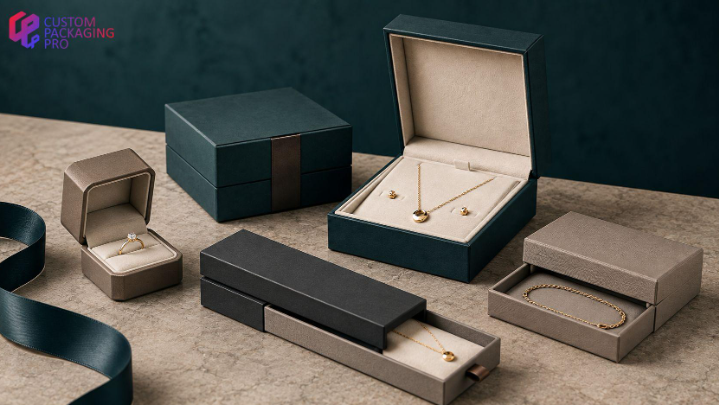
Jewellery is often selected to mark a relationship, achievement or important occasion. Before the customer sees the piece in full, its box has already started to shape expectations. Well-planned jewellery packaging can make a product feel considered, protected and ready to give, while weak or poorly fitted packaging may reduce confidence in the purchase.
The box must do more than look attractive. It should limit unnecessary movement, keep delicate surfaces away from rough contact and present the item in a clear position. When structure, insert and branding work together, packaging can support both product safety and perceived value without distracting from the jewellery itself.
Match the Box to the Type of Jewellery
Different pieces require different internal arrangements. A ring needs a secure slot that holds it upright, while earrings may need paired holes or a removable card. Necklaces and pendants benefit from anchor points that reduce tangling, and bracelets may require a curved support or a wider padded recess.
Using one oversized box for every item can waste material and create movement. A small, coordinated range of sizes is often more practical. Brands can retain a consistent exterior design while changing the insert and dimensions to suit each product category.
Prevent Movement, Scratches and Tangling
Jewellery can be affected by rubbing, loose components and pressure during handling. A fitted insert helps keep the piece in place so it does not strike the walls of the box or arrive in an untidy position. Soft contact surfaces are particularly important for polished metals, stones and fine chains.
Packaging is not a substitute for appropriate product care, but it can reduce avoidable movement. The complete pack should be tested with the actual item rather than an empty box. This reveals whether clasps, posts, chains or raised settings touch any area that could cause damage.
Choose Rigid, Cardboard or Kraft Jewellery Boxes
Rigid jewellery boxes offer a firm structure and may suit premium collections, gifts and pieces intended for long-term storage. Cardboard boxes can provide a lighter, printable option for everyday retail ranges, while kraft jewellery boxes can support a natural, understated presentation.
The material should be selected according to product weight, retail position, shipping method and expected reuse. A heavier box is not automatically better. Customers usually notice proportion, finish and construction quality more than unnecessary bulk.
Use Foam, Velvet and Custom-Fitted Inserts
The insert connects the jewellery to the outer box. Foam can be cut to hold specific shapes, while velvet or fabric-covered inserts can create a softer visual and tactile finish. Card inserts may suit lightweight items or brands seeking a simpler material system.
A good insert should secure the piece while allowing easy removal. Slots that are too tight can make handling awkward, and deep recesses may hide important details. Brands should check the insert with every size variation in the collection before approving a larger order.
Create a Premium Look with Closures and Finishes
Closures affect the opening experience. Magnetic lids can provide a neat, controlled action, while lift-off lids, sleeves and hinged boxes offer different levels of formality. The choice should suit the product and remain simple for customers and retail staff to use.
Matt, soft-touch, satin and gloss finishes each create a different surface character. Foil stamping or embossing can highlight a logo without covering the box in decoration. Premium packaging often feels confident because it uses a small number of details consistently rather than combining every available effect.

Add Branding Without Overdesigning the Box
Custom packaging for jewellery can carry a logo, brand colour, collection name or short message. These elements help customers connect the piece with the business and can improve recognition when the box is photographed, gifted or kept after purchase.
Branding should remain readable and correctly positioned across folds, lids and sleeves. Small metallic logos can lose detail, while large graphics may compete with the jewellery. A flat proof, 3D mock-up or physical sample helps confirm scale and alignment before production.
Design Jewellery Packaging for Gifting
Many jewellery purchases are gifts, so the package may be opened in front of another person. A clean exterior, secure closure and well-positioned piece make that moment feel complete. Gift-ready design can also reduce the need for extra wrapping when the customer prefers a simple presentation.
The interior may include a small message card, care instructions or authenticity information when relevant. These additions should have a defined place so they do not cover the jewellery or move loosely around the box.
Select Sustainable Materials Carefully
Brands increasingly consider recycled board, reduced plastic content and components that are easier to separate. These choices can support a more responsible packaging strategy, but environmental statements must remain specific and supported by the actual material specification.
Reducing unnecessary size can be as important as changing material. A compact box uses less board, takes up less storage space and may reduce the volume of outer packaging required for delivery. Durability also matters when the customer is expected to reuse the box for storage.
Plan Custom Sizes for Retail Collections
Custom sizes allow a brand to build packaging around its real products rather than forcing items into unsuitable stock boxes. The process should begin with accurate measurements of the jewellery, insert and any accompanying cards. Closure depth and lid clearance must also be considered.
A coordinated size system can make ordering and stock control easier. Brands may use compact boxes for rings and earrings, a medium format for bracelets, and a longer box for necklaces while retaining the same colours, logo position and finish.
Order Jewellery Boxes Wholesale with Confidence
Jewellery boxes wholesale can offer more consistent presentation and better unit value, but the quantity should reflect realistic sales and storage capacity. Before committing to a full run, businesses should confirm which sizes sell most often and whether seasonal collections require different artwork.
Sampling is particularly useful when the box includes a custom insert, window or special finish. A finished sample can expose fit, colour or opening issues that may not be obvious on screen. It also gives retail staff an opportunity to test packing and removal.
Jewellery Packaging from Custom Packaging Pro UK
Custom Packaging Pro UK produces jewellery boxes in custom sizes, shapes and printed styles. Options listed for the product include rigid, cardboard, kraft and corrugated stocks, digital or offset printing, die cutting, matt, gloss, soft-touch and satin finishes, plus recycled and biodegradable options. Flat proofs, 3D mock-ups and physical sampling on request can support approval before production.
Alongside custom jewellery packaging, the company also produces specialised retail solutions such as Cosmetic Boxes, helping beauty and accessory brands maintain a consistent presentation across product ranges. Its broader work in custom retail packaging, bespoke printed packaging, custom made packaging and packaging design services can support businesses that need coordinated branded materials. The listed turnaround is six to eight business days, subject to the approved specification and quotation.

Frequently Asked Questions
- What is the main purpose of jewellery packaging?
- It protects the item, controls its position and presents it professionally. The correct structure and insert depend on the jewellery type, weight, finish and distribution method.
- Which insert is suitable for custom jewellery boxes?
- Foam, velvet-covered, fabric-covered and card inserts may all be suitable. The best option is one that holds the specific piece securely without making removal difficult.
- Can jewellery packaging be printed with a logo?
- Yes. Logos and brand artwork can be printed, foiled or embossed depending on the box material and design. A proof should be checked for scale, colour and placement.
- Are rigid boxes suitable for luxury jewellery packaging?
- Rigid boxes can provide a firm structure and premium presentation for valuable or gift-focused pieces. The insert and dimensions must still be tailored to the product.
- Should a sample be checked before ordering jewellery boxes wholesale?
- Yes. A sample helps confirm product fit, insert performance, closure movement, print colour and finishing before the complete production quantity is approved.