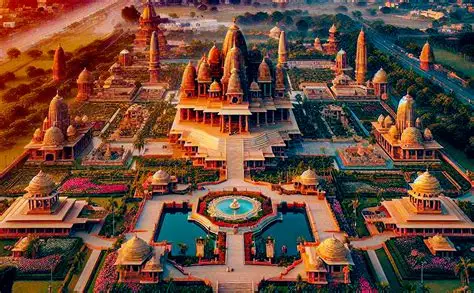
Ayodhya, located on the banks of the Sarayu River in Uttar Pradesh, is one of India’s most revered spiritual destinations. Known as the birthplace of Lord Rama, places to visit in Ayodhya attract millions of pilgrims, history enthusiasts, and cultural travelers every year. The city is a blend of mythology, heritage, and modern development, offering a unique experience that connects faith with history.
Ram Janmabhoomi Temple
- Significance: The most iconic site in Ayodhya, believed to be the birthplace of Lord Rama.
- Architecture: The newly constructed temple showcases intricate carvings, grand spires, and traditional Hindu temple architecture.
- Spiritual Appeal: Daily rituals, aarti, and festive celebrations draw devotees from across the globe.
- Tourist Experience: The temple complex is designed to accommodate large numbers of visitors, offering both spiritual and cultural immersion.
Hanuman Garhi
- Location: Situated in the heart of Ayodhya.
- Significance: Dedicated to Lord Hanuman, who is believed to have guarded Ayodhya.
- Highlights: A 10th-century temple with a massive idol of Hanuman.
- Pilgrimage Appeal: Devotees believe that visiting Hanuman Garhi before Ram Janmabhoomi ensures blessings.
Kanak Bhawan
- Significance: A temple gifted to Sita by Queen Kaikeyi after her marriage to Lord Rama.
- Highlights: Houses beautiful idols of Rama and Sita adorned with gold ornaments.
- Architecture: A blend of Mughal and Hindu styles, reflecting Ayodhya’s cultural diversity.
- Tourist Experience: Known for its peaceful ambiance and devotional music.
Nageshwarnath Temple
- Significance: Believed to have been established by Kush, son of Lord Rama.
- Highlights: Dedicated to Lord Shiva, symbolizing Ayodhya’s inclusive spiritual heritage.
- Festivals: Shivratri is celebrated with grandeur, attracting thousands of devotees.
- Cultural Importance: Reflects the coexistence of Shaivism and Vaishnavism in Ayodhya.
Treta Ke Thakur
- Significance: Houses idols of Lord Rama, Sita, Lakshman, and Hanuman carved from black stone.
- Historical Note: Believed to have been established during the Treta Yuga.
- Tourist Appeal: A sacred site for devotees seeking to connect with ancient traditions.
Guptar Ghat
- Location: On the banks of the Sarayu River.
- Significance: Believed to be the site where Lord Rama took Jal Samadhi.
- Highlights: Temples dedicated to Lord Rama and Vishnu surround the ghat.
- Tourist Experience: Evening aarti on the Sarayu River is a mesmerizing spectacle.
Sarayu River and Ghats
- Spiritual Importance: Bathing in the Sarayu River is considered purifying.
- Ghats: Ram ki Paidi, Guptar Ghat, and Naya Ghat are popular spots.
- Festivals: During Diwali and Ram Navami, the ghats are illuminated with thousands of diyas.
- Tourist Appeal: Boat rides and evening aarti offer serene experiences.
Ayodhya Research Institute and Museums
- Ayodhya Research Institute: Preserves manuscripts, artifacts, and cultural heritage related to Lord Rama.
- Tulsi Smarak Bhawan Museum: Dedicated to Goswami Tulsidas, author of Ramcharitmanas.
- Ram Katha Museum: Showcases paintings, sculptures, and artifacts narrating the story of Lord Rama.
- Tourist Experience: Ideal for history enthusiasts and cultural explorers.
Other Notable Temples and Sites
- Chhoti Chhavani: Known for its murals depicting Ramayana scenes.
- Valmiki Ramayan Bhawan: Dedicated to Maharishi Valmiki, who composed the Ramayana.
- Mani Parbat and Sugriv Parbat: Hillocks associated with Ramayana legends.
- Dashrath Mahal: Believed to be the residence of King Dashrath, father of Lord Rama.
Festivals and Cultural Experiences in Ayodhya
- Diwali: Celebrated as Deepotsav, with millions of diyas illuminating the city.
- Ram Navami: Marks the birth of Lord Rama, celebrated with grand processions.
- Kartika Purnima: Devotees take holy dips in the Sarayu River.
- Cultural Programs: Ram Leela performances and devotional music enhance the festive atmosphere.
Culinary Traditions in Ayodhya
- Vegetarian Cuisine: Reflects the city’s spiritual ethos.
- Local Delicacies: Kachori, jalebi, peda, and poori-sabzi are popular.
- Festive Foods: Special sweets and prasad during festivals.
- Community Dining: Langars and bhandaras foster unity and devotion.
Emerging Trends in Ayodhya Tourism
- Spiritual Tourism: Ram Janmabhoomi Temple has boosted Ayodhya’s global appeal.
- Eco-Friendly Initiatives: Riverfront development and sustainable practices.
- Digital Outreach: Virtual tours and online darshan services.
- Wellness Tourism: Yoga and meditation centers are gaining popularity.
Accessibility and Infrastructure
- Air Travel: Maharishi Valmiki International Airport connects Ayodhya to major cities.
- Rail Links: Ayodhya Junction and Faizabad stations serve pilgrims.
- Road Connectivity: Highways link Ayodhya to Lucknow, Varanasi, and Prayagraj.
- Tourism Infrastructure: Hotels, guesthouses, and dharamshalas cater to diverse travelers.
Why Places to Visit in Ayodhya Stand Out
- Spiritual Significance: Birthplace of Lord Rama, central to Hindu faith.
- Cultural Heritage: Temples, ghats, and museums narrate centuries of history.
- Festive Appeal: Diwali and Ram Navami celebrations attract global attention.
- Tourist Diversity: Appeals to pilgrims, historians, and cultural enthusiasts alike.
Sample Itinerary: 5 Days in Ayodhya
- Day 1: Ram Janmabhoomi Temple, Hanuman Garhi, Kanak Bhawan.
- Day 2: Nageshwarnath Temple, Treta Ke Thakur, Dashrath Mahal.
- Day 3: Guptar Ghat, Sarayu River boat ride, evening aarti.
- Day 4: Museums (Ram Katha Museum, Tulsi Smarak Bhawan), Chhoti Chhavani.
- Day 5: Mani Parbat, Sugriv Parbat, Valmiki Ramayan Bhawan.
Conclusion
Places to visit in Ayodhya are not just tourist attractions—they are sacred landmarks that embody India’s spiritual and cultural essence. Whether it is the grandeur of Ram Janmabhoomi Temple, the serenity of Sarayu River, or the cultural richness of museums and festivals, Ayodhya offers a holistic experience. As infrastructure improves and global interest grows, Ayodhya is poised to become one of the most significant spiritual tourism destinations in the world.