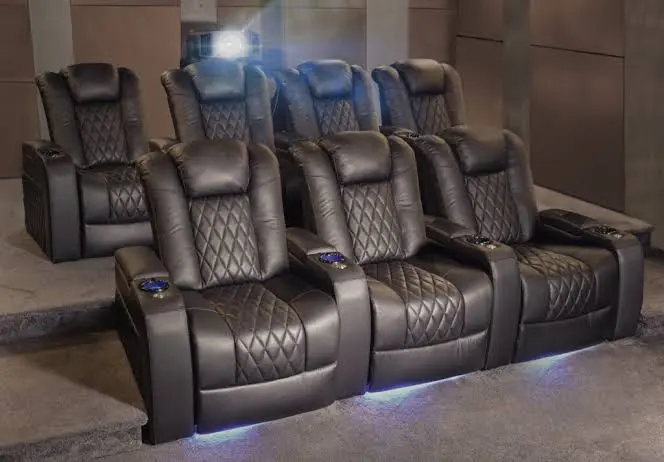
Creating a comfortable home theater involves more than choosing a large television and a quality sound system. Seating plays an equally important role because it affects how people watch movies, enjoy sports, and spend time together. Well-designed theater recliners can transform an ordinary entertainment room into a relaxing viewing space by combining supportive seating, convenient features, and thoughtful design.
However, choosing the right seating requires more consideration than simply selecting a chair that looks attractive. Room dimensions, reclining mechanisms, upholstery, comfort preferences, and seating capacity all influence the final decision. Understanding these factors helps homeowners create a home theater that feels inviting, functions efficiently, and remains comfortable during extended viewing sessions.
Understanding Theater Recliners and Their Benefits
Theater recliners are specialized chairs designed to provide a relaxed seating position while supporting the body during extended periods of sitting. Unlike standard living room chairs, many models include reclining backrests, adjustable footrests, padded armrests, and additional convenience features.
Their primary advantage is flexibility. Viewers can adjust their seating position to reduce pressure on the back and legs, making movie nights more comfortable. Some models also include independently adjustable headrests and lumbar support, allowing users to customize their position.
Theater recliners are available in individual, double, and sectional configurations. Individual chairs provide personal space, while connected seating arrangements create a traditional cinema-style experience. Sectional designs can also accommodate larger families or entertainment areas with flexible layouts.
Another benefit is their variety of styles. From classic leather designs to contemporary upholstered models, homeowners can find seating that complements their existing interior rather than making the entertainment room feel disconnected from the rest of the house.
Popular Styles of Theater Recliners
Selecting a style is an important part of planning a comfortable and visually balanced entertainment room. Different designs offer distinct advantages depending on the available space and intended use.
Traditional Manual Recliners
Manual recliners use a lever, handle, or body-weight mechanism to adjust the backrest and footrest. They are generally straightforward to operate and may require less maintenance than powered alternatives.
These chairs are suitable for homeowners who prefer simple functionality without additional electrical components. Their designs range from classic padded models to streamlined contemporary options.
Power Theater Recliners
Power recliners use electric motors to adjust the seating position. Controls are usually located on the armrest, allowing users to recline gradually without manually operating a lever.
Some models offer separate adjustments for the backrest and footrest. More advanced versions may include adjustable headrests and lumbar support. These features are particularly useful for people who prefer precise positioning.
Because powered models require electricity, buyers should consider outlet locations and cord management before finalizing the room layout.
Leather and Upholstered Recliners
Leather seating offers a refined appearance and is generally easy to wipe clean when properly maintained. It can work well in entertainment rooms where spills and frequent use are concerns. However, leather quality varies, and some surfaces may feel cool initially or become warm during extended use.
Fabric recliners provide a wider range of colors, patterns, and textures. They can create a softer, more relaxed atmosphere and may feel comfortable in different seasons. Performance fabrics are worth considering in busy households because many are designed to resist everyday stains and wear.
Loveseat and Sectional Recliners
Loveseat recliners provide seating for two people, sometimes with a shared center console. Sectional arrangements offer greater flexibility for larger rooms and can help define separate viewing areas.
The right configuration depends on household size, room dimensions, and whether viewers prefer individual seating or a connected arrangement.
How to Choose the Right Theater Recliners
A practical selection process helps prevent expensive mistakes and ensures the seating fits both the room and its users.
Step 1: Measure the Available Space
Start by measuring the room’s length, width, and usable floor area. Then consider the dimensions of each recliner, including the additional clearance required when fully extended.
Do not measure only the chair’s upright position. A recliner may extend significantly when its footrest and backrest move into their fully open positions.
For example, a narrow entertainment room may accommodate two compact chairs more comfortably than a large three-seat configuration. Leaving enough space for walkways also makes the room easier to use.
Step 2: Evaluate Comfort and Support
Comfort should be a priority because theater seating is often used for extended periods. Consider seat depth, cushioning firmness, backrest height, and armrest positioning.
A chair that feels comfortable for a few minutes may become uncomfortable during a longer movie. Whenever possible, test the seating in person and try several reclining positions.
Look for adequate lumbar support and a headrest that supports the neck without forcing the head forward. Seat height also matters, especially for people who prefer their feet to rest naturally on the floor when sitting upright.
Step 3: Compare Reclining Mechanisms
Choose between manual and powered operation based on convenience, budget, and personal preference.
Manual mechanisms are often simpler, while power models offer easier adjustments. If considering an electric model, check the control placement, motor operation, warranty, and availability of service support.
Step 4: Select Suitable Upholstery
Consider how frequently the chairs will be used and who will use them. Families may prefer durable, easy-to-clean materials, while a formal entertainment room may benefit from premium leather or textured upholstery.
Always review the manufacturer’s cleaning instructions. Different materials require different care methods, and unsuitable cleaning products can damage upholstery.
Step 5: Consider Additional Features
Features can improve convenience, but not every option is essential. Depending on the model, available additions may include:
- Built-in cup holders for drinks.
- Storage compartments for remote controls.
- USB charging ports for compatible devices.
- Adjustable headrests and lumbar support.
- Center consoles for shared seating.
- Reading lights for added convenience.
Prioritize features that support your actual habits instead of paying for functions that may rarely be used.
Common Mistakes to Avoid
One frequent mistake is choosing oversized seating without considering the room’s dimensions. Large recliners can make an entertainment space feel crowded and restrict movement when fully extended. Accurate measurements should always come before purchasing.
Another mistake is focusing entirely on appearance. Attractive upholstery and modern styling cannot compensate for poor cushioning, inadequate support, or an uncomfortable reclining position. Comfort should be evaluated alongside design.
Ignoring electrical requirements can also create problems. Power recliners need accessible outlets, and poorly planned cables may interfere with walkways or furniture placement.
Buyers sometimes overlook upholstery maintenance as well. Light-colored fabric may require more frequent cleaning in a busy household, while certain leather finishes need specific care products. Understanding maintenance requirements helps preserve the furniture’s appearance.
Finally, avoid assuming that more features automatically mean better value. A well-constructed chair with reliable reclining functionality may be a better investment than a complicated model with features you rarely use.
Practical Tips for a Better Home Theater Setup
Arrange seating so that viewers have a comfortable sightline to the screen without needing to turn their heads excessively. For multiple rows, consider the height and distance of each seating position to reduce visual obstruction.
Leave sufficient space between chairs and nearby walls. This improves movement and allows recliners to operate without hitting surrounding furniture. If the room is narrow, consider placing seating in a straight row rather than using bulky sectional arrangements.
Think about lighting before positioning the furniture. Adjustable wall lighting or dimmable fixtures can make the room more comfortable without creating distracting reflections on the screen.
It is also useful to coordinate seating materials and colors with the room’s overall design. Neutral upholstery can provide long-term flexibility, while darker shades may help create a traditional cinema atmosphere.
Before purchasing, review construction details such as frame materials, stitching, cushion quality, weight capacity, and warranty coverage. These factors provide a better indication of long-term value than appearance alone.
Conclusion
Choosing the right theater recliners involves balancing comfort, functionality, durability, and design. By measuring the room, evaluating support, comparing reclining mechanisms, and selecting suitable upholstery, homeowners can create an entertainment space that meets their everyday needs. The best seating is not necessarily the model with the most features or the largest size. It is the option that fits the room, supports comfortable viewing, and delivers dependable performance over time.