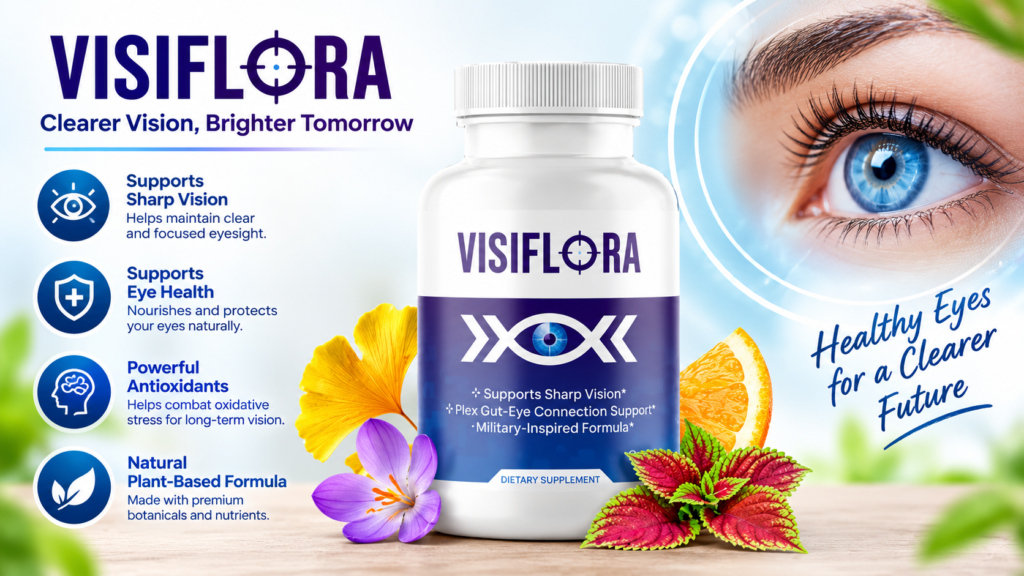
Introduction: Understanding VisiFlora
Eye health is an important part of overall well-being, yet it is something many people tend to overlook until they begin experiencing changes in their vision or everyday visual comfort. Spending long hours looking at computers, smartphones, televisions, and other digital screens has also made people more interested in maintaining healthy eyesight through better lifestyle choices and nutritional support.
This growing interest has encouraged the development of different dietary supplements designed to support eye wellness. These products often focus on nutrients and plant-based ingredients associated with normal eye function, antioxidant protection, and general nutritional balance.
VisiFlora is a product name that may attract attention from people exploring nutritional support for their eyes. Before considering any supplement, however, it is important to understand what it contains, how it is intended to work, what benefits may be realistic, and whether its claims are supported by reliable information.
This guide takes a closer look at VisiFlora, including its proposed purpose, ingredients, potential benefits, usage considerations, possible side effects, customer feedback, pricing considerations, and purchasing decisions.
One important point should be clear from the beginning: verified product-specific information about its complete formula, current price, manufacturer, and customer experiences is not available in the information provided for this article. Therefore, this guide will distinguish general eye-health information from claims that would need confirmation from the product label or manufacturer. It will not present unverified details as established facts.
The goal is to help readers make a thoughtful decision rather than rely entirely on promotional statements.
What Is VisiFlora?
VisiFlora is a product presented for consideration in the eye-wellness supplement category. People researching products in this category are generally interested in maintaining normal vision, supporting eye nutrition, and protecting their eyes from everyday environmental challenges.
Dietary supplements are designed to complement a balanced diet. Depending on their ingredients, they may provide vitamins, minerals, plant extracts, or other nutritional compounds that contribute to normal bodily functions.
However, it is important not to assume that every eye-health supplement contains the same ingredients or offers identical benefits.
Understanding Its Intended Purpose
The general purpose of eye-health nutritional products is to help fill potential nutritional gaps and provide nutrients associated with normal eye function.
Some nutrients are involved in maintaining healthy tissues, supporting normal visual processes, and protecting cells from oxidative stress. Others contribute to broader nutritional requirements.
Whether VisiFlora provides these nutrients depends on its actual formulation. Readers should check the supplement facts panel before making assumptions about its contents.
Is It a Medicine or a Dietary Supplement?
A dietary supplement is not the same as a prescription medicine or an approved treatment for an eye condition.
Supplements should not be considered replacements for professional eye examinations, prescribed medication, or medical treatment.
Anyone experiencing blurred vision, eye pain, sudden vision changes, flashes of light, or other concerning symptoms should seek professional medical attention instead of relying on nutritional products.
How Does VisiFlora Work?
Understanding how an eye-health supplement may work requires looking at the role of nutrition in maintaining normal eye function.
The eyes are complex organs that depend on several biological processes. They require adequate nutrients, healthy blood circulation, functioning retinal tissues, and protection against cellular damage.
Certain vitamins, minerals, and plant compounds have recognized roles in these processes.
However, the precise mechanism of VisiFlora cannot be established without access to its verified ingredient list and quantities.
Supporting Normal Eye Nutrition
The eyes require several nutrients to function properly. Vitamin A, for example, contributes to the maintenance of normal vision.
Other nutrients, including vitamin C, vitamin E, zinc, and certain carotenoids, are associated with different aspects of eye and cellular health.
A supplement containing appropriate amounts of these nutrients may help support normal nutritional requirements, particularly when someone’s diet does not provide enough.
Antioxidant Protection
Oxidative stress occurs when the production of free radicals exceeds the body’s ability to manage them.
The eyes are exposed to environmental factors that can contribute to oxidative stress. Antioxidants help protect cells from oxidative damage as part of the body’s natural defense systems.
Some nutritional ingredients used in eye-health supplements have antioxidant properties.
Nevertheless, the presence of antioxidants does not mean that a supplement can reverse eye damage or prevent every age-related eye condition.
Supporting Overall Visual Wellness
Healthy eyesight depends on more than taking a supplement.
Good nutrition, adequate sleep, regular eye examinations, proper lighting, and responsible screen habits all contribute to maintaining eye comfort and general visual health.
VisiFlora should be evaluated as a possible nutritional addition, not as a complete solution for every vision-related concern.
VisiFlora Ingredients and Their Stated Purposes
Ingredients are among the most important factors to consider when evaluating an eye-health supplement. The formula determines which nutrients a product supplies, how much of each ingredient it contains, and whether the combination is suitable for a particular person.
Some product descriptions associated with VisiFlora advertise a 22-ingredient formula featuring vitamins, minerals, carotenoids, and botanical extracts. The listed ingredients vary in the level of detail available, and a complete, independently verified supplement label has not been established here.
The following overview explains several ingredients associated with the product’s advertised formulation and their general nutritional roles. It should not be interpreted as confirmation that every ingredient appears in every version of VisiFlora or that the finished supplement has been clinically tested.
1. Lutein
Lutein is a carotenoid found in foods such as spinach, kale, and other leafy green vegetables. It accumulates in the macula, a small region of the retina responsible for detailed central vision.
Lutein is frequently included in eye-health supplements because of its role in macular pigment. It also has antioxidant properties.
Research on specific combinations of nutrients, including lutein, has examined their potential role in people with certain stages of age-related macular degeneration. However, findings from a studied formulation cannot automatically be applied to every supplement containing lutein.
For consumers considering VisiFlora, the amount of lutein per serving is more informative than simply seeing the ingredient listed in promotional material.
2. Zeaxanthin
Zeaxanthin is another carotenoid naturally present in the retina. It works alongside lutein as part of the macular pigment that helps protect sensitive eye tissues.
Foods containing zeaxanthin include leafy vegetables, corn, and some brightly colored fruits and vegetables.
Lutein and zeaxanthin are often combined in nutritional formulas because they contribute to the same general area of eye health.
Nevertheless, including both compounds does not guarantee sharper eyesight, eliminate the need for corrective lenses, or reverse existing vision problems.
3. Bilberry Extract
Bilberry is a dark-colored berry containing anthocyanins, a group of plant compounds with antioxidant properties.
Bilberry extracts are commonly marketed for eye comfort, circulation, and night vision. These traditional and commercial uses have attracted interest, but evidence for treating vision problems with bilberry supplements remains limited and inconsistent.
It is therefore important to distinguish between the general antioxidant properties of bilberry and claims that it can reliably improve night vision or reduce eye strain.
Anyone evaluating VisiFlora should check whether the label specifies the amount of bilberry extract and whether the extract is standardized.
4. Vitamin A
Vitamin A is an essential nutrient involved in normal vision. It helps maintain the functioning of the retina and supports the process through which the eyes respond to light.
A deficiency in vitamin A can cause significant vision problems, including difficulty seeing in low light. Adequate intake is therefore important.
However, more vitamin A is not necessarily better. Excessive intake of preformed vitamin A can be harmful, particularly when combined with other supplements containing the same nutrient.
Before taking VisiFlora alongside a multivitamin or another eye-health product, consumers should compare the ingredient labels to avoid unnecessary duplication.
5. Vitamin C
Vitamin C is an antioxidant that supports normal cellular functions and contributes to collagen formation.
The body uses collagen in various tissues, including structures associated with the eyes. Vitamin C also helps protect cells against oxidative damage.
A balanced diet containing fruits and vegetables is an important source of this vitamin.
If VisiFlora contains vitamin C, its contribution depends on the amount per serving and the person’s overall nutritional intake. Its presence alone does not establish that the supplement prevents cataracts or other eye conditions.
6. Vitamin E
Vitamin E is a fat-soluble antioxidant that helps protect cell membranes from oxidative damage.
It is available from foods such as nuts, seeds, and vegetable oils. Some eye-health formulations include vitamin E alongside other antioxidant nutrients.
People taking blood-thinning medication should exercise particular caution with high-dose vitamin E supplements because of potential bleeding concerns.
The relevant question is not simply whether VisiFlora contains vitamin E, but how much it provides and whether that amount is appropriate for the individual.
7. Zinc
Zinc is an essential mineral involved in numerous bodily processes, including immune function, cellular metabolism, and normal vitamin A metabolism.
It also plays a role in maintaining healthy vision.
Certain nutrient combinations studied for age-related macular degeneration have included zinc. However, the benefits observed with those specific formulations should not be assumed for every zinc-containing supplement.
Excessive zinc intake can cause digestive problems and may interfere with copper absorption over time. Consumers should consider the combined amount they obtain from food and other supplements.
8. Astaxanthin
Astaxanthin is a naturally occurring carotenoid found in certain algae and seafood, including salmon.
It has antioxidant properties and has been investigated for several potential health applications, including eye comfort and visual fatigue.
However, research findings are not sufficient to conclude that every astaxanthin supplement reduces digital eye strain or improves eyesight.
If VisiFlora includes astaxanthin, the amount and quality of the ingredient would be important considerations when evaluating its potential usefulness.
9. Grape Seed Extract
Grape seed extract contains plant compounds called proanthocyanidins, which have antioxidant activity.
It is included in various nutritional products intended to support general wellness and healthy circulation.
Although these properties provide a reason to investigate grape seed extract, they do not establish that it improves retinal blood flow or treats an eye disease when taken as part of VisiFlora.
Consumers should also consider possible interactions with medications, particularly those that affect blood clotting.
10. Quercetin and Rutin
Quercetin and rutin are plant-derived compounds found in a variety of fruits, vegetables, and other plant sources.
Both have been studied for their antioxidant and other biological properties. They appear in some supplements marketed for general wellness and cellular protection.
Research involving these compounds is not equivalent to proof that a finished supplement can prevent inflammation-related eye conditions or improve visual clarity.
Their actual contribution to VisiFlora cannot be assessed without knowing the amounts used and the quality of the supporting evidence.
11. Taurine
Taurine is a compound naturally present in the body, including in the retina.
It participates in several physiological processes and is important for normal function in certain tissues.
Its presence in a supplement may be intended to support general cellular health, but this does not demonstrate that taking additional taurine will improve vision in a person who already receives adequate amounts.
12. Alpha-Lipoic Acid
Alpha-lipoic acid is a compound involved in energy metabolism that has also been studied for its antioxidant properties.
It appears in some supplements designed to support metabolic and cellular health.
Its effectiveness depends on the intended use, dosage, and quality of the evidence. It should not be assumed to reverse eye damage or protect against every consequence of aging.
13. Selenium and Copper
Selenium and copper are trace minerals that support different biological functions.
Selenium contributes to antioxidant enzyme activity, while copper is involved in normal connective tissue formation, iron metabolism, and other processes.
Both minerals are needed in appropriate amounts. Excessive supplementation can be harmful, so a product’s total mineral content should be considered alongside other dietary sources.
14. Other Advertised Botanical Ingredients
Some descriptions associated with VisiFlora also mention ingredients such as ginkgo biloba, eyebright, saffron, lycopene, and coleus forskohlii.
These ingredients have different histories of use and different levels of scientific support.
For example, saffron has been investigated in limited clinical research involving certain aspects of retinal function. Ginkgo biloba has been studied for circulation-related effects, while evidence supporting eyebright for eye conditions remains insufficient.
None of these ingredients should be treated as a proven treatment simply because it appears in a supplement formula.
Why the Complete Supplement Label Matters
The most useful ingredient information includes:
-
The exact name of every active ingredient.
-
The amount of each ingredient per serving.
-
The recommended serving size.
-
Any proprietary blends that prevent individual quantities from being identified.
-
Allergen information and other ingredients.
-
Relevant quality-testing information.
A product may contain well-known nutrients but still provide amounts that differ substantially from those used in research.
For that reason, the ingredient list is a starting point for evaluation, not proof of effectiveness.
Potential Benefits of VisiFlora and Realistic Expectations
VisiFlora is marketed in the eye-wellness category, but its actual benefits depend on its verified formulation, ingredient quantities, and the needs of the person using it.
It is helpful to separate potential nutritional support from stronger claims about changing eyesight or treating medical conditions.
Supporting Normal Vision
Adequate intake of essential nutrients contributes to normal eye function. Vitamin A, for example, has an established role in maintaining normal vision.
If a supplement provides nutrients that someone is lacking, it may help address a nutritional shortfall. That does not mean it will improve eyesight in someone who already receives sufficient amounts.
Supporting Macular Health
Lutein and zeaxanthin are relevant to macular pigment and are among the better-known nutrients in eye-health research.
Certain studied nutrient combinations may benefit specific groups of people with age-related macular degeneration. These findings are specific to the formulations and populations studied.
VisiFlora should not be assumed to provide the same benefits without evidence that its formulation, quantities, and intended use match the relevant research.
Helping Address Nutritional Gaps
People with limited dietary variety may not consistently obtain all the nutrients they need.
A supplement can sometimes help complement a balanced diet, depending on its contents and the person’s nutritional requirements.
However, supplements should not replace a varied diet rich in vegetables, fruits, whole grains, healthy fats, and appropriate protein sources.
Supporting General Eye Wellness
Some people explore eye-health supplements because they want to take a more proactive approach to aging and long-term wellness.
A nutritional product may fit into such a routine if its ingredients are suitable and its claims are reasonable.
Nevertheless, maintaining eye health also involves regular eye examinations, managing relevant health conditions, avoiding smoking, protecting the eyes from excessive sunlight, and following professional recommendations.
What About Screen-Related Eye Strain?
Long periods of screen use can contribute to dry eyes, temporary blurred vision, headaches, and visual fatigue.
These symptoms are often associated with reduced blinking, prolonged close-up focus, glare, or unsuitable screen positioning.
There is not enough product-specific evidence here to establish that VisiFlora relieves these symptoms.
Practical measures such as taking regular screen breaks, blinking consciously, adjusting screen brightness, and addressing dry eyes may be more directly relevant to everyday digital discomfort.
Can It Restore Lost Eyesight?
There is no verified evidence establishing that VisiFlora restores lost eyesight, eliminates the need for glasses, or cures an eye disease.
Changes in vision can have many causes, including refractive errors, cataracts, retinal conditions, and other medical problems.
These conditions require appropriate assessment. A supplement should never delay a professional examination when vision changes occur.
How Long Might Results Take?
There is no established product-specific timeline for VisiFlora.
The effects of nutritional supplementation depend on the ingredient, dosage, existing nutrient status, underlying health, and the outcome being measured.
A person should not interpret the absence of noticeable changes as a reason to increase the recommended dose. Nor should an early subjective improvement be taken as proof that an eye condition has been treated.
The most realistic expectation is that any potential nutritional benefit depends on the formulation and the individual’s circumstances.
How to Use VisiFlora
Using a dietary supplement responsibly begins with reading the product label and understanding its recommended serving size.
Some promotional descriptions associated with VisiFlora describe it as a daily capsule. However, the exact directions should be confirmed using the packaging supplied with the product you are considering.
Follow the Label Instructions
Do not assume that every product with the same name has identical instructions. Check the recommended serving, whether it should be taken with food, and any warnings printed on the label.
Never take more than the recommended amount in an attempt to achieve faster results.
Make It Part of a Balanced Routine
Nutritional supplements work best as part of an overall approach to wellness rather than as substitutes for healthy habits.
A practical eye-care routine may include eating a varied diet, taking regular breaks from screens, sleeping adequately, wearing appropriate sunglasses, and attending routine eye examinations.
Avoid Combining Similar Supplements Without Checking
If you already take a multivitamin, an eye-health formula, or another nutritional product, compare the ingredients before adding VisiFlora.
Several products may contain overlapping amounts of vitamin A, zinc, selenium, or vitamin E. Taking multiple supplements together can result in excessive intake.
If you are uncertain about combining products, ask a qualified healthcare professional or pharmacist for advice.
Who May Consider VisiFlora?
VisiFlora may attract adults interested in learning more about nutritional approaches to eye wellness. However, whether it is appropriate depends on its verified formula and the individual’s circumstances.
Adults Interested in Nutritional Eye Support
People who want to improve their dietary intake may explore eye-health supplements containing relevant vitamins, minerals, and carotenoids.
The first step should be identifying actual nutritional needs rather than assuming that a supplement is necessary for everyone.
People With Limited Dietary Variety
Someone whose diet lacks a range of vegetables, fruits, and other nutrient-rich foods may wish to discuss nutritional options with a healthcare professional.
A supplement may be useful in particular circumstances, but improving food choices is also important.
People Who Spend Long Hours on Screens
Office workers, students, and other frequent screen users may be interested in products marketed for visual comfort.
However, digital eye strain often requires practical changes to screen habits, lighting, and eye lubrication rather than supplementation alone.
Who Should Seek Medical Advice First?
Anyone with an existing eye condition, a history of significant vision changes, or a prescribed treatment plan should consult an eye-care professional before relying on a supplement.
The same caution applies to people taking regular medication, those who have relevant medical conditions, and individuals who are pregnant or breastfeeding.
VisiFlora Side Effects and Safety Precautions
Even products marketed as natural can cause unwanted effects. Safety depends on the specific ingredients, their quantities, product quality, and individual health circumstances.
Because a complete verified formula has not been established here, the exact side-effect profile of VisiFlora cannot be confirmed.
Possible Digestive Discomfort
Some supplements can cause nausea, stomach discomfort, or changes in bowel habits.
The likelihood depends on the ingredients and dosage. Taking a product with food may help with certain forms of digestive discomfort, but users should follow the product’s own instructions.
Stop using a supplement and seek appropriate advice if you experience a concerning reaction.
Possible Medication Interactions
Some ingredients commonly used in nutritional formulas may interact with medicines.
For example, ginkgo biloba and high-dose vitamin E may increase bleeding concerns in certain circumstances. Zinc can interfere with the absorption of some medications when taken too close together.
These are ingredient-specific considerations, not confirmation that VisiFlora will cause these effects.
Discuss the full formula with a pharmacist or healthcare professional if you take prescription medicines or other supplements.
Allergies and Sensitivities
Check the label for allergens, capsule materials, and other ingredients that may not be suitable for you.
Do not assume that a product is free from gluten, soy, dairy, or other allergens unless the packaging provides reliable confirmation.
Quality and Manufacturing Claims
Product descriptions may use phrases such as natural, non-GMO, or manufactured in a facility following Good Manufacturing Practices.
Such claims should be evaluated separately from evidence of effectiveness.
In particular, an FDA-registered manufacturing facility does not mean that the FDA has approved the supplement to treat or prevent disease. Dietary supplements are not approved by the FDA for effectiveness before marketing in the same way as prescription medicines.
When to Seek Urgent Medical Care
Sudden loss of vision, severe eye pain, a sudden increase in flashes or floaters, or a curtain-like shadow across the visual field can indicate a serious eye problem.
These symptoms require urgent medical assessment. Do not wait to see whether a supplement helps.
VisiFlora Customer Reviews and Feedback
Customer feedback can help consumers understand how a product is perceived, but it needs to be interpreted carefully.
At present, independently verified customer reviews specific to VisiFlora have not been established for this article. It would therefore be misleading to invent testimonials, claim a particular customer satisfaction rating, or suggest that a specific number of people experienced benefits.
What Should You Look for in Customer Reviews?
Useful reviews describe the buyer’s experience in concrete terms.
For example, a detailed review might explain whether the product arrived on time, whether the packaging matched the description, whether the instructions were clear, and whether the customer experienced any unwanted effects.
These observations can help assess the purchasing experience without treating personal experiences as clinical evidence.
Are Positive Reviews Enough?
No. Positive reviews may be genuine, but they cannot independently establish that a supplement improves eyesight or prevents eye disease.
Individual experiences vary, and people may have different expectations, diets, health conditions, and reasons for taking the product.
It is also worth checking whether reviews are clearly attributed to verified purchases and whether the reviewer discusses limitations as well as positive experiences.
How to Interpret Negative Feedback
Negative reviews may identify practical concerns such as delayed shipping, difficulty contacting customer service, unexpected charges, or confusion about refund procedures.
Look for repeated, specific complaints rather than drawing conclusions from a single emotional review.
A fair assessment considers both positive and negative experiences while recognizing that customer feedback is not a substitute for scientific research.
VisiFlora Reviews and Complaints
People researching VisiFlora may want to understand whether there are recurring complaints or reasons to avoid purchasing it.
Without a reliable, independently verified record of customer experiences, it is not possible to determine whether there is a widespread pattern of complaints.
Nevertheless, several issues deserve attention before buying any dietary supplement.
Check the Full Price Before Ordering
Promotional advertisements may emphasize a reduced per-bottle price without making the total order cost immediately obvious.
Confirm the number of bottles, shipping charges, applicable taxes, and final payment amount before completing a transaction.
Review the Refund Conditions
If a money-back guarantee is advertised, read its conditions carefully.
Check the length of the return period, whether opened products are eligible, how refunds are requested, and whether return shipping costs apply.
Do not rely solely on a promotional statement that describes a purchase as risk-free.
Watch for Unsupported Health Claims
Be cautious of any seller suggesting that a supplement guarantees perfect vision, reverses all age-related changes, or replaces professional eye treatment.
Such statements go beyond what can responsibly be concluded from the general nutritional roles of common supplement ingredients.
Assess Customer Service Transparency
Clear business information, accessible support channels, transparent policies, and understandable payment terms are useful indicators when evaluating an online purchase.
If important information is missing or contradictory, consider postponing the purchase until those details can be verified.
VisiFlora Price and Value for Money
The price of VisiFlora is an important consideration, particularly if the product is intended for regular use.
A reliable current price has not been independently established here. Promotional prices can change, so quoting a specific amount as the current standard price would risk misleading readers.
What Determines Whether It Offers Good Value?
Price should be evaluated alongside several other factors:
-
Formula transparency: Are the ingredients and their individual amounts clearly disclosed?
-
Product quality: Is there credible information about manufacturing and quality testing?
-
Serving size: How much product is included, and what is the recommended daily serving?
-
Total cost: Does the advertised amount include shipping and other charges?
-
Refund policy: Are the conditions clearly stated and reasonable?
-
Evidence: Are the advertised benefits supported by appropriate research?
A low price does not automatically make a supplement good value, and a high price does not guarantee superior quality.
Should You Buy a Multi-Bottle Package?
Larger packages sometimes offer a lower price per bottle. However, a lower unit price is useful only if the product suits your needs and you are comfortable with the total upfront cost.
Avoid buying more than you can reasonably afford simply because a promotion is presented as temporary.
It is sensible to evaluate the product’s label, suitability, and return conditions before committing to a larger order.
Is VisiFlora a Scam or Legit?
It would be inappropriate to label VisiFlora either a scam or a proven, effective supplement without sufficient evidence.
These are separate questions: whether a seller supplies the product as advertised, and whether the product delivers the health benefits claimed for it.
What Would Support Its Credibility?
Useful evidence would include a complete ingredient label, transparent manufacturer information, clear purchasing and refund policies, credible quality-control documentation, and health claims that accurately reflect available research.
Independent testing and well-designed clinical studies of the finished product would provide additional evidence, where available.
What Should Raise Concerns?
Be cautious if you encounter exaggerated promises, unclear ingredient quantities, pressure to purchase immediately, inconsistent product information, or refund terms that are difficult to understand.
Claims that a supplement is FDA-approved simply because it is manufactured in an FDA-registered facility should also be treated carefully.
A Balanced Verdict
VisiFlora is marketed as an eye-wellness supplement, but its exact effectiveness and overall value cannot be established from promotional claims alone.
Consumers should verify the product label, examine the evidence for the ingredients, and discuss any medical concerns with an appropriate professional before deciding whether to use it.
VisiFlora Pros and Cons
The following overview summarizes the main considerations based on the product category and the information that would need verification.
Potential Advantages
-
Its eye-wellness positioning may appeal to consumers interested in nutritional support.
-
Ingredients such as lutein and zeaxanthin have established biological roles in the retina.
-
A supplement may help complement dietary intake when particular nutrients are needed.
-
A clearly disclosed formula can make ingredient comparison easier.
-
Transparent pricing and refund conditions, if provided, can help consumers make informed purchasing decisions.
Potential Disadvantages
-
The complete formulation and individual ingredient quantities require verification.
-
Product-specific clinical evidence has not been established here.
-
Marketing claims may create expectations that exceed the available scientific evidence.
-
Supplements can cause side effects or interact with medications.
-
The current price, overall value, and independently verified customer feedback remain uncertain.
Where to Buy VisiFlora
Before purchasing VisiFlora, verify the seller’s identity and confirm that the product details match the supplement you intend to buy.
Check the packaging, ingredient panel, serving size, shipping costs, return conditions, and final price. If a seller claims to be an authorized source, look for clear evidence supporting that claim.
Do not assume that similar-looking product names, packaging, or online advertisements necessarily refer to the same formulation.
It is also sensible to avoid purchasing a supplement from an unfamiliar seller if important safety, ingredient, or refund information is missing.
Before placing an order, review the most recent product information available directly from the seller you have independently verified. Confirm availability and pricing at checkout rather than relying on an older advertisement.
Frequently Asked Questions About VisiFlora
1. What is VisiFlora?
VisiFlora is marketed as an eye-wellness dietary supplement. Its advertised purpose is nutritional support for eye health. The exact formula and its effectiveness should be assessed using a verified product label and reliable evidence.
2. What ingredients does VisiFlora contain?
Some product descriptions identify ingredients such as lutein, zeaxanthin, bilberry extract, vitamin A, and other vitamins, minerals, and botanical compounds. Verify the complete ingredient list and individual quantities on the packaging before use.
3. Can VisiFlora improve eyesight?
There is insufficient verified product-specific evidence to conclude that VisiFlora improves eyesight. Some nutrients support normal vision, but that does not mean a supplement can correct refractive errors or restore lost vision.
4. Does VisiFlora help with screen-related eye strain?
Its marketing may appeal to people who spend long hours using digital devices, but a specific benefit has not been established here. Screen breaks, appropriate lighting, frequent blinking, and professional advice may help address digital eye discomfort.
5. Are there any VisiFlora side effects?
The exact side effects depend on the verified formulation and the individual. Supplements may cause digestive discomfort, allergic reactions, or medication interactions. Review the label and seek professional advice if you have health concerns.
6. How should VisiFlora be taken?
Follow the serving instructions on the actual product packaging. Do not exceed the recommended amount or combine it with similar supplements without checking for overlapping ingredients.
7. How much does VisiFlora cost?
A reliable current price has not been established for this guide. The total cost may depend on the package selected, shipping, and available promotions. Confirm the final amount before ordering.
8. Is VisiFlora legitimate?
Its legitimacy and effectiveness cannot be conclusively established from marketing material alone. Check seller transparency, ingredient disclosure, quality documentation, purchasing conditions, and the evidence supporting its claims.
9. Are VisiFlora customer reviews reliable?
Reviews can provide useful information about delivery, packaging, customer service, and individual experiences. However, testimonials do not establish clinical effectiveness. Look for specific, credible, independently verifiable feedback.
10. Can VisiFlora replace an eye examination?
No. A supplement cannot replace professional eye examinations, prescribed treatment, or medical assessment. Seek prompt care for sudden vision changes, significant eye pain, or other concerning symptoms.
Final Thoughts: Is VisiFlora Worth Considering?
VisiFlora may interest people who are exploring nutritional supplements for general eye wellness. Ingredients commonly associated with eye-health formulas, including lutein, zeaxanthin, and essential vitamins and minerals, have legitimate nutritional roles. However, the presence of these ingredients does not automatically prove that a finished supplement delivers its advertised benefits.
The most important step is to evaluate the actual product rather than relying entirely on marketing language. Review the complete ingredient list, compare serving amounts, check for potential interactions, and look for credible information about quality and testing.
It is equally important to maintain realistic expectations. No supplement should be assumed to restore lost eyesight, prevent every age-related eye condition, or replace professional eye care.
If you are considering VisiFlora, take time to verify the current product details, pricing, availability, and refund conditions before making a purchase. Compare those details with your nutritional needs and budget, and consult a qualified healthcare professional if you have an existing eye condition or take medication.
Call to action: Before deciding whether VisiFlora is right for you, review its latest product information and full supplement label, confirm the total cost and purchasing conditions, and make an informed choice based on your individual needs.
Disclaimer: This article is for informational purposes only and is not medical advice. Dietary supplements are not intended to diagnose, treat, cure, or prevent diseases. Consult a qualified healthcare professional about personal health concerns or supplement use.