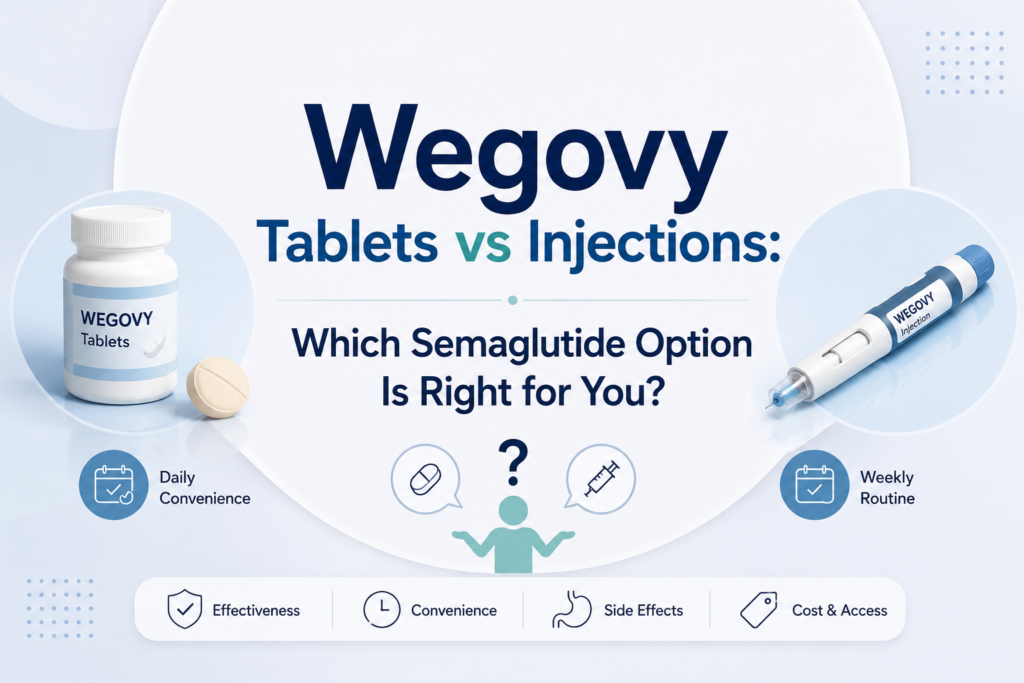
Wegovy Tablets vs Injections: Which Semaglutide Option Is Right for You?
Until recently, anyone wanting semaglutide for weight loss in the UK had exactly one choice: a weekly injection. That changed in June 2026 when the MHRA approved an oral tablet version of Wegovy, giving people a genuine choice for the first time. Both options use the same active ingredient and both are backed by solid clinical data, so the real question is no longer “does it work” but “which format actually fits my life.” Here is a full breakdown to help you decide.
The Same Medicine, Two Different Formats
Wegovy tablets and Wegovy injections both contain semaglutide, a GLP1 receptor agonist that mimics a natural hormone your gut releases after eating. It works on appetite regulating areas of the brain to reduce hunger, increase feelings of fullness, and slow down digestion so you feel satisfied on less food.
The injection is delivered through a prefilled pen once a week. The tablet is taken once daily, first thing in the morning, on an empty stomach with a small sip of water. The tablet uses an absorption enhancer called SNAC, which briefly protects the semaglutide from stomach acid long enough for it to be absorbed properly. Without this technology, the tablet simply would not work, since your stomach would break the peptide down before it ever reached your bloodstream.
Comparing Effectiveness
This is often the deciding factor for people, so it deserves a closer look.
In the OASIS 4 trial, adults taking the 25mg oral tablet lost an average of around 16.6% of their body weight over 64 weeks when the treatment was followed as intended, compared with roughly 2.7% on placebo, alongside diet and lifestyle changes. Results from earlier injection trials showed broadly comparable weight loss at the highest doses. In short, the tablet is not a “lesser” version of the injection. Both formats can produce meaningful, sustained weight loss when combined with a reduced calorie diet and regular physical activity.
That said, individual response always varies. Some people respond slightly better to one format over the other, and a prescriber reviewing your health history is the best way to judge what is likely to suit you.
Daily Routine vs Weekly Routine
This is where the two treatments genuinely diverge, and it is worth being honest with yourself about which routine you can actually stick to.
The tablet requires:
- Taking it first thing in the morning after an overnight fast of at least 8 hours
- No more than a small sip of plain water, around 120ml
- Waiting at least 30 minutes before eating, drinking, or taking other medication
- Never crushing, splitting, or chewing the tablet
The injection requires:
- One dose per week, on the same day each week
- No fasting or food timing rules
- No daily thinking about it once the injection is done
If you like consistency and don’t mind a small daily ritual, the tablet can feel manageable and even satisfying once it becomes habit. If mornings are chaotic or you know a strict fasting window simply won’t happen reliably, a weekly injection removes that daily friction entirely.
Storage and Convenience
The tablet has a clear practical advantage here. It does not need refrigeration, so it travels well and fits easily into a bag or suitcase without any special planning. The injection pen typically needs to be stored in a fridge, and while short periods at room temperature are usually fine, it does require a bit more thought if you are travelling or staying somewhere without reliable refrigeration.
For frequent travellers or people with unpredictable schedules, this alone can tip the decision in favour of tablets.
Needle Anxiety and Personal Preference
For a lot of people, the deciding factor has nothing to do with data and everything to do with comfort. If you are needle averse, the oral tablet removes that barrier completely. If you would honestly rather deal with treatment once a week and get it over with, rather than manage a daily tablet routine, the injection may feel simpler in practice.
Neither preference is wrong. The best treatment is the one you can actually stick with consistently, since consistency is what drives results with either format.
Side Effects: What to Expect
Both formats carry a similar side effect profile, since they contain the same active ingredient. The most commonly reported issues are gastrointestinal, including nausea, diarrhoea, constipation, and general stomach discomfort, particularly during the early weeks and when moving up a dose. These effects tend to ease over time as your body adjusts. A gradual dose titration schedule is used with both formats specifically to reduce the likelihood and severity of these side effects.
Who Is Eligible
Eligibility criteria are the same regardless of format. You may be considered suitable if you have:
- A BMI of 30 or above, classed as obesity, or
- A BMI of 27 to 30, classed as overweight, alongside at least one weight related condition such as high blood pressure, raised cholesterol, or type 2 diabetes
Both treatments are meant to be used alongside a reduced calorie diet and increased physical activity rather than as a standalone solution.
Cost and Availability
Both the tablet and the injection are currently available only through private prescription in the UK, since NICE is still reviewing the tablet for NHS funding. Because the tablet does not require cold chain storage or refrigerated distribution, there is an argument that its cost could eventually settle lower than the injection, though pricing is still stabilising as supply increases across the UK.
If you are drawn to the idea of a simple Daily Weight Loss Tablets routine rather than managing appointments around a weekly dose, the oral option is worth discussing with a prescriber. On the other hand, semaglutide is not your only choice within GLP1 treatment. Some people find that Mounjaro Weight Loss Injections, which use a different mechanism called tirzepatide, suit their body and goals better, so it is worth keeping an open mind during your consultation.
So, Which Should You Choose?
There is no single correct answer here, only the option that matches your lifestyle, habits, and comfort level. Ask yourself a few honest questions before deciding:
- Can I reliably manage a daily fasted morning routine, or would a once a week treatment suit me better?
- Does needle anxiety play a role in my decision?
- Do I travel often or have unpredictable access to refrigeration?
- Would I prefer thinking about treatment once a week rather than once a day?
Your answers will usually point you toward the right format fairly quickly.
Final Thoughts
Both Wegovy tablets and Wegovy injections offer proven, clinically supported weight loss when used correctly alongside lifestyle changes. The real decision is about your daily habits and personal comfort rather than one format being objectively superior to the other. Since this is a prescription only medicine, the safest way to choose is through a proper consultation with a qualified provider. The team at Weight Medics can assess your eligibility, talk you through both formats in detail, and help you decide whether tablets, injections, or an alternative treatment altogether is the right starting point for your weight loss journey.