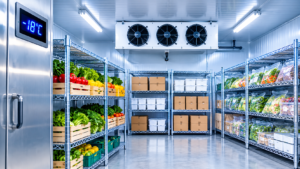
Cold storage facilities play an essential role in industries that depend on maintaining specific temperatures to protect products and preserve their quality. From food processing and pharmaceuticals to agriculture and logistics, businesses require dependable storage environments to manage temperature-sensitive goods. A well-designed cold storage room helps maintain suitable conditions, reduce product spoilage, and support smooth inventory operations. However, achieving reliable performance requires more than installing a refrigeration unit. Insulation, cooling equipment, airtight construction, temperature monitoring, and ventilation must work together to create an efficient storage environment.
Understanding the key components of a cold storage facility can help businesses make informed decisions when planning new installations or upgrading existing infrastructure.
1. High-Quality Insulated Panels
Insulation is one of the most important elements of an efficient cold storage facility. Insulated panels help minimize heat transfer between the indoor storage environment and the surrounding area. Without suitable insulation, warm outside air can enter the facility, increasing the workload on refrigeration equipment.
Insulated sandwich panels are commonly used in cold storage construction because they combine insulation materials with protective outer surfaces. Depending on project requirements, manufacturers may use materials such as polyurethane or polyisocyanurate insulation.
The effectiveness of these panels depends on factors such as thickness, thermal conductivity, joint design, and installation quality. Properly selected panels help maintain internal temperatures while supporting energy-efficient operation.
2. Reliable Refrigeration System
The refrigeration system is responsible for removing heat from the storage space and maintaining the required temperature range. Selecting suitable refrigeration equipment is essential because different products have different storage requirements.
A typical refrigeration system may include:
- Compressors that increase refrigerant pressure.
- Condensers that release heat from the refrigerant.
- Expansion devices that regulate refrigerant flow.
- Evaporators that absorb heat from the storage environment.
- Refrigerant piping that connects the system components.
The capacity of the refrigeration system should match the room’s dimensions, insulation performance, product load, and expected operating conditions. An undersized system may struggle to maintain the desired temperature, while an oversized system may increase initial and operating costs.
Professional system planning helps ensure that refrigeration equipment performs effectively under the intended conditions.
3. Airtight Doors and Proper Sealing
Doors are another critical component of cold storage construction. Every time a door opens, warm and often humid air can enter the facility. This increases the cooling load and may affect the condition of stored products.
Cold storage doors should provide effective insulation and reliable sealing. Depending on the facility’s requirements, businesses may select hinged doors, sliding doors, or high-speed doors.
Important features include:
- Insulated door construction.
- Durable sealing around the edges.
- Strong hinges and locking mechanisms.
- Suitable opening dimensions.
- Easy-to-clean surfaces.
- Safety features for personnel.
Proper installation is equally important. Even a high-quality door can allow unwanted air leakage if its frame and surrounding joints are not sealed correctly.
4. Accurate Temperature Monitoring and Control
Maintaining the correct temperature is essential for protecting temperature-sensitive products. A modern cold storage room should include reliable temperature sensors and monitoring equipment to track internal conditions.
Digital controllers allow operators to set temperature requirements and monitor cooling performance. More advanced systems may provide remote monitoring, automated alerts, and data logging.
These features help facility managers identify temperature fluctuations and respond before they affect stored goods. Monitoring records can also support quality management and operational documentation.
For facilities handling food or pharmaceutical products, temperature monitoring should be planned according to applicable storage standards and product-specific requirements.
5. Proper Air Circulation and Ventilation
Effective air circulation helps distribute cooled air throughout the storage space. If airflow is uneven, some areas may become warmer or colder than others, potentially affecting product quality.
Evaporator fans and suitable air distribution arrangements help maintain consistent temperatures. Their placement should consider the room’s dimensions, shelving layout, storage density, and product arrangement.
Businesses should also avoid blocking air outlets and returns with stored goods. Leaving appropriate clearance around products allows cooled air to circulate more effectively.
Ventilation requirements vary depending on the application. The system should be designed to support the intended storage conditions without introducing unnecessary heat or humidity.
6. Moisture and Condensation Management
Humidity control is another important consideration in cold storage facilities. Excess moisture can lead to condensation, frost formation, corrosion, and potential damage to stored products or building materials.
A well-designed facility should include appropriate vapor barriers, sealed panel joints, and suitable drainage arrangements. These features help limit moisture movement into insulated structures.
The required humidity level depends on the type of products being stored. Fresh produce, dairy products, frozen foods, and pharmaceutical materials may all require different environmental conditions.
Proper moisture management supports building durability and helps maintain a stable storage environment.
7. Strong Flooring and Drainage Systems
Cold storage flooring must withstand regular operational activity, including movement of workers, pallets, forklifts, and stored goods. It should also be suitable for the facility’s temperature and moisture conditions.
Important flooring considerations include:
- Adequate load-bearing capacity.
- Durable and easy-to-clean surfaces.
- Slip-resistant finishes where appropriate.
- Suitable insulation beneath the floor when required.
- Proper drainage for facilities that involve washing or moisture-producing operations.
In freezer applications, floor insulation and vapor protection are especially important because temperature differences can create condensation or freezing problems within the floor structure.
A properly designed flooring system supports safe movement, hygiene, and long-term facility performance.
8. Energy-Efficient Lighting
Lighting is necessary for employees to inspect products, manage inventory, and move safely around the facility. However, lighting equipment also generates heat, which can increase the refrigeration load.
Energy-efficient LED lighting is commonly used because it produces less heat than many traditional lighting options and consumes less electricity.
Lighting fixtures should be selected according to the operating temperature and moisture conditions. Their placement should provide sufficient visibility without interfering with storage arrangements or airflow.
Motion sensors and automated controls can further reduce unnecessary electricity consumption in areas that are not continuously occupied.
9. Safety and Access Control Features
A cold storage facility must provide a safe working environment for employees. Workers may operate in low temperatures, handle heavy materials, and use powered equipment in restricted spaces.
Important safety features may include:
- Internal emergency door-release mechanisms.
- Appropriate lighting and warning indicators.
- Non-slip flooring.
- Suitable personal protective equipment.
- Emergency communication arrangements.
- Temperature alarms and system-failure alerts.
Access control can also help facility managers monitor entry into restricted storage areas. Safety planning should consider the room’s size, operating temperature, equipment, and workforce requirements.
10. Regular Maintenance and System Inspection
Even a properly designed cold storage facility requires routine maintenance to maintain reliable performance. Refrigeration components, door seals, insulation joints, sensors, fans, and drainage systems should be inspected regularly.
Maintenance activities may include cleaning evaporator coils, checking refrigerant systems, testing temperature sensors, inspecting electrical connections, and replacing worn door gaskets.
Preventive maintenance can help identify minor issues before they develop into major equipment failures. It also supports consistent cooling performance and reduces unexpected operational interruptions.
A documented maintenance schedule makes it easier for facility managers to track inspections and plan necessary repairs.
How TSSC Group Supports Modern Cold Storage Infrastructure
Developing an efficient cold storage facility requires coordination between building materials, insulation systems, structural design, and refrigeration requirements. Every component must be selected according to the intended application, available space, operating conditions, and storage capacity.
TSSC Group operates in the building solutions industry, including insulated panel systems that are relevant to temperature-controlled infrastructure. Insulated panels are an important part of cold storage construction because they help reduce heat transfer and support stable internal conditions.
When planning a cold storage project, businesses should evaluate panel specifications, joint details, installation quality, and compatibility with the overall facility design. Working with experienced building solution providers can help project teams make informed decisions about suitable construction materials and systems.
Conclusion
An efficient cold storage room depends on several components working together. Insulated panels, reliable refrigeration equipment, airtight doors, temperature monitoring, proper airflow, moisture management, durable flooring, and energy-efficient lighting all contribute to dependable performance.
Regular maintenance and appropriate safety arrangements are equally important for protecting products and supporting daily operations. By considering these elements during the planning and construction stages, businesses can develop cold storage facilities that meet their operational requirements while managing energy consumption and maintenance needs.
With suitable insulated building solutions and careful system design, organizations can create reliable temperature-controlled environments for food processing, pharmaceuticals, agriculture, and other industries. TSSC Group’s experience in insulated panel solutions reflects the importance of choosing appropriate building materials when developing modern cold storage infrastructure.