A restroom that is dirty, scarce, or badly placed is the part of an event or job site people remember longest. Whether you are planning a wedding, a festival, or a construction project, the unit you book shapes how guests and crews feel. Many renters start by searching for luxury portable restrooms for rent, then discover that price alone says little about quality. This guide explains what to check before signing, so you can book confidently.
Start With the Purpose of Your Rental
Before comparing quotes, define what the restrooms must do. A backyard wedding for 120 guests has different needs than a ten-person roofing crew or a three-day music festival.
Ask yourself four questions. How many people will attend? How long will the event last? Will guests be dressed up or working in boots? And does the site have power and water, or must everything be self-contained?
Your answers decide which unit type, how many units, and what servicing schedule make sense. A rental company can only recommend the right setup if you give it these details up front.
Understand the Types of Portable Restrooms Available
The term covers more variety than most renters expect. Knowing the categories prevents you from paying for features you do not need, or booking a basic unit for an occasion that calls for more.
Standard Single Units
These are the familiar one-piece plastic stalls. They suit construction sites, farm work, and casual outdoor gatherings. They usually have a toilet, a ventilation system, and sometimes a hand sanitizer dispenser. They are the most affordable option but offer the fewest comforts.
Deluxe and Flushing Units
Flushing models use a small water reservoir and often include a sink with running water, mirrors, and better lighting. They feel closer to a household bathroom and work well for corporate events and community festivals.
Luxury Restroom Trailers
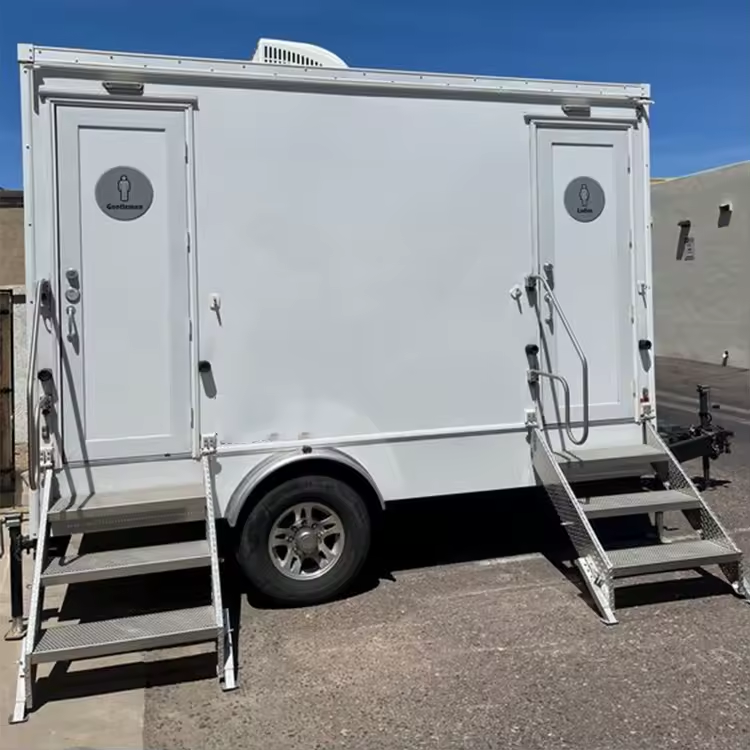
Trailers resemble small buildings on wheels. Many offer climate control, real sinks, vanity counters, interior lighting, and separate stalls for men and women. They are common at weddings, galas, and upscale outdoor events. Because they are towed in and need a level spot, they require more planning around access and placement.
Accessible Units
Events open to the public generally need accessible options. These units have more floor space, grab bars, and wider doors for wheelchair users. Confirm availability early, since rental companies may carry fewer of them.
How Many Units Do You Actually Need?
Too few units create lines, and lines create frustration. Planning for the right quantity matters more than most renters realize.
For workplaces, the U.S. Occupational Safety and Health Administration (OSHA) sets minimum toilet requirements for construction sites under standard 1926.51. For events, no single national rule applies, so most planners rely on industry guidelines and the rental company’s recommendations. Local health departments and event permit offices may also have their own requirements, so check with them.
Event length changes the math. Guests drink more at weddings and festivals, and alcohol increases restroom use. A cocktail hour followed by dinner and dancing needs more capacity than a two-hour open house of the same size. It is also wise to add one extra unit as a buffer, and to include at least one accessible unit where appropriate.
If your guest list includes many women, remember that they typically need more time per visit. Trailers with multiple stalls help here, and so does spreading units across more than one location.
Cleanliness and Servicing Schedule
Cleanliness is the single most visible difference between rental companies. Ask what condition units arrive in, and how they are cleaned before each job.
For multi-day events and long projects, ask how often the units are serviced. Servicing typically includes pumping waste, refilling water or sanitizer, restocking toilet paper, and wiping surfaces. A standard weekly service may work for a small work crew but fall short for a busy festival.
At large or luxury events, consider an on-site attendant. A staff member who restocks supplies and keeps surfaces clean during the event prevents problems before guests notice them. It costs more, but it often makes the biggest difference to guest experience.
Delivery, Placement, and Site Logistics
A great unit is only useful if it arrives on time and sits in the right place. Discuss logistics early, ideally with a site visit or photos.
Access and Ground Conditions
Delivery trucks and trailers need a clear path. Narrow gates, soft ground, steep slopes, and low branches can block delivery. Trailers need level, stable ground, and muddy sites may require extra preparation or ground protection.
Power and Water Needs
Luxury units may need electricity for lighting and climate control, and some need a water connection. Find out whether the unit is self-contained or requires hookups. If you need a generator, ask whether the rental company supplies one.
Placement for Guests
Position units where guests can find them easily but not so close to dining or ceremony areas that sounds and odors intrude. Add lighting and clear signage if the event runs after dark. A short walkway lit with string lights can make a basic setup feel thoughtful.
Comparing Features and Typical Pricing Factors
Rental prices vary widely by region, season, unit type, and event length, so exact numbers are best confirmed through written quotes. What stays consistent is the set of factors that drive cost. The table below summarizes the main unit categories and what to weigh when choosing among them.
Portable Restroom Comparison Guide
| Unit Type | Best For | Typical Comforts | Main Consideration |
|---|---|---|---|
| Standard single unit | Job sites, casual gatherings | Basic toilet, ventilation | Lowest cost, fewest amenities |
| Deluxe flushing unit | Festivals, corporate events | Flush toilet, sink, better lighting | Needs more frequent water refills |
| Luxury restroom trailer | Weddings, galas, upscale events | Climate control, vanity, multiple stalls | Requires level space and power |
| Accessible unit | Public events, any site with accessibility needs | Wider space, grab bars | Limited supply, book early |
| ADA-style trailer | Large public events | Spacious interior, ramp access | Higher cost, advance planning |
Use the table as a starting point, then request quotes in writing. Compare the same details across each quote: number of units, delivery and pickup fees, servicing, event duration, and any attendant costs.
Read the Contract Before You Sign
A clear contract protects both sides. Many rental disputes come from details nobody discussed in advance.
Check what the base price includes. Some quotes list the unit rate alone, while delivery, pickup, fuel, cleaning, and service fees appear later. Ask about cancellation and rescheduling terms, especially for outdoor events affected by weather.
Look at liability and damage clauses as well. Understand who is responsible if a unit is damaged, tipped over, or vandalized. Confirm the delivery and pickup windows in writing, and ask what happens if the company arrives late. A reliable provider will answer these questions plainly.
Evaluating the Rental Company Itself
The company behind the units matters as much as the units. Look for a provider with a clear service area, responsive communication, and a track record at events similar to yours.
Read recent customer reviews and look at photos of actual equipment, not stock images. Ask whether they carry insurance and whether they follow local waste-handling regulations. Responsible operators dispose of waste at approved facilities, which matters for both the environment and your liability.
Test their responsiveness during the quoting stage. A company that answers slowly before you book is unlikely to speed up once the event is underway. Ask what happens if something goes wrong on the day, and whether a contact person is reachable during the event.
Common Mistakes to Avoid
Booking too late is the most common problem. Spring and early fall are busy seasons for weddings and outdoor events, and trailers in particular can sell out. Reserve as soon as your date and venue are firm.
Another frequent mistake is choosing on price alone. A low quote that omits servicing and delivery may cost more than a higher quote that includes everything. Underestimating guest numbers is equally costly, since long lines affect everyone’s experience.
Finally, some planners forget to confirm venue rules. Certain venues restrict where units can be placed or require approved vendors. Check this before you book, not after.
Conclusion
Choosing the right rental comes down to matching the unit to your purpose, planning enough capacity, and confirming how the units will be delivered, cleaned, and maintained. Compare written quotes line by line, read the contract carefully, and book early. A few questions asked in advance can prevent long lines, unpleasant surprises, and last-minute scrambling. If you want help choosing a setup for your event, reach out to a trusted local rental provider and share your guest count, schedule, and site details for a tailored recommendation.
FAQs
How far in advance should I book portable restrooms?
For weddings and large events, book as early as your date and venue are confirmed, often several months ahead. Standard units for job sites are usually available on shorter notice.
How many restrooms do I need for 100 guests?
It depends on the event length, whether alcohol is served, and the unit type. A few standard units may suit a short event, while a longer, formal event may call for more or a multi-stall trailer. Ask your provider for a recommendation based on your schedule.
Do portable restroom rentals include servicing?
Not always. Some quotes cover delivery and pickup only. Confirm whether servicing, restocking, and cleaning are included, and how often they happen.
Do I need a permit to place portable restrooms at my event?
Requirements vary by city and county. Contact your local health department or permit office, and check your venue’s rules before booking.
What is the difference between a deluxe unit and a restroom trailer?
A deluxe unit is a single stall with added comforts like a flush toilet and sink. A trailer is a larger structure with multiple stalls and often climate control and vanity areas, making it better for formal events.