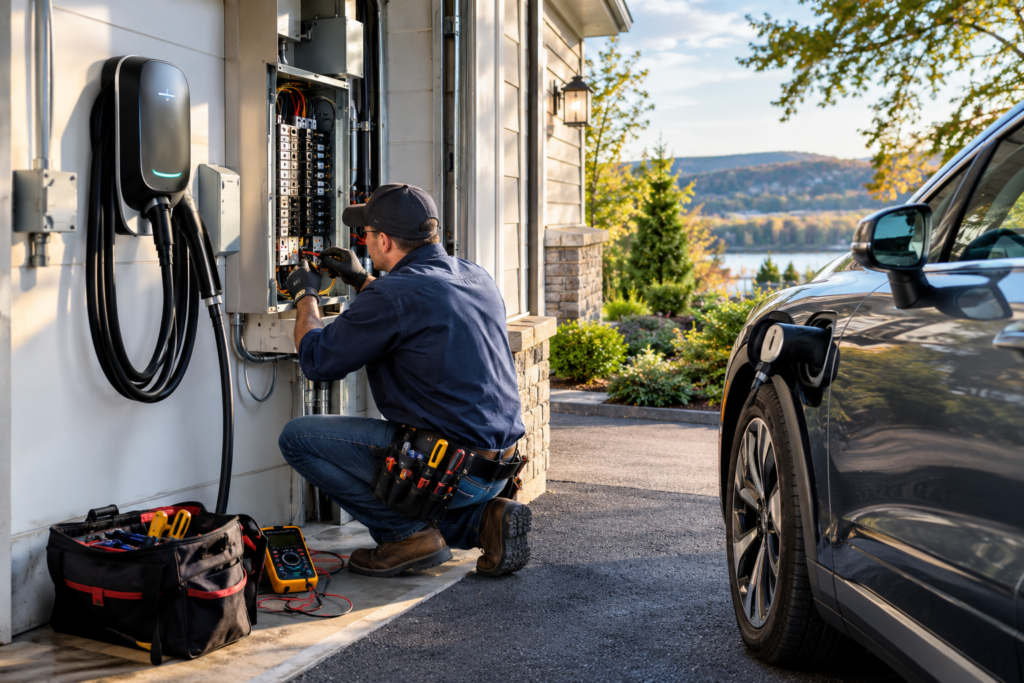
More driveways across the Hudson Valley now feature a small charging unit beside the family car. As electric vehicles become part of everyday life, EV charger installation in Middletown, NY has shifted from a rare request to a common home upgrade. For many drivers, the switch starts the moment they realize a standard wall outlet just won’t cut it for daily charging.
Picture a new EV owner plugging into a regular household socket overnight, only to wake up with barely half a charge. That slow trickle is a familiar frustration, and it’s usually the reason people start looking into a proper charging setup.
Understanding How Home Charging Works
Most residential charging falls into two categories. Level 1 charging uses a standard 120-volt outlet and adds only a few miles of range per hour. Level 2 charging runs on a 240-volt circuit, similar to what a dryer or oven uses, and can fully charge a vehicle overnight.
The difference matters. A Level 2 unit needs a dedicated circuit, proper wiring, and enough capacity in the home’s electrical panel. That’s why installation is rarely a plug-and-play job.
Older homes often carry the biggest surprises. A panel built decades ago may not have room for the added load, so an upgrade sometimes comes before the charger itself. A licensed electrician typically checks the panel, the wiring path, and local code requirements before any work begins.
Why Professional Installation Matters
Charging pulls steady, high current for hours at a time. Poor wiring or an overloaded circuit can lead to overheating, tripped breakers, or worse. That’s the main reason homeowners lean on trained electricians rather than DIY kits.
A correctly installed charger also protects the vehicle. Consistent voltage and grounding reduce wear on the car’s onboard charging system. Over the life of an EV, that reliability adds up.
There’s a practical benefit too. Permits and inspections, which most towns require, are far easier when the work meets code from the start. Skipping that step can cause headaches during a future home sale.
Real-World Situations Drivers Face
Consider a household that adds a second electric vehicle. Suddenly one charger isn’t enough, and the panel that handled a single car now struggles. Load management becomes the deciding factor.
Another common scenario involves detached garages. Running a safe line across a yard or through an older structure takes planning, not guesswork. Distance, conduit, and weatherproofing all come into play.
Electrical work outside of charging can surface too. Homeowners sometimes discover flickering lights or a warm outlet during an upgrade. That overlap is why some providers, such as Lightsmith Electric, handle both charger work and broader wiring concerns.
When Charging Meets Older Wiring
Adding a high-demand appliance can expose hidden faults in a home’s system. A breaker that keeps tripping or an outlet that won’t hold power often points to a deeper issue. In those cases, Electrical Troubleshooting Services in Nyack, NY and nearby areas help pinpoint the root cause before a charger goes in.
Diagnosing these problems early saves money. A small fix now beats a failed inspection or a damaged circuit later. Many drivers across Middletown, NY find that a quick electrical check clears the path for smooth, worry-free charging.
The takeaway is simple. Reliable EV charging starts with a sound electrical foundation, and that foundation is worth getting right the first time.
Frequently Asked Questions
How long does it take to install a home EV charger?
Most Level 2 installations take a few hours. Jobs that need a panel upgrade or long wiring runs can stretch into a full day.
Do I need a permit to install an EV charger?
In most towns, yes. Local codes usually require a permit and an inspection for new 240-volt circuits.
Can any electrician install an EV charger?
A licensed electrician familiar with EV equipment and local code is the safest choice. They ensure proper sizing, grounding, and inspection compliance.
Why does my charger keep tripping the breaker?
This often signals an overloaded circuit, a wiring fault, or a panel too small for the load. An electrical diagnosis can identify the exact cause.
Is a Level 2 charger worth it for a single EV?
For daily drivers, usually yes. It charges several times faster than a standard outlet and reduces range anxiety overnight.