For many food businesses, online ordering started as a way to survive. Over time, it became the primary way customers interact with a brand. Today, digital ordering is no longer just an operational tool—it is the backbone of revenue, customer relationships, and long-term growth. This shift has forced restaurants, cloud kitchens, and food entrepreneurs to rethink who really controls their digital presence. That reassessment has led to growing interest in the white label online food ordering system.
Unlike third-party marketplaces that act as gatekeepers, white label systems allow food businesses to own their technology layer. When done right, this ownership translates directly into stronger branding, better margins, and more predictable growth.
What a White Label Online Food Ordering System Really Is
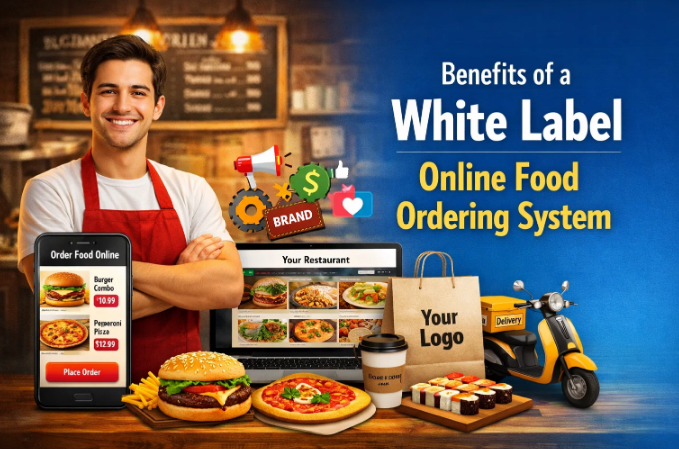
At its core, a white label online food ordering system is a ready-built digital platform that businesses can deploy under their own brand. Customers place orders through a branded website or mobile app, not a third-party marketplace. The technology runs in the background, invisible to the end user.
From a practical standpoint, this means the ordering flow, visual design, and customer communication all belong to the business. The system typically includes order management, payments, delivery coordination, and reporting tools. Instead of renting space inside someone else’s ecosystem, businesses operate within their own digital environment.
This difference may sound subtle, but in real-world operations, it changes everything.
Why Brand Control Is More Than a Marketing Concern
Brand control in food delivery is often misunderstood as a design issue. In reality, it is a strategic asset. Every interaction a customer has—opening an app, receiving a notification, tracking an order—shapes how they perceive the brand.
A white label online food ordering system allows businesses to design these interactions intentionally. The tone of notifications, the layout of menus, and even the checkout experience can be aligned with brand identity. Over time, this consistency builds familiarity and trust, which directly affects repeat orders.
On third-party platforms, branding competes for attention. In a white label environment, the brand stands alone.
Owning Customer Data Changes the Game
One of the most overlooked advantages of a white label online food ordering system is data ownership. When customers order through a branded platform, their behavior becomes visible and usable. Order history, preferences, frequency, and location data all remain with the business.
This data is not just for reporting. It fuels smarter decisions. Businesses can identify peak ordering times, optimize menus, and personalize offers. Over time, patterns emerge that help improve both marketing and operations.
In contrast, marketplace platforms often restrict access to this information. Without data ownership, businesses are forced to make decisions based on assumptions instead of evidence.
Profit Growth Goes Beyond Saving on Commissions
Avoiding marketplace commissions is an obvious benefit, but it is not the most powerful one. A white label online food ordering system opens the door to revenue strategies that are impossible or limited on third-party platforms.
Businesses gain full control over pricing logic, promotional rules, and loyalty incentives. They can test bundles, introduce subscription models, or offer personalized discounts without external restrictions. These small optimizations compound over time and significantly impact profitability.
When revenue strategies are built into owned technology, margins become easier to protect and scale.
Operational Efficiency Through System Integration
Modern food businesses rely on multiple digital tools to operate smoothly. A white label online food ordering system is designed to fit into this ecosystem rather than sit outside it. Integration with POS systems, kitchen workflows, and delivery management tools reduces manual work and errors.
Orders flow directly from the customer interface to the kitchen and then to delivery coordination. Staff spend less time reconciling systems and more time focusing on execution. As order volume grows, this efficiency becomes essential.
Technology that reduces friction is not just convenient—it is scalable.
The Role of the White Label Food Delivery App
For many customers, the mobile experience defines the brand. A white label food delivery app gives businesses full ownership of that experience. Instead of adapting to a generic interface, they can design flows that match how their customers actually order.
This flexibility allows businesses to simplify checkout, highlight popular items, or tailor navigation to local preferences. Over time, continuous improvements can be made based on real usage data rather than platform limitations.
A branded app also strengthens customer loyalty. When the app icon on a phone represents a single brand, the relationship feels more personal.
Supporting Multi-Vendor and Marketplace Models
Not every food business operates as a single brand. Some act as aggregators themselves, connecting multiple restaurants or vendors under one umbrella. In these cases, a multi-vendor food delivery app built on white label technology provides the necessary foundation.
From a technical perspective, this requires sophisticated role management, vendor dashboards, and commission logic. White label systems designed for multi-vendor use cases allow operators to configure rules without losing brand ownership. This creates opportunities for regional or niche marketplaces that operate independently of global platforms.
The key advantage is control over how the marketplace evolves.
Scalability Without Constant Rebuilding
Growth exposes weaknesses in technology. Systems that work at low volume often fail under pressure. A well-designed white label online food ordering system is built with scalability in mind from day one.
Cloud infrastructure, modular components, and automated scaling ensure performance remains stable during peak demand. Businesses can expand to new locations or markets without rebuilding their digital foundation. This reduces technical debt and long-term costs.
Scalability is not just about handling more orders—it is about growing without disruption.
Security and Compliance as Built-In Requirements
Handling online payments and personal data comes with responsibility. A white label online food ordering system typically includes security measures such as encrypted transactions, secure authentication, and compliance with payment standards.
From an operational perspective, this reduces risk. Businesses do not need to engineer security from scratch, yet they maintain ownership of the platform. As regulations around data privacy tighten, having compliance embedded into the system becomes increasingly important.
Security is not a feature customers notice—until it fails. White label systems help prevent that failure.
Predictable Costs and Long-Term ROI
Marketplace platforms often appear affordable at first, but become expensive as order volume grows. A white label online food ordering system usually follows a licensing or subscription model, making costs more predictable.
This predictability allows better financial planning. As customer retention improves and marketing becomes more efficient, return on investment becomes easier to measure. Over time, owned technology pays for itself through reduced dependency and improved margins.
In the long run, stability often matters more than short-term savings.
The Role of Food Delivery App Development Companies
Behind every white label system is an app development company responsible for building and maintaining the technology. While businesses may not market this relationship, it is critical to long-term success.
Experienced development teams focus on modular architecture, performance optimization, and future readiness. The best systems are designed to evolve, not remain static. This ensures the platform can adapt to new features, integrations, and customer expectations.
Technology is not a one-time project—it is an ongoing partnership.
Adapting to Future Technologies
Food delivery technology continues to evolve. Artificial intelligence, predictive analytics, voice ordering, and automation are no longer theoretical. A white label online food ordering system offers the flexibility to adopt these innovations as they become practical.
Because the platform is owned, businesses can experiment without waiting for marketplace approval. This agility becomes a competitive advantage as customer expectations change. Future-ready architecture ensures the system grows alongside the business.
Innovation is easier when the technology belongs to you.
Final Thoughts
A white label online food ordering system is not just an alternative to third-party platforms. It represents a shift in mindset—from dependency to ownership. When businesses control their brand, data, and technology, they gain leverage in every part of the operation.
Higher profits are not achieved through cost cutting alone. They come from smarter decisions, stronger customer relationships, and scalable systems. White label technology brings these elements together under one roof.
In an industry where margins are thin and competition is intense, owning the digital foundation is no longer optional. It is the difference between reacting to change and shaping it.