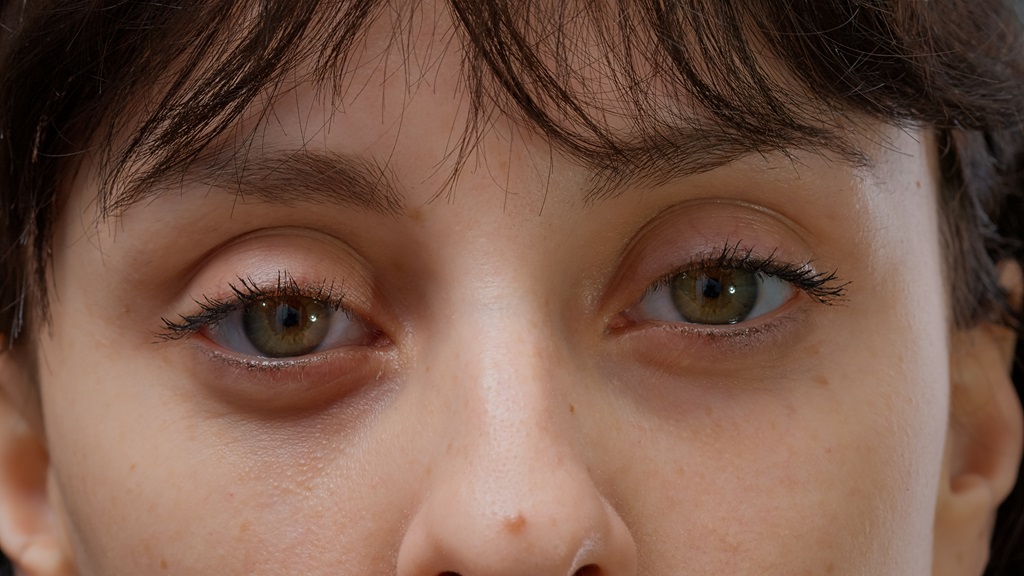
Macro shot authentic portrait of woman with natural skin, beautiful attractive person smiling in front of camera. Female model with positive facial expressions and fresh look. Close up.
The area around the eyes has delicate skin and a complex arrangement of muscles, fat, connective tissue, and supporting structures. Changes in these tissues can influence the appearance of the upper or lower eyelids, including the development of visible skin folds, puffiness, or under-eye bags.
Before eyelid surgery is planned, a detailed assessment is important to understand the characteristics of the individual eyelids. Two factors that can receive particular attention are skin elasticity and tissue volume. Evaluating these features helps the surgeon understand how much skin and tissue are present and how they contribute to the appearance of the eyelids.
For patients considering Eyelid Bag Surgery Dubai, the consultation provides an opportunity to assess these characteristics and discuss individual aesthetic goals. At Cornerstone, the evaluation can help guide an approach that takes the patient’s eyelid anatomy and overall facial appearance into consideration.
Why Are Skin Elasticity and Tissue Volume Assessed?
Not every patient develops eyelid bags or excess eyelid skin for the same reason. In some individuals, changes in skin elasticity may be more noticeable, while others may have greater prominence of underlying tissue.
The surgeon therefore needs to evaluate the different components contributing to the appearance of the eyelids.
Skin elasticity can influence how the skin sits around the eyes, while tissue volume can affect fullness in the upper or lower eyelid area.
Understanding these characteristics allows the surgeon to develop a more individualised treatment plan rather than relying on a standard approach for every patient.
What Does Skin Elasticity Mean in Eyelid Assessment?
Skin elasticity refers to the ability of the skin to stretch and return toward its original position. The skin around the eyes is particularly thin and delicate, making its characteristics different from those of many other areas of the face.
During an eyelid assessment, the surgeon observes the quality and movement of the eyelid skin.
The evaluation may consider:
- Skin thickness
- Skin flexibility
- Skin laxity
- The amount of visible excess skin
- Skin movement during facial expression
- Differences between the upper and lower eyelids
These observations help the surgeon understand how the skin contributes to the patient’s eyelid appearance.
How Is Skin Laxity Evaluated?
Skin laxity describes a reduction in skin tightness or firmness. During consultation, the surgeon may visually assess the amount of loose skin around the upper or lower eyelid.
The assessment can be performed while the patient is relaxed and during natural facial expressions.
The surgeon considers how the skin rests over the eyelid and whether excess skin extends toward the surrounding areas.
The amount and location of laxity can help determine which areas should receive attention during treatment planning.
How Is Skin Elasticity Assessed During Physical Examination?
A physical examination provides information that cannot always be obtained from photographs alone.
The surgeon may gently assess the eyelid skin and observe how it moves and returns to its resting position. The purpose is to understand the characteristics of the skin and its relationship with the underlying tissues.
The examination is performed carefully because the eyelid region contains delicate structures.
The findings are considered alongside the patient’s facial anatomy, skin quality, and treatment goals.
How Is Tissue Volume Evaluated?
Tissue volume refers to the amount and distribution of soft tissue around the eyelids. The appearance of eyelid bags can be influenced by the position and prominence of underlying fat compartments as well as surrounding soft tissue.
During the consultation, the surgeon examines the upper and lower eyelids from different angles.
The assessment may consider whether fullness is concentrated beneath the eyes, toward the inner portion of the lower eyelid, or within the upper eyelid area.
The surgeon also evaluates how the tissue relates to neighbouring facial structures.
Why Is the Distribution of Fat Around the Eyes Important?
Fat around the eyes is naturally divided into different compartments. Changes in the position or prominence of these compartments can influence the appearance of fullness or bags.
A surgeon assessing eyelid appearance may therefore look at the distribution of tissue rather than simply considering the overall amount.
This helps determine whether the appearance is primarily associated with excess tissue, changes in skin, or a combination of different factors.
Understanding the distribution can contribute to more precise treatment planning.
How Are Upper and Lower Eyelids Assessed Differently?
The upper and lower eyelids have different anatomical characteristics and often require different considerations during assessment.
For the upper eyelid, the surgeon may evaluate excess skin, the position of the eyelid crease, tissue fullness, and the relationship between the eyelid and eyebrow.
For the lower eyelid, attention may be given to under-eye fullness, skin quality, tissue distribution, and the transition between the lower eyelid and cheek.
These differences are important because treatment planning needs to reflect the specific anatomy of the area being considered.
How Does the Surgeon Assess the Upper Eyelid?
During an upper eyelid assessment, the surgeon examines the amount of visible skin and the way it folds over the natural eyelid crease.
The position of the eyebrow may also be considered because changes in the brow can influence the appearance of the upper eyelid.
The surgeon may assess whether the visual heaviness of the upper eyelid is primarily associated with skin, underlying tissue, brow position, or a combination of these factors.
This allows the treatment plan to be based on the specific anatomical findings.
How Does the Surgeon Assess the Lower Eyelid?
The lower eyelid requires a detailed assessment of the skin, underlying tissue, eyelid contour, and transition toward the cheek.
The surgeon may observe the patient from the front and side to understand how the lower eyelid projects in relation to the surrounding facial structures.
Under-eye fullness may appear differently depending on lighting, facial expression, and viewing angle.
A comprehensive examination helps the surgeon distinguish between skin-related changes and changes in underlying tissue volume.
How Does Facial Structure Influence Tissue Assessment?
The eyelids are part of the overall face, so their appearance needs to be considered in relation to surrounding structures.
The surgeon may assess the cheeks, eyebrows, forehead, and facial contours as part of the consultation.
For example, the transition between the lower eyelid and upper cheek can influence how under-eye fullness appears.
Considering these relationships helps the surgeon understand the broader facial context rather than focusing only on the eyelid itself.
How Are Photographs Used During Eyelid Assessment?
Clinical photographs can provide a useful visual record of the patient’s eyelid appearance.
The surgeon may take photographs from different angles, including frontal and side views. These images can help document skin folds, tissue fullness, eyelid position, and facial proportions.
Photographs may also be useful for reviewing the patient’s appearance during treatment planning.
However, photographs are generally considered alongside the physical examination because skin elasticity and tissue characteristics cannot always be fully evaluated through images alone.
Does Facial Expression Affect the Assessment?
Yes. The appearance of the eyelids can change with facial expression.
The surgeon may observe the patient while the face is relaxed and during natural expressions such as smiling or looking upward.
This can provide additional information about how the eyelid skin moves and how tissue fullness changes with facial activity.
Considering these differences can help the surgeon understand the patient’s natural eyelid appearance more comprehensively.
How Is Eyelid Symmetry Evaluated?
The two sides of the face are rarely perfectly identical, so the surgeon examines both eyelids separately.
The assessment may compare:
- Upper eyelid skin
- Lower eyelid fullness
- Eyelid crease position
- Brow position
- Tissue volume
- Overall eyelid contour
Recognising natural differences between the left and right sides is important when planning an individual treatment.
The goal is to understand the patient’s existing anatomy rather than assuming both sides are exactly the same.
How Does Skin Quality Influence Treatment Planning?
Skin quality can influence how the eyelid area appears and how the surgeon approaches treatment planning.
Thin skin, reduced elasticity, and visible folds may contribute differently to the appearance of the eyelids.
The surgeon considers these characteristics when determining which aspects of the eyelid need attention.
This evaluation is particularly important because the amount and quality of skin vary between individuals.
How Does Tissue Volume Influence the Treatment Plan?
The amount and location of tissue around the eyelids can influence the appearance of puffiness or fullness.
The surgeon assesses whether the tissue appears concentrated in particular areas and how it relates to the surrounding structures.
This can help determine whether the treatment plan should focus primarily on skin, tissue volume, or a combination of factors.
The approach is therefore based on the patient’s individual anatomy.
What Role Does the Patient’s Aesthetic Goal Play?
Clinical assessment provides information about the eyelids, but the patient’s preferences are also an important part of consultation.
Some patients may want a more refreshed appearance, while others may be primarily concerned with under-eye fullness or excess upper eyelid skin.
The surgeon can discuss these concerns and explain which anatomical factors contribute to the patient’s current appearance.
This creates a treatment plan that combines clinical assessment with the patient’s individual objectives.
How Is Previous Eyelid Treatment Considered?
Patients who have previously undergone eyelid procedures should provide details about their treatment history.
Previous surgery can influence the current amount of skin, tissue arrangement, and eyelid anatomy.
The surgeon may ask about the type of procedure performed, when it was performed, and which eyelid was treated.
This information can be considered alongside the current physical examination when developing a treatment plan.
Why Is a Personalised Eyelid Assessment Important?
The eyelid region differs considerably between individuals. Skin thickness, elasticity, tissue volume, brow position, eyelid shape, and facial proportions can all vary.
For this reason, there is no single assessment that applies equally to every patient.
A personalised examination allows the surgeon to identify the specific factors contributing to the patient’s eyelid appearance.
For patients considering Blepharoplasty Dubai, this detailed assessment can help establish an appropriate treatment approach based on individual anatomy and aesthetic goals.
What Should Patients Expect During the Consultation?
An eyelid surgery consultation generally begins with a discussion of the patient’s concerns and desired outcome.
The surgeon then examines the eyelids and surrounding facial structures. Photographs may be taken, and the surgeon may assess skin quality, elasticity, tissue volume, eyelid position, and facial symmetry.
Patients can also discuss their expectations and ask questions about the proposed treatment approach.
The consultation is an important opportunity to understand how the surgeon has assessed the eyelid area and why a particular treatment plan may be recommended.
Why Are Skin Elasticity and Tissue Volume Considered Together?
Skin and underlying tissue work together to create the visible contour of the eyelid.
Excess skin may contribute to folding or heaviness, while tissue volume can contribute to fullness. In many cases, the visible appearance reflects more than one anatomical factor.
Assessing these characteristics together allows the surgeon to develop a more complete understanding of the eyelid.
This is why a detailed consultation is an important part of planning Eyelid Bag Surgery Dubai.
Conclusion
Assessing skin elasticity and tissue volume is an important part of eyelid surgery consultation. The surgeon evaluates the quality and flexibility of the eyelid skin, the amount and distribution of underlying tissue, eyelid symmetry, facial proportions, and the relationship between the eyelids and surrounding structures.
Photographs and physical examination can provide complementary information, while the patient’s aesthetic goals help shape the overall treatment discussion.
For anyone considering Eyelid Bag Surgery Dubai, an individual assessment can provide a clearer understanding of what contributes to the appearance of the eyelids and how treatment planning may be approached. At Cornerstone, careful evaluation of skin and tissue characteristics can support a personalised approach to eyelid treatment.
FAQs
How is skin elasticity assessed before eyelid surgery?
The surgeon examines the eyelid skin and may gently assess its movement and flexibility during the physical examination. Skin thickness, laxity, and how the skin returns to its resting position may also be considered.
Why is tissue volume assessed before eyelid bag surgery?
Tissue volume can contribute to fullness around the upper or lower eyelids. Assessing its amount and distribution helps the surgeon understand which anatomical factors contribute to the patient’s appearance.
Are upper and lower eyelids assessed differently?
Yes. The upper eyelid assessment may focus on excess skin, eyelid crease, brow position, and tissue fullness, while the lower eyelid assessment may focus on under-eye fullness, skin quality, eyelid contour, and the transition toward the cheek.
Can photographs show skin elasticity?
Photographs can document the appearance of eyelid skin, but they cannot provide all the information obtained through a physical examination. The surgeon generally considers photographs together with clinical assessment.
Does facial structure affect eyelid surgery planning?
Yes. The eyebrows, cheeks, forehead, and surrounding facial contours can influence how the eyelids appear. These structures may therefore be considered during the consultation.
Why is eyelid symmetry evaluated?
Natural differences can exist between the two sides of the face. Comparing both eyelids allows the surgeon to understand these differences and consider them during individual treatment planning.
Does skin thickness affect eyelid assessment?
Yes. Skin thickness and quality can influence the appearance of the eyelids and are among the characteristics the surgeon may evaluate during consultation.
How does tissue distribution affect under-eye appearance?
The position and distribution of soft tissue around the lower eyelid can influence visible fullness. The surgeon evaluates where this fullness is located and how it relates to surrounding facial structures.
Does the eyebrow position matter during upper eyelid assessment?
Yes. Brow position can influence the appearance of the upper eyelid. The surgeon may assess the eyebrow and upper eyelid together to understand the overall appearance.
Can facial expressions change the appearance of eyelid bags?
Yes. Eyelid skin and underlying tissues can appear different during facial expressions. The surgeon may observe the patient both at rest and during natural expressions.
What is discussed during an eyelid surgery consultation?
The consultation may include the patient’s concerns, aesthetic goals, medical and treatment history, eyelid anatomy, skin quality, tissue volume, facial proportions, and the proposed treatment approach.
What is Blepharoplasty Dubai?
Blepharoplasty Dubai refers to eyelid surgery performed to address selected concerns involving the upper or lower eyelids. The appropriate approach depends on the patient’s individual anatomy and treatment goals.
Is every patient assessed in the same way before eyelid surgery?
The basic principles of assessment are similar, but the specific evaluation varies according to each patient’s eyelid anatomy, skin characteristics, tissue volume, facial structure, and desired outcome.
How does previous eyelid surgery affect assessment?
Previous eyelid treatment can change the existing skin and tissue arrangement. The surgeon may review previous procedures and incorporate this information into the current assessment.
Why is a personalised assessment important before eyelid surgery?
A personalised assessment helps identify the specific anatomical factors contributing to the patient’s eyelid appearance. This allows treatment planning to be based on individual characteristics rather than a standard approach.