Commercial properties require continuous attention to remain clean, functional, safe, and professional. Facility Services provide businesses with organized support for managing recurring property requirements. These services can cover cleaning, maintenance, inspections, exterior care, emergency response, and other responsibilities that influence how a building operates.
A well-managed facility does not depend entirely on fixing problems after they occur. Instead, effective facility management combines preventive planning, regular inspections, clear communication, and timely responses. This approach helps businesses maintain their properties while reducing unnecessary operational distractions.
Why Are Facility Services Important?
Commercial buildings experience constant activity.
Employees move between workspaces, customers visit reception areas, deliveries enter service areas, and shared facilities receive repeated use. Weather can also affect entrances, exterior surfaces, and surrounding property areas.
These conditions create ongoing maintenance and cleaning requirements.
Without a structured approach, minor issues can remain unresolved. Over time, they may affect workplace comfort, property appearance, safety, or operational efficiency.
A facility services program gives managers a practical framework for identifying these requirements and assigning appropriate priorities.
What Can Facility Services Include?
The exact scope depends on the property.
Common responsibilities can include:
- Commercial cleaning
- Building inspections
- Preventive maintenance
- Floor care
- Exterior upkeep
- Emergency response
- Property repairs
- Waste management
- Facility documentation
- Workplace support
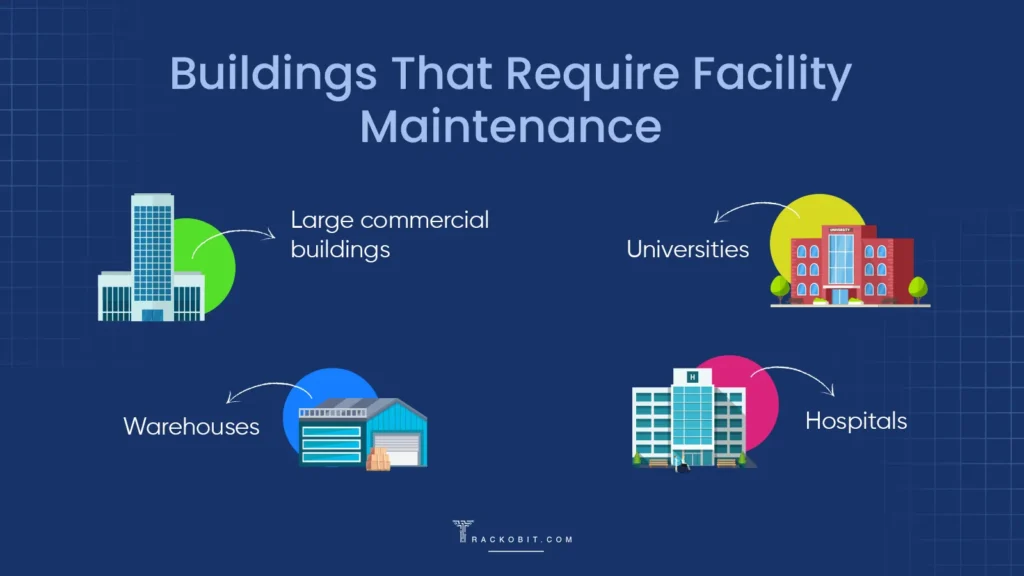
A corporate office may require different services from a warehouse, retail center, healthcare facility, or industrial property.
Therefore, service planning should reflect actual building conditions.
How Does Commercial Cleaning Support Facility Management?
Cleanliness is one of the most visible aspects of property management.
Entrances, reception areas, restrooms, corridors, breakrooms, and shared workspaces can accumulate dirt at different rates. High-traffic areas usually require more frequent attention.
Commercial Janitorial Services can help businesses establish recurring cleaning schedules based on building activity.
A structured cleaning plan prevents businesses from relying only on complaints or last-minute requests.
Managers can also review cleaning frequency as occupancy changes.
For example, a growing business may require additional attention in restrooms and shared spaces.
Why Is Preventive Maintenance Valuable?
Preventive maintenance focuses on identifying problems before they become major disruptions.
Regular inspections can reveal deteriorating surfaces, damaged fixtures, leaks, faulty components, and other developing concerns.
Managers can then prioritize repairs according to safety, operational impact, and cost.
This approach can make maintenance expenses more predictable.
It can also reduce the likelihood of emergency repairs caused by issues that remained unnoticed for long periods.
However, preventive maintenance does not mean every issue requires immediate repair. Managers should evaluate each problem according to its condition and importance.
How Does Facility Management Support Workplace Safety?
Safety should remain an important consideration in commercial property management.
Damaged flooring, wet surfaces, blocked walkways, faulty fixtures, and poor lighting can create avoidable concerns.
Regular inspections can help identify these conditions.
Businesses should also provide employees with clear reporting procedures.
When staff know how to report property concerns, facility managers can respond more quickly and determine the appropriate level of priority.
Urgent issues should receive appropriate attention rather than waiting for routine maintenance schedules.
Why Does Exterior Property Care Matter?
The exterior of a commercial building creates an immediate impression.
Customers and visitors encounter entrances, sidewalks, parking areas, landscaping, and exterior walls before entering the property.
Outdoor surfaces also experience constant environmental exposure.
Rain, wind, sunlight, debris, and temperature changes can affect their condition.
Regular inspections can identify damaged surfaces, drainage concerns, debris, and other developing problems.
Exterior upkeep should therefore form part of a broader facility strategy.
How Can Facility Services Improve Employee Experience?
Employees spend significant time inside commercial properties.
A clean, functional, and organized workplace can reduce distractions caused by unresolved facility problems.
Broken fixtures, poorly maintained shared spaces, uncomfortable work areas, or inaccessible facilities can interfere with normal activities.
Facility management helps businesses organize these physical requirements.
The goal is not simply to create attractive spaces. Facilities must also support how employees actually work.
For example, meeting rooms need to remain usable, shared areas need appropriate attention, and essential building components need timely maintenance.
How Can Businesses Control Facility Costs?
Facility costs can become difficult to predict when businesses rely entirely on reactive repairs.
Unexpected failures may require urgent work and can sometimes disrupt operations.
Preventive planning provides greater visibility.
Managers can review maintenance histories, identify recurring expenses, and prioritize work based on operational importance.
Maintenance records can also help businesses evaluate whether repeated repairs remain practical.
In some situations, replacing an aging component may provide better long-term value than continuing to repair it.
Why Is Facility Documentation Important?
Facility management involves many tasks.
Without accurate records, managers may struggle to determine which inspections occurred, which repairs were completed, and which concerns remain unresolved.
Documentation can include:
- Inspection reports
- Work orders
- Service schedules
- Photographs
- Repair histories
- Follow-up notes
These records create a useful history of property conditions.
They can also reveal recurring problems.
If a particular area repeatedly develops issues, managers can investigate whether the existing maintenance approach is sufficient.
How Can Technology Improve Facility Management?
Digital tools can make facility management easier to organize.
Work-order systems can collect employee requests and assign tasks. Inspection applications can document property conditions, while scheduling platforms can manage recurring services.
Centralized information improves visibility.
Managers can review open requests, completed tasks, upcoming maintenance, and recurring concerns without depending on scattered records.
For businesses operating multiple locations, digital systems can also provide a consistent method for monitoring facilities.
Technology should support clear processes rather than replace them.
How Should Facility Services Be Scheduled?
A useful schedule should reflect actual building conditions.
Managers should consider:
- Property size
- Occupancy
- Operating hours
- Traffic levels
- Building age
- Seasonal conditions
- Business activities
- Previous maintenance history
High-traffic areas may require more frequent attention.
Low-use spaces may follow longer schedules.
Managers should also review schedules regularly because business requirements change.
Expansion, renovations, workforce growth, and seasonal activity can all affect facility needs.
What Should Businesses Look for in a Facility Services Provider?
Commercial experience should be an important consideration.
Businesses should evaluate reliability, responsiveness, employee training, safety practices, communication, quality control, and scheduling flexibility.
A provider should understand that every commercial property has different priorities.
A retail center may need more customer-facing attention, while an industrial facility may require stronger focus on equipment and operational areas.
Clear communication is equally important.
Businesses should understand which services are included, how requests are handled, and how urgent concerns are escalated.
How Can Facility Services Support Business Continuity?
Facility problems can interrupt operations quickly.
A water leak may restrict access to a workspace. A damaged entrance can affect customers. A maintenance failure may prevent employees from using essential areas.
Prepared procedures can improve the response.
Businesses should maintain updated provider contacts and establish clear responsibilities for reporting urgent issues.
Facility teams can then prioritize affected areas and coordinate appropriate support.
Preparation cannot prevent every incident, but it can reduce confusion when problems occur.
Why Should Businesses Review Facility Performance?
Facility management should evolve with the property.
Managers can review cleaning quality, maintenance response times, recurring issues, inspection results, and employee feedback.
These reviews help identify areas that require improvement.
For example, repeated complaints about one location may indicate that the current cleaning frequency or maintenance schedule does not match actual usage.
Adjusting the process can improve results without changing the entire facility strategy.
Why Are Facility Services a Long-Term Business Priority?
Commercial properties support employees, customers, visitors, and daily operations.
Consistent facility care helps maintain cleanliness, functionality, safety, professional presentation, and property condition.
About CFS provides facility solutions designed around the practical requirements of commercial properties.
An effective facility strategy combines scheduled cleaning, preventive maintenance, inspections, responsive support, documentation, and regular performance reviews. By managing these responsibilities consistently, businesses can maintain commercial environments that remain organized, functional, and ready for everyday operations.