Picture a family that just bought an older home on a quiet cul-de-sac. The rooms are spacious and the yard is perfect, but the floors tell a different story. There’s worn carpet in the living room, faded tile in the kitchen, and a hallway that squeaks with every step.
Many homeowners face this situation, and it’s often what starts the conversation about hardwood flooring installation in Alpharetta GA. Wood floors remain one of the most requested upgrades in North Georgia homes. Knowing how the process works makes the decision far less stressful.
Why Hardwood Still Holds Its Appeal
Flooring trends come and go, but hardwood has stayed popular for decades. It brings warmth to a room and works with almost any design style, from farmhouse to modern.
Real estate agents often say that buyers notice floors first. A well-installed oak or hickory floor can make a home feel finished and cared for, even before the furniture arrives.
How Hardwood Flooring Installation Actually Works
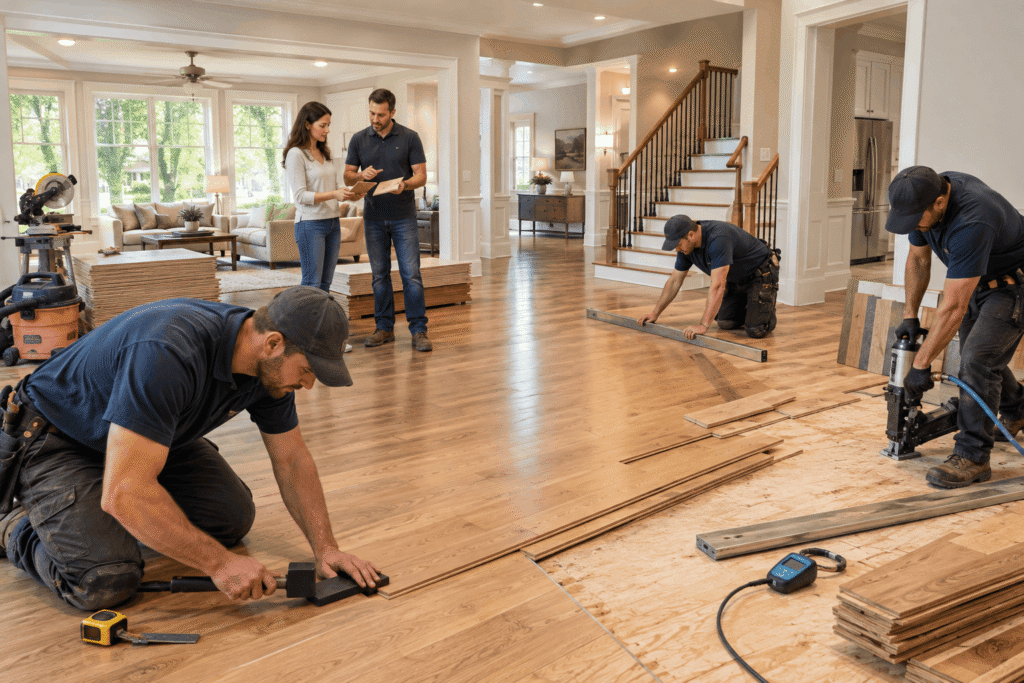
Installation is more than laying boards side by side. The job usually starts with an inspection of the subfloor, the layer underneath that supports everything. If the subfloor is uneven, damp, or damaged, problems will show up later no matter how good the wood is.
In Alpharetta, many homes built in the 1990s and 2000s sit on crawl spaces or concrete slabs. Each foundation type affects which installation method makes sense. Solid hardwood is often nailed down over plywood, while engineered hardwood can be glued or floated over concrete.
Moisture is the next big factor. Georgia’s humid summers can cause wood to swell, and drier winter air can make it shrink. That’s why installers typically let the boards sit in the home for several days before installation. This “acclimation” period helps the wood adjust to the indoor climate.
Once the wood is ready, the boards are laid out, cut to fit around doorways and vents, and secured in place. Unfinished hardwood then gets sanded, stained, and sealed on-site. Prefinished boards skip that step, which shortens the timeline and reduces dust.
The Real Benefits Homeowners Notice
Durability is one of the biggest advantages. A quality hardwood floor can last 50 years or more with proper care. Solid wood can be sanded and refinished several times, so scratches and dull spots don’t mean replacement.
Hardwood is also easier to keep clean than carpet. It doesn’t trap dust, pet dander, or pollen in the same way, which matters during the long Georgia allergy season. A quick sweep and an occasional damp mop usually do the trick.
There’s also the value question. Homes with hardwood floors often appeal to more buyers, and the upgrade tends to return a good share of its cost at resale. For people planning to stay put, the payoff is simpler. They get a floor they enjoy walking on every day.
Hardwood vs. Other Options
Not every room is a good fit for wood. Basements, laundry rooms, and full bathrooms see moisture that can damage hardwood over time. Many homeowners mix materials based on how each space gets used.
That’s where vinyl comes into the picture. Interest in luxury vinyl plank flooring in Watkinsville GA and other parts of the state has grown because it handles water well and mimics the look of real wood. It’s a practical choice for spaces where spills and humidity are common.
Some families choose hardwood for the main living areas and vinyl plank for wet zones. Others compare the two side by side before deciding. Homeowners researching luxury vinyl plank flooring in Watkinsville GA often discover that the right answer depends on lifestyle, budget, and how long they plan to own the home.
Real-World Scenarios
Consider a couple with two young kids and a large dog. They love the look of hardwood but worry about scratches. In cases like this, installers often suggest harder species like hickory or white oak, paired with a matte finish that hides wear better than high gloss.
Another common situation involves an empty-nester renovating a 1980s ranch home. The original carpet hides a solid subfloor in good shape. Here, solid hardwood is a natural fit, and the house gains a timeless look that suits its age.
Then there are new-build owners who want an upgrade without the wait. Prefinished engineered hardwood can often go in within a few days. Local professionals such as Lica Hardwood Floors LLC often point out that engineered planks handle seasonal humidity shifts better than some solid wood options.
What to Think About Before Getting Started
Timing matters. Spring and fall are often busy seasons for flooring work, so planning ahead helps. It’s also smart to clear furniture, plan for pets, and expect some noise during installation.
Budget should include more than the wood itself. Subfloor repairs, trim work, moving furniture, and removing old flooring can all add to the final cost. Asking for a detailed written estimate helps avoid surprises.
Getting several quotes is a good habit too. Comparing materials, warranties, and timelines gives homeowners a clearer picture of what a fair price looks like for hardwood flooring installation in Alpharetta GA.
FAQs
How much does hardwood flooring installation cost?
Costs vary based on wood species, board width, and the condition of the subfloor. Many homeowners pay somewhere between $8 and $15 per square foot for materials and labor combined.
How long does it take to install hardwood floors?
Most average-sized rooms take one to three days. Site-finished floors need extra time for sanding, staining, and drying, which can stretch the job to a week.
Can hardwood be installed over a concrete slab?
Yes, but engineered hardwood is usually the better choice over concrete. It’s glued down or floated and handles moisture changes more reliably than solid wood.
Is hardwood or luxury vinyl plank better for my home?
Hardwood offers long-term value and can be refinished many times. Luxury vinyl plank is more water-resistant and budget-friendly, which makes it a strong pick for kitchens, baths, and basements.
Does Georgia humidity affect hardwood floors?
Humidity can cause wood to expand and contract throughout the year. Proper acclimation, a moisture barrier, and steady indoor climate control help keep boards stable.