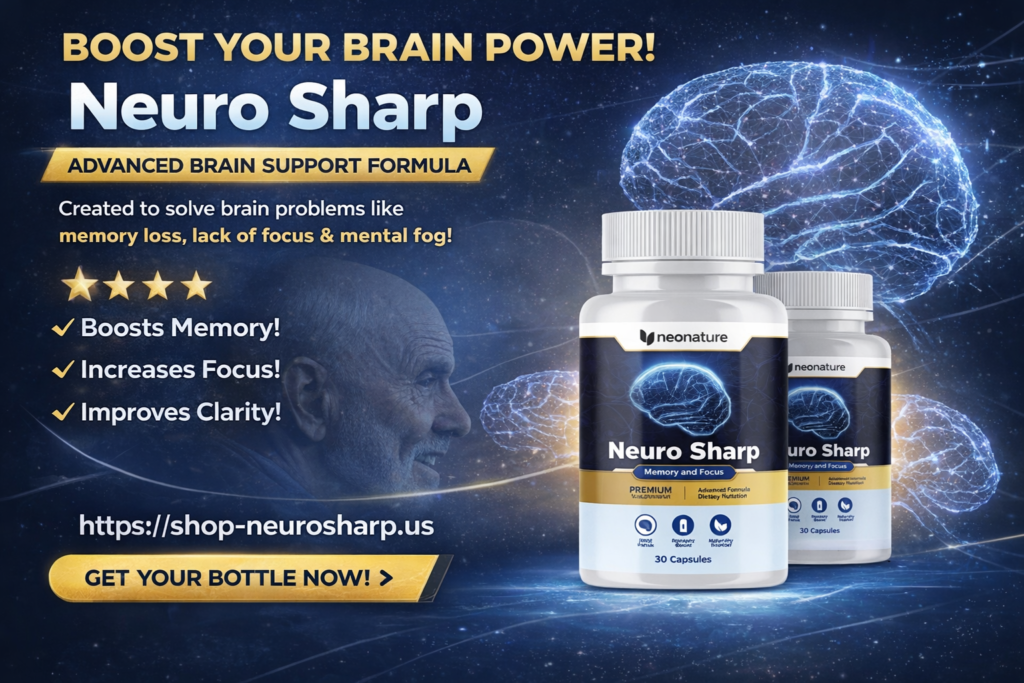
Neuro Sharp
If you’ve ever typed “Neuro Sharp”, “NeuroSharp brain supplement”, or “best nootropic for focus and memory” into Google, you’re not alone. Interest in mental clarity, memory support, and “brain fog” solutions has exploded—especially among students, professionals, gamers, and adults who simply want to feel sharper during busy weeks.
But here’s the reality: the brain-supplement market is crowded, product pages can be vague, and marketing language often sounds more certain than the science actually is. This article breaks Neuro Sharp down in a clear, balanced way—what it is, why people use it, what its commonly listed ingredients do, what evidence exists, and how to use it responsibly without chasing hype.
Important note: “Neuro Sharp/NeuroSharp” is used across multiple supplement listings and sellers, and formulas can vary. Always verify ingredients from the label of the exact bottle you’re buying. Some Neuro Sharp listings commonly mention Bacopa monnieri, Ginkgo biloba, Huperzine-A, Alpha GPC, L-Tyrosine, GABA, Niacin, and Vitamin B6.
What Is Neuro Sharp?
Neuro Sharp is typically marketed as a brain support supplement (often called a nootropic supplement) designed to support:
- Focus and attention
- Memory and recall
- Mental energy
- Clarity during “brain fog” moments
Many Neuro Sharp product descriptions position it as a daily cognitive support blend rather than a quick “instant IQ” product. Common ingredient lists on major marketplaces include a combination of vitamins and nootropic-style compounds such as Bacopa, Ginkgo, Huperzine-A, Alpha GPC, L-Tyrosine, and GABA, along with Niacin and Vitamin B6.
Why People Search for “Brain Fog,” Focus, and Memory Support
Before judging any supplement, it helps to understand the problem it’s trying to solve. When people say they want better focus or memory, they often mean one (or more) of these:
- Sleep debt (the #1 hidden cause of poor attention)
- Stress overload and anxious thinking
- Overstimulation (constant switching between tasks/apps)
- Nutrient gaps (sometimes B12, vitamin D, iron, etc.)
- Lifestyle factors (low movement, poor diet, dehydration)
- Medical factors (thyroid issues, depression, medication effects, etc.)
Even highly reputable health sources emphasize that supplements are not “magic.” Some can help in specific situations, but the baseline of brain performance usually comes from sleep, stress management, and overall health habits.
That doesn’t mean brain supplements are useless—it means you get the best results when you treat them as support, not replacement.
How Neuro Sharp Ingredients May Work (Based on Common Formulas)
Below is a breakdown of the ingredients most commonly associated with Neuro Sharp listings, plus what research suggests and where expectations should stay realistic.
1) Bacopa monnieri (Brahmi): Memory & Learning Support (Slow Burn)
Bacopa monnieri is one of the best-known herbal ingredients in cognitive supplements. It’s often used for memory support, especially in the context of learning and recall over time.
- A 12-week randomized controlled trial reported improvements in areas like attention and working memory with Bacopa supplementation.
- A meta-analysis of randomized controlled trials found Bacopa may help certain attention-related domains, while also calling for more high-quality large trials.
What this means in real life: Bacopa is not usually a “take it today, feel it today” ingredient. It’s more like a consistency ingredient—people often evaluate it after 8–12 weeks, not 2–3 days. (And if a label is under-dosed, you may not feel much.)
Common expectation to avoid: Bacopa won’t fix severe memory issues overnight and isn’t a substitute for medical care for cognitive decline.
2) Ginkgo biloba: Blood Flow, Antioxidants, and Mixed Evidence
Ginkgo biloba is famous—maybe too famous—because it’s been marketed for decades for memory and circulation.
What does research say? It’s complicated:
- Reviews focusing on healthy people have found insufficient evidence to confidently recommend ginkgo for cognitive enhancement in healthy populations.
- Ginkgo has also been studied more seriously in clinical populations (like dementia/MCI), and some reviews suggest possible benefits in those settings depending on extract and dose—but results vary.
Safety note: Ginkgo can increase bleeding risk and may interact with certain medications (especially blood thinners). Health sources also warn about toxicity from raw ginkgo parts and stress safe supplement selection.
What this means in real life: If Neuro Sharp includes ginkgo, it may be more about broad “brain circulation/antioxidant” positioning than guaranteed focus gains—especially for healthy adults.
3) Huperzine-A: Acetylcholine Support (Potent, But Be Cautious)
Huperzine-A is a compound often discussed for its ability to inhibit acetylcholinesterase (which affects acetylcholine availability). It has been studied heavily in Alzheimer’s disease contexts.
- A systematic review of Huperzine-A trials in Alzheimer’s disease noted it was generally well-tolerated in the included studies, while still highlighting the importance of long-term safety considerations.
- Independent research summaries point out that short-term safety looks reasonably supported, but long-term data can be limited.
What this means in real life: Huperzine-A can feel “stronger” than many herbs for some people. That’s not always a good thing. It can potentially cause unwanted effects in sensitive users—especially if combined with other cholinergic compounds or certain medications.
If Neuro Sharp contains Huperzine-A, it’s one of the ingredients most worth discussing with a healthcare professional if you have medical conditions or take prescriptions.
4) Alpha GPC: Choline for Focus and Cognitive Performance
Alpha-GPC (α-GPC) is a choline-containing compound commonly used in nootropic stacks. Choline relates to acetylcholine pathways and is often associated with focus and mental performance.
- A 2024 paper reported that acute Alpha-GPC supplementation improved certain cognitive performance measures in a small group of healthy young males, based on Stroop test outcomes.
What this means in real life: Alpha-GPC may help some users feel more “on” cognitively, but responses differ a lot. Dose, tolerance, and individual baseline choline status matter.
5) L-Tyrosine: Performance Under Stress (Situational Support)
L-Tyrosine is an amino acid involved in producing catecholamines (dopamine/norepinephrine). It’s often used in supplements aimed at focus, especially during stress, sleep loss, or demanding workloads.
While I didn’t pull a specific tyrosine clinical citation in the web results above, it is widely used in focus formulas for its “stress-performance” positioning. As with many amino acids, it tends to be more about helping you perform when taxed, rather than giving superpowers on an easy day.
6) GABA: Calm Focus (But Effects Vary)
GABA is typically marketed for relaxation and calm. Some users like GABA-containing blends because they want focus without jitteriness.
The tricky part: oral GABA’s effects can vary widely by person, and formulas differ. The best approach is to treat GABA as a “calm support” ingredient rather than a guaranteed focus booster.
7) Niacin (Vitamin B3) + Vitamin B6: Energy Metabolism (Dose Matters)
Many Neuro Sharp listings mention Niacin and Vitamin B6 as part of the formula.
B vitamins are important for normal energy metabolism, but more is not always better:
- Dietitian-guided warnings have noted that high-dose Vitamin B6 can cause nerve issues in some cases, and that some popular brain supplements (including ginkgo in certain contexts) have risks or limited evidence.
What this means in real life: If you already get plenty of B vitamins (or take a multivitamin), stacking extra B6 could be unnecessary. Always check the label and avoid exceeding safe long-term intakes unless supervised.
What Benefits Can You Realistically Expect?
If Neuro Sharp’s formula and dosing are reasonable, users typically hope for improvements like:
- Less mental fatigue during long work sessions
- Better sustained attention (fewer “wander” moments)
- Smoother recall (names, tasks, studying)
- Less brain fog (especially if stress-related)
But the most honest expectation is this:
Neuro Sharp is more likely to “support” than to “transform.”
Many ingredients associated with focus/memory work best when:
- You take them consistently (especially herbs like Bacopa)
- Your sleep and hydration are decent
- You’re not expecting a stimulant-like punch
Also, response is personal. Two people can take the same nootropic and report totally different outcomes.
How Long Does It Take to Work?
This depends on the ingredient types:
- Fast/acute (hours–days): Alpha-GPC (for some), tyrosine (especially under stress), possibly GABA (calm)
- Slow/accumulative (weeks): Bacopa (often evaluated after 8–12 weeks in studies)
- Unpredictable/mixed: Ginkgo in healthy adults is inconsistent in research
A practical approach: evaluate Neuro Sharp in two phases:
- First 7–10 days: tolerance, side effects, sleep impact
- Weeks 6–12: memory/learning changes (if Bacopa is included and properly dosed)
Safety, Side Effects, and Who Should Avoid It
Because Neuro Sharp often combines multiple cognitive ingredients, it’s important to treat it like a real intervention—not candy.
Common side effects users may report (varies by formula)
- Headache (sometimes from choline-related ingredients)
- Digestive discomfort (herbs/vitamins)
- Vivid dreams or sleep disruption (some nootropics do this to certain users)
- Jittery or “wired” feeling (if combined with caffeine or stimulants)
Higher-risk situations (talk to a clinician first)
You should be extra cautious if you:
- Take blood thinners or have bleeding concerns (ginkgo interactions are a known issue)
- Are pregnant/breastfeeding
- Have a neurologic condition, seizure history, or take psychiatric meds
- Use other cholinergic products (due to huperzine-A/alpha-GPC stacking potential)
- Already take high-dose B vitamins (avoid too much B6 long-term)
Quick quality checklist before you buy
- Look for clear ingredient amounts (not only “proprietary blend”)
- Prefer brands with third-party testing when possible
- Avoid products that claim to “treat/cure Alzheimer’s” or promise guaranteed results—those are red flags
How to Use Neuro Sharp Without Wasting Money
Here’s the most practical, non-hype plan:
- Start simple: Take the label-recommended dose, but don’t stack it with 3 other nootropics on day one.
- Avoid late dosing: If your sleep is sensitive, take it earlier in the day.
- Track 3 signals weekly:
- Focus stamina (how long can you work before drifting?)
- Recall (names/tasks/study material)
- Mental energy (afternoon crash severity)
- Support the supplement: Hydration, protein intake, movement, and sleep are multipliers.
- Reassess at 8–12 weeks if Bacopa is included and you’re aiming for memory/learning improvements.
Neuro Sharp vs. “Best Brain Supplements”: Where It Fits
Health references discussing brain supplements often highlight that there’s no single “best” option for everyone and that benefit depends on needs and deficiencies.
Neuro Sharp may fit you if you want:
- A multi-ingredient nootropic blend
- A mix of “memory herb” (Bacopa) + “focus compounds” (Alpha-GPC / Tyrosine) style support
- A non-stimulant approach (depending on your specific product version)
It may not fit you if:
- You want a stimulant-like immediate effect (coffee would win)
- You have medication interactions (especially blood thinners)
- You prefer evidence strongest in clinical populations (ginkgo/huperzine evidence is often in dementia contexts, not healthy optimization)
Final Thoughts: The Smart Way to Think About Neuro Sharp
If you treat Neuro Sharp as a “brain upgrade in a capsule,” you’ll probably be disappointed. If you treat it as a support tool—one that may help focus, calm, or memory in a modest way—then it becomes easier to evaluate fairly.
The most evidence-aligned approach is:
- Verify your exact formula and doses
- Use it consistently (especially for Bacopa-style effects)
- Watch for interactions (especially ginkgo/huperzine-A situations)
- Pair it with sleep/stress habits that actually move the needle