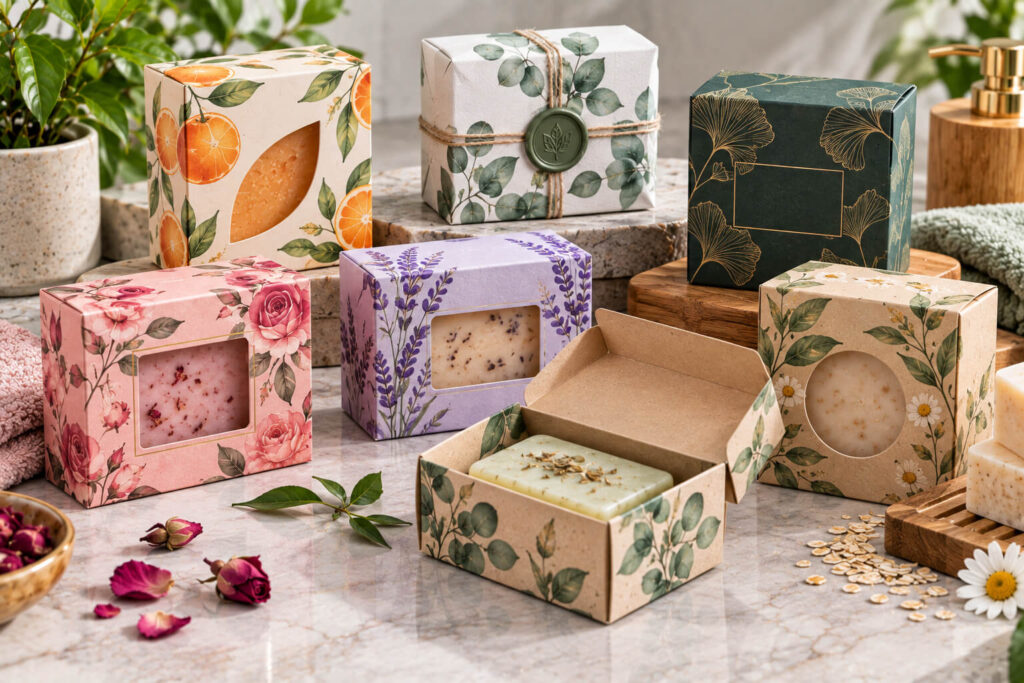
A bar of soap can look perfect in the workshop and tired by the time it reaches a shelf. Damp air, oily fingers and crowded display tables all take a toll on thin board. Choosing paper soap boxes with these everyday conditions in mind helps your bars stay clean and presentable. These checks suit makers who sell at fairs, online or through small shops.
Where Paper Cartons Show Their Limits
Paper is light and easy to print, but it reacts to water and oil more quickly than thick board. A damp bar can leave a soft patch, and a scented oil can leave a faint dark ring.
Place a cured bar on a spare piece of the same paper stock for two days. Check the surface for marks, ripples or softness. The result tells you whether you need a liner or a coated stock.
Weight and Stiffness: Choosing the Stock
Thin paper bends in the hand, while heavier folding board holds its shape. A single bar is light, but a set of three can bow a weak carton.
Ask for the stock weight and press the sides of a sample. Hold the carton by one end with a bar inside and check that it stays square. Choose the lightest stock that passes, since heavier paper adds cost and postage.
Folds, Glue and Closures
Tuck flaps should close firmly without tearing. Run a finger along each fold and look for cracks in the print, especially on dark colours.
Open and close a filled sample ten times. If the tuck loosens or the glue line lifts, ask about a different closure or a firmer stock. Also, check whether the box stays shut when you shake it.
Printing on Smooth Paper
Smooth stock gives crisp lines and clear small text, so it suits detailed artwork, botanical drawings and short ingredient notes. Ask for a printed sample rather than a screen proof.
Read the smallest wording from arm’s length and rub the surface with a dry cloth, then a slightly damp one. Keep names and scent labels away from the folds. Rules for ingredient lists and label claims differ by region, so check the current requirements for each market you sell in. This is general information, not legal advice.
Simple Tests Before You Approve a Sample
Use the same routine on each round:
- Fit your longest and shortest bars to see how much they move
- Carry a filled carton in a tote bag for a day
- Leave a boxed bar in a humid room overnight and look for warping
- Stack three filled cartons and check the bottom one
Photograph every result so comparisons stay fair.
Four Details to Confirm Before You Request a Quote
Have these ready so quotes match your real bars:
- The length, width and height of your largest and smallest bars
- The stock weight and whether you need a liner or coating
- The number of print colours and any finish
- Your first order quantity and expected reorder schedule
Working With a Printer That Lets You Test Stock by Hand
Paper behaves differently with every recipe, so real trials matter. At The Custom Printers, you send in your bars, request samples and check how the stock, fit and print cope with normal storage. You review the results before anything goes into production, so changes stay small and inexpensive. That sample-led routine makes it easier to choose Paper Soap Boxes that suit your range and your sales channel.
A good paper carton protects the bar and shows off its character. Measure a range of bars, test the stock with your own recipe and keep photos of each round. When you are ready to compare options, The Custom Printers can help you work through the details with your own soap in hand.
Customized Packaging Wholesale That Protects Margins Across Reorders
A first bulk order often goes smoothly, and the trouble starts with the second or third. Prices shift, lead times stretch and a small change in board can leave cartons that no longer suit the product. Planning customized packaging wholesale around the full life of the account helps you avoid those surprises. Here is a way to check the terms that matter before you sign.
Look Past the First Quote
A first quote can be sharp because the supplier wants the account. Ask what happens to the price at the second and third order, and whether it depends on quantity, board costs or freight.
Request the terms in writing. A clear note on how and when prices can change makes budgeting far easier, and it gives you something to compare when you review other suppliers.
Ask About Minimums and Split Deliveries
Large runs cost less per carton, but they tie up cash and storage space. Ask whether the supplier can hold the printed stock and release it in several deliveries.
Check how long they will store it and whether storage is free. A split schedule suits growing brands that cannot yet fill a whole pallet room.
Plan Lead Times Around Your Selling Season
Printing, cutting and shipping each take time, and peak months are usually busier. Work backwards from the date you need stock on your shelves, and add a buffer for sample changes.
Ask for typical lead times for new orders and reorders separately. Reorders of an approved design are often quicker, but confirm this rather than assuming it.
Protect Quality When Volume Grows
Large runs pass through many hands, so small drifts in size, colour or board thickness can creep in. Keep an approved sample as your benchmark and ask the supplier to hold one too.
When each pallet arrives, pull ten cartons from different places and measure them against the reference. Weigh a few, rub the print with a dry cloth and open the lids several times to check glue and folds.
Keep Your Storage and Handling Realistic
Measure the space where the pallet will sit, and keep it away from damp walls and floors. Cardboard absorbs moisture, so store a few flat samples in that spot for a week before the real delivery.
Rules for recycling marks and material claims differ by region, so check the current requirements for each market you sell in. This is general information, not legal advice.
Four Details to Confirm Before You Request a Quote
Have these ready so every supplier quotes the same job:
- The inner length, width and depth of the finished item, including any insert
- The loaded weight of one filled carton
- Whether you want one delivery or a split schedule
- Your yearly volume estimate and the months when you sell most
Working With a Printer That Treats a Tested Sample as the Standard
Bulk accounts stay healthy when everyone agrees on what good looks like. At The Custom Printers, you send in your product, request samples and test fit, print and strength before approving production. You review the results, adjust where needed and keep the approved sample as the benchmark for later deliveries. That sample-led routine makes customized packaging wholesale easier to manage as your volumes grow.
A good wholesale partner keeps prices clear, deliveries steady and quality consistent. Ask about terms early, record your specification and inspect every pallet against your reference. When you are ready to compare options, The Custom Printers can help you work through the details with your own products in hand.