Custom Packaging
A retailer’s store brand competes on price against national products that arrive with famous packaging and advertising budgets. Custom packaging is the store brand’s entire marketing: one design system printed across the range, doing the work that campaigns do for the national labels. Retailers order it because the box is the only advertising a private label product will ever get.
One Design System Across a Category Range
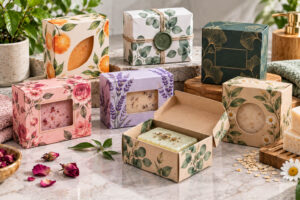
A private label line launches as a family, not a single product: the store’s pasta, sauces, and olive oil arriving together in matched cartons. One palette, one type family, and one layout logic applied across every size makes a six-product line look like a brand and a sixty-product line look like an institution. The system is drawn once and applied everywhere, which keeps the per-unit cost falling as the range grows.
Shelf Standout Without Ad Spend
Store brands sit beside the national product, usually at a lower price, and custom packaging closes the gap in confidence: clean layouts, honest type, and a shelf color the category is not already using. The look of restraint reads as trust at the price point, and shoppers who try the line once on price stay for the quality the box quietly promised.
Price Positioning Through Packaging Choices
Packaging choices telegraph the price tier. Simple one-color prints on standard folding cartons signal value without signaling cheapness; heavier board and special finishes belong on premium tiers the retailer wants to mark. Deciding the tier before the artwork keeps the store brand from accidentally looking either more expensive or cheaper than its shelf price.
Launch Categories and Supplier Minimums
Private label programs start where the decision is easiest for a shopper: pantry staples, paper goods, simple remedies. Those categories tolerate brand switching, which makes them the right first run for a store brand, and digital short runs let a retailer prove a category at small volume before committing to warehouse-scale orders. Boxo Packaging runs private label packaging at both stages, from first test categories to full range replenishment.
Private label packaging decisions:
- One design system specified before the first product prints
- A shelf color chosen against the category, not the retailer’s other brands
- Packaging tier matched to the intended price position
- First categories chosen where shoppers switch easily
What Must Medicine Boxes Carry for Store-Brand Medicines?
A store-brand pain reliever sits on the shelf beside the national version and has to say the same things: the active ingredient, the strength, the directions, the warnings, and the count. Medicine boxes for private label lines carry the store’s identity on the front and the full product information everywhere else, and the layout has to serve both without crowding either.
The Front Panel’s Hierarchy
The front of a store-brand medicine box leads with what the shopper is shopping for: the symptom, the strength, and the count, in that visual order. Brand identity comes as a frame around those facts rather than a competitor for attention. Shoppers scan the symptom aisle in seconds, and the box that answers fastest wins the reach.
Matching the Store’s Wellness Look
The pharmacies own medicine line should look related to its vitamins and first aid products, so a shopper trusts the whole wellness shelf under one name. Matching the design system from the private label section, softened for the medical context, makes the medicine line feel like part of a considered health program rather than a price play. Consistent carton heights keep the range tidy behind the counter.
Carton Sizes by Count and Strength
Medicine lines run in count variations: the travel size, the standard, and the family value size, each a different carton on the same dieline logic. Stepped sizes printed on matched artwork make the shelf read as a system, and blister formats inside some lines need interior depth planned for the pack, not just the bottle.
Trust at the Pharmacy Counter
The pharmacist’s shelf recommendation is the store brand’s best sales channel, and the box participates in that trust: clear strength printing, honest count, legible directions. Medicine boxes that pharmacists can recommend without apology close the loop the whole private label program opens, and retail cartons on the front-of-store wellness displays carry the same identity past the pharmacy itself.
Store-brand medicine carton checks:
- Front panel hierarchy: symptom, strength, count, then brand
- Design system shared with the store’s wider wellness lines
- Dieline family stepped across count sizes
- Information zones reserved and verified before printing
The store brand’s custom packaging builds the identity; its medicine boxes carry that identity into the category where trust matters most. A private label program that gets both right competes on price while looking like it never had to.