Introduction
Access to clean drinking water is an important part of everyday life, but traditional supplies can become unreliable in remote areas, during emergencies, or where water infrastructure is limited. Atmospheric Water Generation (AWG) technology offers an alternative approach by collecting moisture from the air and converting it into liquid water.
The Smart Water Box is marketed as a water-generation solution designed around this concept. Its promotional information describes a system intended to help users explore water independence without relying entirely on municipal pipelines or groundwater wells. In this guide, we’ll explain the technology behind AWG, explore the Smart Water Box’s advertised features, and discuss important points to check before purchasing or building a water-generation system.
What Is Smart Water Box?
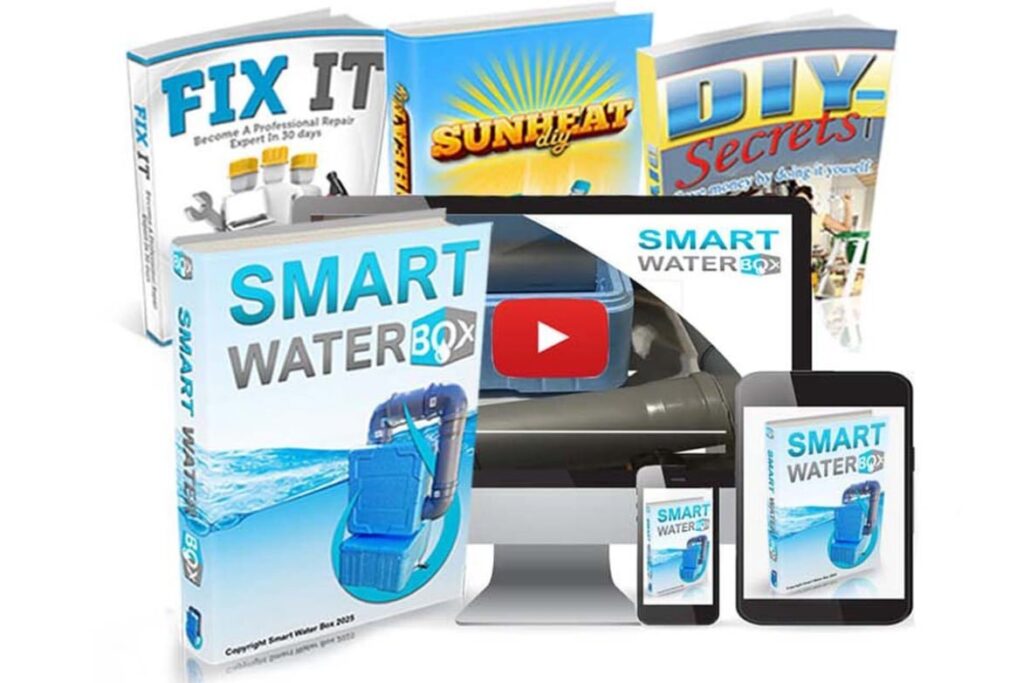
Smart Water Box is promoted as an atmospheric water-generation solution that captures humidity from surrounding air and processes the collected moisture into water. Unlike a conventional filter, which treats water from an existing source, an AWG system is designed to obtain water from water vapor already present in the atmosphere.
The product’s promotional materials emphasize off-grid use, reduced dependence on traditional water sources, and potential usefulness for emergency preparedness. However, actual performance depends on the specific equipment, local climate, energy supply, treatment components, and maintenance requirements.
Before relying on any AWG system for daily drinking water, review the product specifications and confirm that the finished water meets applicable drinking-water quality standards.
What Is Atmospheric Water Generation Technology?
Atmospheric Water Generation, commonly called AWG, is a technology that extracts moisture from ambient air. Many systems use cooling and condensation to turn water vapor into liquid droplets. Other designs may use moisture-absorbing materials, depending on their engineering.
The basic principle is similar to the natural water cycle: moisture in the air condenses when conditions allow it. An AWG device recreates this process within a controlled system and then collects the resulting water for treatment.
AWG technology is being explored for locations where conventional water supplies are limited. Nevertheless, output, energy consumption, and water quality vary from one system to another. AWG should not be assumed to produce unlimited water in every climate.
How Does Smart Water Box AWG Technology Work?
The general process behind a condensation-based AWG system involves several stages.
1. Air Intake
The system draws surrounding air into the device. Depending on the design, an intake filter may help remove dust and airborne particles before the air reaches the condensation components.
2. Moisture Collection
Air passes through a cooling system or heat exchanger. When conditions bring the air below its dew point, water vapor condenses into liquid droplets.
3. Water Collection
The condensed moisture is directed into a collection area or storage tank. The cleanliness of the surfaces, pipes, and tank matters because water can become contaminated during collection and storage.
4. Water Treatment
Collected water may require several treatment stages, such as sediment filtration, activated-carbon filtration, disinfection, and mineral adjustment. The exact treatment process depends on the system. Not every AWG device includes all these components, so check the actual product specifications rather than relying only on general technology descriptions.
5. Storage and Use
After appropriate treatment, water can be stored or dispensed. Storage tanks and internal plumbing need regular cleaning and maintenance to help protect water quality.
Smart Water Box Features to Explore
The following features are promoted in Smart Water Box marketing or are relevant to evaluating an AWG system. Verify which ones are included in the exact product or package you intend to purchase.
| Feature | What It Means |
|---|---|
| Atmospheric water generation | Collects moisture from surrounding air |
| Off-grid potential | May reduce reliance on municipal water connections |
| Water treatment | Should include suitable filtration and disinfection |
| Storage | Holds collected water for later use, depending on the design |
| Flexible placement | May suit some homes, cabins, or remote locations if environmental and power requirements are met |
| Emergency preparedness | Could provide an additional water source when conventional supplies are disrupted |
Can Smart Water Box Produce 40 Gallons of Water Daily?
Some Smart Water Box promotional pages advertise production of up to 40 gallons per day. This figure should be treated as a claim to verify, not a guaranteed daily output.
AWG production depends strongly on relative humidity and air temperature. Water production can decline significantly in dry or cool conditions, and a system may need substantial electricity to cool air and operate fans and other components.
Before treating a stated capacity as realistic for your home, ask for independent performance data showing the output under specified temperature and humidity conditions. Also check the power consumption, water-treatment specifications, filter replacement costs, and whether the advertised capacity applies to the exact model being sold.
Potential Benefits of AWG Technology
Reduced Dependence on Conventional Water Sources
An appropriately designed AWG system may supplement existing water supplies in locations where pipelines or wells are unavailable or unreliable.
Useful for Some Remote Locations
Depending on the climate, power supply, and device capacity, atmospheric water generation may be worth investigating for remote cabins, isolated facilities, or other locations with limited infrastructure.
An Additional Preparedness Option
A water-generation device may provide another potential source during disruptions. However, it should not replace an emergency water plan unless its production capacity, power requirements, reliability, and water safety have been established.
Less Dependence on Bottled Water in Suitable Conditions
If a system reliably produces safe water, it may reduce the need to purchase bottled water. The environmental and financial benefits depend on energy use, maintenance, equipment life, and local alternatives.
Important Limitations to Consider
AWG technology is promising, but it has practical limitations.
- Climate dependence: Low humidity can sharply reduce the amount of water available to collect.
- Electricity requirements: Cooling-based systems use power, and operating costs may be significant.
- Water safety: Condensed atmospheric moisture is not automatically safe to drink.
- Ongoing maintenance: Filters, tanks, tubing, and treatment components require appropriate care.
- Output uncertainty: Marketing capacity figures may describe favorable test conditions rather than everyday performance.
- Purchase verification: Confirm what is included in the package, the seller’s terms, warranty, and refund policy.
Smart Water Box Pros and Cons
| Potential Advantages | Considerations |
|---|---|
| Uses moisture already present in air | Output depends on humidity and temperature |
| May supplement a conventional water supply | Requires a reliable energy source unless the design provides another verified option |
| Could be useful in selected off-grid settings | Safe drinking water requires effective treatment |
| May reduce bottled-water use in suitable conditions | Filter changes and cleaning can add costs |
| Offers an alternative to water collection from wells or pipelines | Actual performance needs independent verification |
What to Check Before Buying Smart Water Box
Before ordering through a website described as the official Smart Water Box site, consider the following checklist:
- Confirm the product format: Determine whether you are buying a complete physical machine, a component kit, or a set of digital instructions.
- Verify output claims: Request documented production figures at realistic temperature and humidity levels.
- Review power requirements: Check wattage, daily energy consumption, and whether solar power is supported by the actual design.
- Check water testing: Look for credible laboratory test results and evidence that the treatment process meets relevant drinking-water standards.
- Understand maintenance: Find out how often filters need replacing and how the tank and internal components should be cleaned.
- Read purchase terms: Check shipping, returns, warranty coverage, customer support, and the full price before paying.
These checks are particularly important if you plan to rely on the system for drinking water rather than use it as an experimental or supplementary device.
Frequently Asked Questions
1. What is Smart Water Box?
Smart Water Box is marketed as an AWG-based water solution intended to collect moisture from air and process it into water. Verify the exact product design and included components before purchase.
2. How does atmospheric water generation work?
A common AWG design draws air over cooled surfaces so that water vapor condenses into droplets. The collected water then needs appropriate treatment and hygienic storage before drinking.
3. Does Smart Water Box work without a water connection?
The product is advertised as an off-grid option that does not depend on a conventional municipal water line. However, its actual power needs, installation requirements, and operating conditions should be confirmed with the seller.
4. Can it produce 40 gallons every day?
Some promotional materials claim up to 40 gallons per day. That figure is not a guarantee. Ask for model-specific testing data and confirm the temperature, humidity, energy use, and other conditions behind the claim.
5. Is water collected from air automatically safe to drink?
No. Airborne contaminants may enter the collected water, and microbes can grow in equipment or storage tanks. Use a properly designed treatment system and confirm water quality through appropriate testing.
6. Is AWG suitable for every climate?
No. Water production depends on the amount of moisture in the air and the system’s operating conditions. Very dry or cool environments can reduce output.
7. What maintenance may be required?
Depending on the design, maintenance may include replacing filters, cleaning tanks and water-contact surfaces, servicing cooling components, and following the manufacturer’s sanitation instructions.
Final Thoughts
Smart Water Box introduces an interesting concept for people researching alternative water sources and atmospheric water generation. AWG technology can collect moisture from air, but its usefulness depends on environmental conditions, energy requirements, water treatment, and verified production capacity.
Before making a purchase, evaluate the specific product rather than relying solely on broad marketing claims. Confirm whether the package includes a working device or instructions, request independent performance and water-quality evidence, and calculate the likely operating and maintenance costs.