Introduction
Memory, concentration, and mental clarity play an important role in everyday life. Whether you are studying, working, reading, or managing a busy schedule, staying focused can sometimes be challenging. Alongside healthy lifestyle habits, some people explore audio-based relaxation and brainwave programs as part of their daily routine.
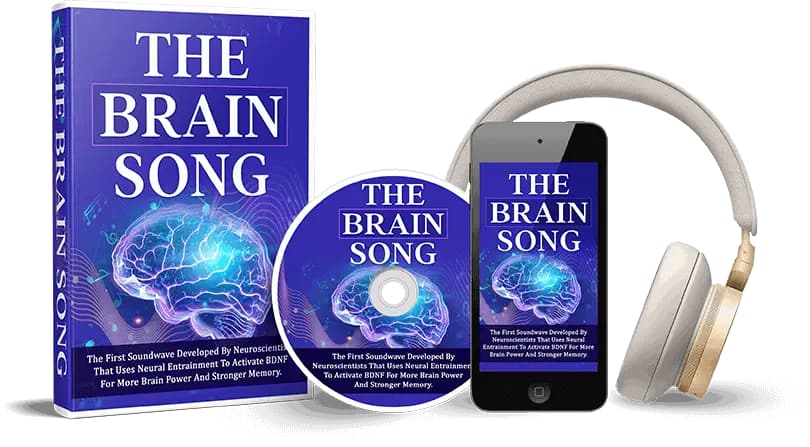
The Brain Song is marketed as a digital audio program designed to support focus, memory, and mental clarity through sound patterns associated with gamma brainwave activity. Unlike capsules or powders, it is intended to be used by listening to a recording. Some versions advertise a session of approximately 12 minutes, although other websites using the same or a similar name describe different program lengths and formats.
This guide explores how The Brain Song is presented, what gamma waves and auditory entrainment mean, its advertised benefits, how to approach listening, and what to consider before purchasing. It also separates general neuroscience research from claims about the effectiveness of this particular commercial audio program.
What Is The Brain Song?
The Brain Song is promoted as a digital listening program for people interested in everyday cognitive wellness. The product is advertised for goals such as improved concentration, better recall, learning support, and greater mental clarity.
Instead of taking a supplement or completing a traditional brain-training exercise, users listen to a prepared audio track. Depending on the version, the recording may combine rhythmic tones, binaural beats, repeated sound patterns, and background audio.
Some sellers describe the program as a 12-minute daily experience, while other listings advertise longer sessions. The precise audio content, included guides, purchase terms, and delivery format should therefore be confirmed on the specific website being considered.
It is important to understand that The Brain Song is a commercial audio program, not an established medical treatment for memory disorders or cognitive decline. Its marketing claims should be evaluated separately from the scientific research that inspired its approach.
The Brain Song at a Glance
| Feature | Description |
|---|---|
| Product name | The Brain Song |
| Product type | Digital audio program |
| Main advertised purpose | Memory, focus, and mental clarity support |
| Approach | Sound patterns associated with brainwave entrainment |
| Gamma frequency discussed | Often around 40 Hz in the product’s marketing |
| Session length | Some versions advertise approximately 12 minutes; others differ |
| Physical ingredients | None; it is an audio-based program |
| Evidence status | General research exists on auditory stimulation, but product-specific benefits are not established by marketing claims alone |
What Are Gamma Brainwaves?
Brainwaves are patterns of electrical activity produced by groups of neurons. Researchers commonly describe different frequency ranges, including delta, theta, alpha, beta, and gamma. These categories help scientists study brain activity during sleep, attention, perception, and other cognitive processes.
Gamma activity generally refers to relatively fast brain oscillations, often discussed in the range of approximately 30–100 Hz, depending on the research context.
Gamma rhythms have been investigated in relation to sensory processing, attention, memory, and communication between brain regions. However, brain activity is complex: gamma waves are not a single switch for intelligence or memory, and more gamma activity does not automatically mean better cognitive performance.
The Brain Song uses this scientific background to explain its focus on rhythmic sound and gamma frequencies. The important distinction is that research on gamma activity does not, by itself, prove that listening to a particular commercial recording will improve memory or concentration.
How Does The Brain Song Work?
The program is described as using auditory patterns intended to encourage a process called neural entrainment. In broad terms, entrainment refers to the way certain rhythmic stimuli may influence the timing of biological or neural activity.
Several audio techniques are relevant to this approach.
1. Gamma-Frequency Sound Patterns
Some versions of The Brain Song advertise sound patterns associated with a 40 Hz gamma frequency. Researchers have investigated stimulation at this frequency in laboratory and experimental settings.
However, a recording containing a target frequency does not guarantee that the listener’s brain will enter a specific state or experience measurable cognitive improvements. The effects depend on the stimulation method, listening conditions, individual differences, and the outcome being measured.
2. Binaural Beats
Binaural beats are created when slightly different tones are presented separately to each ear. The listener may perceive a beat corresponding to the difference between the two tones.
Some audio programs use this technique with the aim of influencing relaxation, attention, or brainwave activity. Research findings are mixed, and results can vary between individuals and studies.
If a particular version of The Brain Song uses binaural beats, stereo headphones may be helpful for hearing the intended separation between channels. Follow the instructions provided with that version.
3. Rhythmic Pulses and Background Audio
Some commercial brainwave programs combine repeated tones with ambient sounds, musical layers, or changes in rhythm. These elements can make a recording more comfortable to listen to and may help create a consistent listening routine.
Comfortable audio may be useful for relaxation, but a soothing soundscape is not proof that the program changes brain function in the way advertised.
4. Brain-Derived Neurotrophic Factor (BDNF)
The Brain Song’s marketing may refer to brain-derived neurotrophic factor, commonly called BDNF. This protein supports neuronal survival, plasticity, and processes involved in learning and memory.
BDNF is a legitimate subject of neuroscience research. Nevertheless, claims that a specific audio track raises BDNF levels or reliably improves memory require direct evidence from studies of that program. Research involving other forms of stimulation, laboratory models, or different protocols cannot automatically be applied to a consumer audio product.
Potential Benefits of The Brain Song
The Brain Song is advertised for several cognitive wellness goals. The following explains what these claims mean without assuming that the product guarantees the results.
Memory and Recall Support
The program is promoted to people who want to remember information more easily or feel more confident during daily tasks. However, there is insufficient product-specific evidence to conclude that The Brain Song reliably improves memory.
Practical memory strategies—such as spaced repetition, active recall, adequate sleep, and regular review—have a more established role in learning.
Focus and Concentration
Some listeners may find a short audio session helpful as a cue to pause, settle into a task, or reduce distractions. Whether the recording itself produces a measurable improvement in attention is a separate question and has not been established by its marketing alone.
Mental Clarity
A calm environment and a consistent routine may help some people feel more settled before work or study. Individual experiences differ, and subjective relaxation should not be confused with proven improvements in cognitive performance.
Relaxation and Routine Building
If the recording is comfortable and enjoyable, it may provide a convenient way to schedule a short break. People who find audio routines useful can consider it alongside other habits that support wellbeing.
Convenient Digital Access
An audio program can be easier to fit into a schedule than a longer course or complicated routine. Check the actual delivery method, device compatibility, access period, and included materials before buying.
How to Use The Brain Song
Instructions may vary by version, so follow the guide supplied with the exact program you purchase. If the version you choose recommends a short daily session, you can approach it as a listening routine rather than a guaranteed cognitive intervention.
- Choose a quiet setting. Reduce distractions where practical.
- Check the listening instructions. Use headphones if the program relies on stereo-separated binaural beats.
- Keep the volume comfortable. Avoid excessively loud audio or prolonged listening at high volume.
- Listen while seated or resting. Avoid using the recording in situations where you need full attention, such as driving or operating machinery.
- Track your experience realistically. Notice whether the session helps you relax or settle into a task, but avoid assuming that a subjective feeling proves a change in memory or brain activity.
- Maintain healthy habits. Continue prioritising sleep, physical activity, balanced nutrition, and effective learning strategies.
There is no need to stop prescribed treatment or replace professional advice to try a general relaxation recording.
Is The Brain Song Safe?
For many people, listening to audio at a comfortable volume is a routine activity. Nevertheless, responses to sound vary, and no product should be described as universally risk-free.
Consider these precautions:
- Hearing comfort: Keep the volume at a safe, comfortable level.
- Headaches or discomfort: Stop listening if the audio causes a headache, dizziness, anxiety, or other unpleasant symptoms.
- Sound sensitivity: If you have tinnitus, sound sensitivity, or a condition affected by particular sounds, consider checking with a qualified healthcare professional before using an unfamiliar audio program.
- Seizure-related concerns: People with neurological conditions or a history of sound-triggered symptoms should seek individual medical guidance if unsure whether the program is suitable.
- Medical care: Do not use an audio program as a substitute for assessment of persistent memory difficulties, confusion, or other new cognitive symptoms.
The fact that a program contains no pills or chemicals does not establish that it produces the advertised benefits. It simply means the product is delivered through audio rather than ingestion.
What to Check Before Buying From The Brain Song Official Website
Search results show multiple websites using the name The Brain Song or very similar names. Some advertise 12-minute sessions, while others promote 17-minute programs. Their claims, descriptions, and included materials may also differ.
Before purchasing, check the following:
- Product identity: Confirm the exact program name and the website selling it.
- Session length and format: Verify whether you are buying a 12-minute recording, a longer audio, or a broader digital package.
- Included materials: Check whether a listening guide, PDF, or other bonus content is actually included.
- Price and access: Review the total cost, whether access is permanent or time-limited, and whether additional payments apply.
- Refund policy: Read the actual refund conditions and deadlines before placing an order.
- Evidence: Look for research on the specific program rather than relying only on general gamma-wave studies.
- Marketing claims: Be cautious of promises of instant memory improvement, guaranteed cognitive results, or prevention of neurological disease.
A website using the words “official website” does not, by itself, verify that it is the original or authorised seller. Confirm the business and product details before sharing payment information.
The Brain Song Pros and Cons
| Potential advantages | Limitations |
|---|---|
| Digital format requires no supplement or capsule | Product-specific clinical evidence is limited |
| May be convenient for a short listening routine | Different websites advertise different versions |
| Can be used at home with compatible devices | Results for memory and focus are not guaranteed |
| May provide a relaxing break for some listeners | General neuroscience research does not prove product effectiveness |
| Can complement healthy study and lifestyle habits | Should not replace medical evaluation or proven learning strategies |
Frequently Asked Questions
What is The Brain Song?
The Brain Song is marketed as a digital audio program intended to support memory, concentration, and mental clarity through sound patterns associated with brainwave entrainment.
Does The Brain Song use gamma waves?
Some versions advertise sound patterns centred around 40 Hz, a frequency commonly discussed in gamma-wave research. The actual format and audio components should be confirmed for the version being sold.
Can The Brain Song improve memory?
There is general research on brainwave activity and auditory stimulation, but this does not establish that The Brain Song itself reliably improves memory. Avoid treating marketing promises or testimonials as proof of clinical effectiveness.
How long is The Brain Song?
Some product pages describe a session of approximately 12 minutes, while others advertise longer recordings. Check the exact product description before purchasing.
Do I need headphones?
Headphones may be useful when the audio uses binaural beats that rely on different tones reaching each ear. Follow the listening instructions for your specific version.
Is The Brain Song a supplement?
No. It is marketed as a digital audio program, not a capsule or nutritional supplement.
Can The Brain Song treat memory problems?
It should not be considered a treatment for memory disorders, dementia, or other neurological conditions. New or persistent memory problems should be discussed with a healthcare professional.
Final Verdict
The Brain Song is marketed as a convenient audio program inspired by research into gamma brainwaves, auditory stimulation, and neural entrainment. Its digital format may appeal to people who enjoy structured listening sessions or want a quiet break in their daily routine.
However, scientific interest in gamma activity and binaural beats should not be confused with proof that this particular program improves memory, increases BDNF, or prevents cognitive decline. The product’s precise format and claims can also vary across websites using similar names.
Before buying, verify the seller, recording length, included materials, price, and refund terms. Treat the program as an optional listening experience rather than a guaranteed cognitive solution, and continue using established learning strategies and healthy lifestyle habits.