Transfer Pumps
Transfer pumps are essential equipment used to move liquids from one location, container, tank, or process stage to another. They are widely used across industrial, commercial, agricultural, construction, and utility applications where liquids need to be transferred safely and efficiently. Depending on the type of liquid, flow requirements, pressure conditions, and operating environment, different pump designs can be selected to achieve reliable performance.
From transferring water and chemicals to handling fuels, oils, wastewater, and industrial fluids, transfer pumps provide an efficient solution for controlled liquid movement. Understanding how these pumps work and what factors influence their selection can help businesses choose equipment that meets their operational requirements while minimizing maintenance and energy costs.
What Are Transfer Pumps?
A transfer pump is a mechanical device designed primarily to move liquid from one point to another. Unlike pumps specifically designed for high-pressure applications or specialized processing, transfer pumps are generally used when the main requirement is moving a liquid between two locations.
For example, a transfer pump may move water from a storage tank to another tank, transfer diesel from a bulk storage system to a vehicle, or move process fluids between different stages of an industrial operation.
Transfer pumps are available in several configurations. The appropriate design depends on factors such as the liquid’s viscosity, temperature, chemical composition, required flow rate, suction conditions, discharge pressure, and installation environment.
How Do Transfer Pumps Work?
The operating principle depends on the pump design. Centrifugal transfer pumps use a rotating impeller to increase the velocity of the liquid. The pump casing then converts part of this velocity into pressure, allowing the liquid to travel through the discharge piping.
Positive displacement transfer pumps work differently. They capture a specific volume of liquid and mechanically move it from the suction side to the discharge side. These pumps are particularly useful for viscous liquids and applications requiring controlled flow.
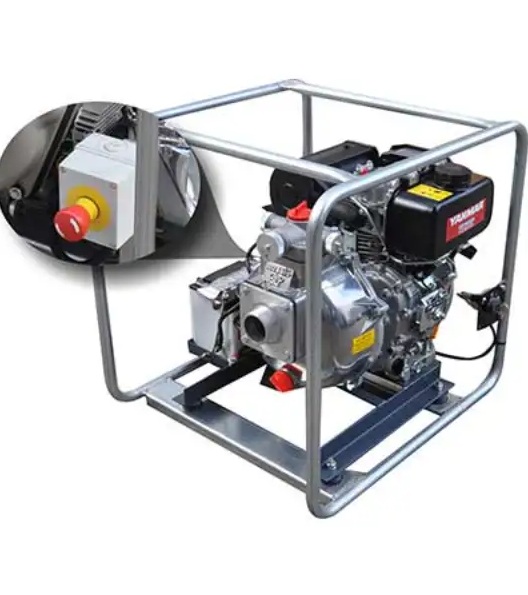
A typical transfer pump system includes a suction connection, pump body, motor or engine, discharge connection, valves, and associated piping or hoses. Depending on the application, additional components such as strainers, filters, pressure gauges, flow meters, and control systems may also be installed.
Common Types of Transfer Pumps
Different industries use different types of transfer pumps based on their liquid-handling requirements.
Centrifugal Transfer Pumps
Centrifugal pumps are among the most widely used options for transferring low- to medium-viscosity liquids. They are commonly used for water, cooling fluids, and other relatively clean liquids.
Their straightforward construction can make them economical and relatively easy to maintain. However, they may not be the ideal choice for highly viscous liquids or applications requiring precise metering.
Positive Displacement Pumps
Positive displacement pumps move a defined quantity of fluid during each operating cycle. Common examples include gear pumps, screw pumps, piston pumps, and diaphragm pumps.
They can be suitable for oils, fuels, chemicals, and other fluids where higher viscosity or controlled flow is important. Their ability to maintain flow across a range of operating conditions makes them valuable in many industrial applications.
Diaphragm Pumps
Diaphragm pumps use a flexible diaphragm to move liquid. They can handle certain aggressive, contaminated, or chemically challenging fluids depending on their construction and material compatibility.
Air-operated double-diaphragm pumps are also used in industrial environments where electrical power may not be convenient or where the pumping application requires a robust, flexible solution.
Submersible Transfer Pumps
Submersible pumps operate while immersed in the liquid being transferred. They are commonly used for drainage, wastewater, construction dewatering, tanks, sumps, and other applications where the pump needs to operate below the liquid level.
Because the pump is installed directly in the fluid, suction-lift limitations can be different from those encountered with surface-mounted pumps.
Drum and Barrel Transfer Pumps
Drum transfer pumps are designed for moving liquids from drums, barrels, IBC containers, and similar storage vessels. They are often used for lubricants, chemicals, fuels, and other industrial liquids.
Portable designs can provide flexibility when liquids need to be transferred between containers at different locations.
Applications of Transfer Pumps
Transfer pumps are used across a wide range of industries because liquid movement is a fundamental part of many operations.
Water Transfer
Water transfer is one of the most common applications. Pumps may be used to move water between storage tanks, supply systems, treatment facilities, construction sites, and irrigation systems.
Industries may also use transfer pumps for emergency water removal, tank filling, and general utility services.
Fuel and Oil Transfer
Fuel transfer pumps are used to move diesel, gasoline, lubricating oils, and other petroleum-based fluids. They can be found in fuel storage facilities, transportation operations, workshops, industrial plants, and generator systems.
For fuel applications, pump materials and electrical or mechanical configurations should be selected according to the fluid and applicable safety requirements.
Chemical Transfer
Chemical processing facilities often need to move acids, alkalis, solvents, and other process chemicals between storage tanks and production equipment.
Chemical transfer requires careful consideration of material compatibility. Pump components such as seals, diaphragms, casings, and impellers must be compatible with the specific chemical being handled.
Wastewater and Sludge Handling
Transfer pumps can also be used to move wastewater, contaminated liquids, and certain types of sludge. Pump selection depends heavily on solids content, particle size, viscosity, and the required flow conditions.
Specialized wastewater pumps can be designed to reduce clogging and withstand demanding operating environments.
Agriculture and Irrigation
Agricultural operations use transfer pumps for irrigation, water storage, livestock water systems, and liquid fertilizer applications. Portable pumps can be particularly useful when water needs to be moved between fields, tanks, ponds, or other locations.
How to Select the Right Transfer Pump
Choosing a transfer pump should begin with understanding the operating requirements rather than simply selecting a pump based on size or motor power.
1. Identify the Liquid
The first consideration is the fluid being pumped. Determine whether it is water, oil, fuel, chemical, wastewater, slurry, or another liquid.
Important characteristics include viscosity, temperature, density, corrosiveness, solids content, and whether the liquid contains abrasive particles.
2. Determine the Required Flow Rate
Flow rate indicates how much liquid needs to be transferred over a specific period. It is commonly expressed in litres per minute, litres per hour, cubic metres per hour, or gallons per minute.
Selecting a pump with an appropriate flow capacity helps ensure the system meets operational requirements without unnecessary energy consumption.
3. Calculate Total Head
Pump head represents the energy required to move liquid through the system. It includes factors such as vertical elevation, pipe friction, valves, fittings, and required discharge pressure.
A pump should be selected based on its performance at the required flow rate and total head rather than relying solely on the maximum specifications listed by the manufacturer.
4. Consider Suction Conditions
Suction conditions are particularly important for surface-mounted transfer pumps. The distance between the liquid level and pump inlet, pipe diameter, temperature, and fluid properties can affect pump performance.
Incorrect suction conditions can contribute to cavitation, loss of prime, reduced performance, or premature equipment damage.
5. Check Material Compatibility
Pump construction materials must be suitable for the liquid. Stainless steel, cast iron, plastics, elastomers, and other materials may be used depending on the application.
For chemical transfer, seal and elastomer compatibility should receive particular attention.
Benefits of Transfer Pumps
A properly selected transfer pump can provide several operational benefits.
Efficient liquid movement: Pumps can move substantial volumes of liquid more efficiently than manual handling methods.
Improved productivity: Automated or powered transfer reduces the time required to move fluids between locations.
Better process control: Pumps can be integrated with valves, meters, sensors, and control systems to provide more consistent fluid handling.
Versatility: Different pump designs allow transfer systems to handle water, oils, fuels, chemicals, wastewater, and other fluids.
Reduced manual handling: Pumping systems can reduce the need for workers to manually move heavy containers or liquids, supporting safer workplace practices.
Maintenance of Transfer Pumps
Regular maintenance helps extend pump service life and reduce unexpected downtime. Operators should inspect pumps for leaks, unusual noise, vibration, overheating, and changes in flow or pressure.
Filters and strainers should be cleaned where applicable, while seals, bearings, hoses, couplings, and other wear components should be inspected according to manufacturer recommendations.
The pump should also be operated within its specified performance range. Running a pump without sufficient liquid, operating against a closed discharge for prolonged periods, or exceeding temperature and pressure limits can cause damage.
Conclusion
Transfer pumps play an important role in moving liquids efficiently across industrial, commercial, agricultural, and utility applications. From water and fuel transfer to chemical processing and wastewater handling, the right pump can improve productivity and provide reliable fluid movement.
Selecting the appropriate transfer pump requires consideration of the liquid characteristics, required flow rate, total head, suction conditions, temperature, material compatibility, and operating environment. Centrifugal, positive displacement, diaphragm, submersible, and drum transfer pumps each serve different purposes.
Businesses should evaluate the complete pumping system rather than focusing only on the pump’s maximum flow or motor capacity. Working with an experienced pump supplier or manufacturer can also help ensure that the selected equipment matches the application’s technical and safety requirements. With proper selection, installation, and maintenance, transfer pumps can provide dependable performance and long-term value across a wide range of liquid-handling operations.