Tree Survey Reports
Tree Survey Reports play a critical role in modern land development, environmental planning, and property management. Whether for residential construction, commercial expansion, infrastructure projects, or ecological preservation, these reports provide an essential foundation for informed decision-making. They combine arboricultural science, environmental responsibility, and regulatory compliance into one structured document that evaluates the condition, value, and impact of trees within a specific site.
In today’s planning landscape, where sustainability and environmental protection are more important than ever, Tree Survey Reports are not just technical documents—they are strategic tools. They protect valuable ecosystems, reduce legal risks, and ensure that development and conservation can coexist in a balanced and responsible way.
What Is a Tree Survey Report?
A Tree Survey Report is a detailed professional document prepared by a qualified arborist or tree consultant. It assesses trees on a specific site and records critical information such as species, height, trunk diameter, age classification, health condition, structural integrity, life expectancy, and overall amenity value.
The purpose of the report depends on the context. For development projects, it evaluates how construction may impact existing trees. For property owners, it provides guidance on maintenance, risk management, and long-term care. For local authorities, it supports planning applications and ensures compliance with environmental regulations.
A high-quality Tree Survey Report goes beyond simply listing trees. It interprets findings, identifies potential hazards, recommends protective measures, and offers practical management strategies. In many jurisdictions, such reports are required before planning permission is granted for new developments.
Why Tree Survey Reports Are Essential in Modern Development
Urban expansion and environmental conservation often appear to be in conflict. However, Tree Survey Reports serve as a bridge between these two priorities. They allow developers and planners to understand which trees can be retained, which may require removal, and how construction can proceed with minimal ecological damage.
Trees provide numerous environmental benefits, including carbon absorption, temperature regulation, wildlife habitat, noise reduction, and improved air quality. Removing mature trees without assessment can result in environmental degradation, community objections, and legal complications.
Tree Survey Reports also reduce financial risk. Construction damage to tree roots or structural instability caused by poor planning can lead to costly repairs, liability claims, or project delays. A thorough survey anticipates these issues and provides preventive guidance.
Ultimately, these reports help ensure that development is responsible, legally compliant, and environmentally sustainable.
The Professional Standards Behind Tree Surveys
Tree surveys are not informal inspections. They are conducted according to established professional standards and methodologies. In the United Kingdom, for example, surveys often follow the guidelines outlined in BS5837: Trees in Relation to Design, Demolition and Construction. This standard provides a structured framework for assessing trees and integrating their protection into development planning.
The survey process typically involves:
-
Identifying each tree and assigning a reference number
-
Recording species (both common and botanical names)
-
Measuring trunk diameter at 1.5 meters above ground level
-
Estimating tree height and crown spread
-
Assessing physiological and structural condition
-
Categorizing trees based on quality and value
-
Identifying root protection areas (RPA)
-
Evaluating potential conflicts with proposed development
These measurements are not random observations. They are precise data points used to calculate protection zones and guide site layout decisions.
Key Components of a Tree Survey Report
A professionally prepared Tree Survey Report usually contains several essential sections. Each plays a vital role in presenting accurate and actionable information.
Site Description and Scope of Survey
This section outlines the location, size, and purpose of the survey. It clarifies whether the report is intended for planning permission, risk assessment, mortgage evaluation, or routine property management.
Tree Schedule
The tree schedule is the core data table of the report. It lists every surveyed tree and includes measurements, species, health assessment, life expectancy, and category grading.
Trees are typically categorized into groups such as:
-
Category A: High-quality trees with significant landscape value
-
Category B: Moderate-quality trees worth retaining
-
Category C: Low-quality trees with limited life expectancy
-
Category U: Trees unsuitable for retention
This grading system helps planners prioritize preservation.
Root Protection Area (RPA)
The Root Protection Area defines the minimum area around a tree that must remain undisturbed to protect its root system. Construction within this zone can compromise stability and long-term survival.
The report includes calculated RPA measurements and often provides a visual representation on a site plan.
Tree Constraints Plan (TCP)
The Tree Constraints Plan is a drawing that shows tree positions, crown spreads, and RPAs in relation to the proposed development. It visually communicates which areas require protection.
Arboricultural Impact Assessment (AIA)
If development is planned, the report may include an Arboricultural Impact Assessment. This section evaluates how construction will affect existing trees and recommends mitigation measures.
Method Statement and Protection Plan
When necessary, the report provides detailed instructions on protective fencing, ground protection, and construction methods to prevent tree damage during development.
The Process of Conducting a Tree Survey
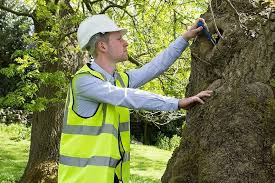
The process begins with a site visit by a qualified arborist. Using measuring tools, mapping equipment, and professional judgment, the arborist gathers detailed information about each tree.
Visual inspection plays a key role. The arborist looks for signs of disease, decay, structural weakness, root disturbance, fungal growth, or pest infestation. They also evaluate tree form, canopy density, and branch structure.
After fieldwork, the data is compiled into a structured report. Measurements are verified, protection areas are calculated, and plans are drafted using mapping software.
The final document combines technical precision with clear explanations. It must be understandable to planners, architects, contractors, and property owners alike.
Tree Surveys for Planning Applications
In many regions, local planning authorities require a Tree Survey Report when development may impact trees. This is particularly true if the site includes mature trees, conservation areas, or trees protected by legal orders.
Submitting an incomplete or inaccurate report can result in rejected applications or costly revisions. A comprehensive survey ensures that planning authorities receive all necessary information to make informed decisions.
Moreover, early tree surveys allow architects to design around valuable trees rather than redesigning projects later. This proactive approach saves time and reduces conflict.
Risk Assessment and Public Safety
Tree Survey Reports are not only for development. They are also essential for public safety and risk management.
Property owners, schools, parks, and commercial estates often commission tree risk assessments to identify hazards such as:
-
Deadwood overhanging walkways
-
Structural cracks in trunks
-
Root instability
-
Storm damage
-
Leaning trees
A professional assessment evaluates the likelihood of failure and the potential consequences. Recommendations may include pruning, monitoring, bracing, or removal.
Regular surveys reduce liability and demonstrate responsible management.
Environmental and Ecological Considerations
Trees are living ecosystems that support wildlife, insects, birds, and soil health. A thorough Acoustic surveys may consider ecological factors, especially when development could disturb habitats.
For example, certain trees may host nesting birds or protected species. Survey findings can trigger additional ecological assessments to ensure compliance with environmental laws.
Preserving mature trees also supports biodiversity, improves urban air quality, and enhances climate resilience. Tree surveys therefore contribute to broader environmental sustainability goals.
The Role of Technology in Modern Tree Surveys
Technology has significantly improved the accuracy and efficiency of Tree Survey Reports. Modern arborists use:
-
GPS mapping tools
-
Digital measuring devices
-
Aerial drone imaging
-
CAD software for planning overlays
-
Tree management databases
These tools enhance precision and allow seamless integration with architectural and engineering plans.
Digital reports are easier to update, share, and archive. They also enable long-term tree management tracking for large estates and public landscapes.
Choosing a Qualified Arboricultural Consultant
The credibility of a Tree Survey Report depends heavily on the qualifications of the consultant. Clients should seek professionals with recognized certifications, relevant experience, and professional indemnity insurance.
Membership in reputable arboricultural organizations indicates adherence to professional standards. An experienced consultant will not only record data but also provide practical advice tailored to the specific project.
Clear communication is equally important. The best reports translate complex arboricultural data into understandable guidance.
Long-Term Benefits of Tree Survey Reports
While some view Tree Survey Reports as a regulatory requirement, their long-term value is far greater.
They:
-
Protect valuable landscape assets
-
Reduce legal and financial risks
-
Improve site design efficiency
-
Support environmental responsibility
-
Enhance property value
-
Promote sustainable development
Retained mature trees can significantly increase property appeal and market value. They create shade, character, and aesthetic charm that newly planted trees cannot immediately provide.
By identifying issues early, surveys also prevent costly emergency tree removals or structural damage.
More Than a Report—A Strategic Environmental Tool
Tree Survey Reports are far more than technical paperwork. They are comprehensive environmental assessments that shape responsible land use decisions. In a world where sustainability, climate awareness, and urban expansion must coexist, these reports provide clarity and balance.