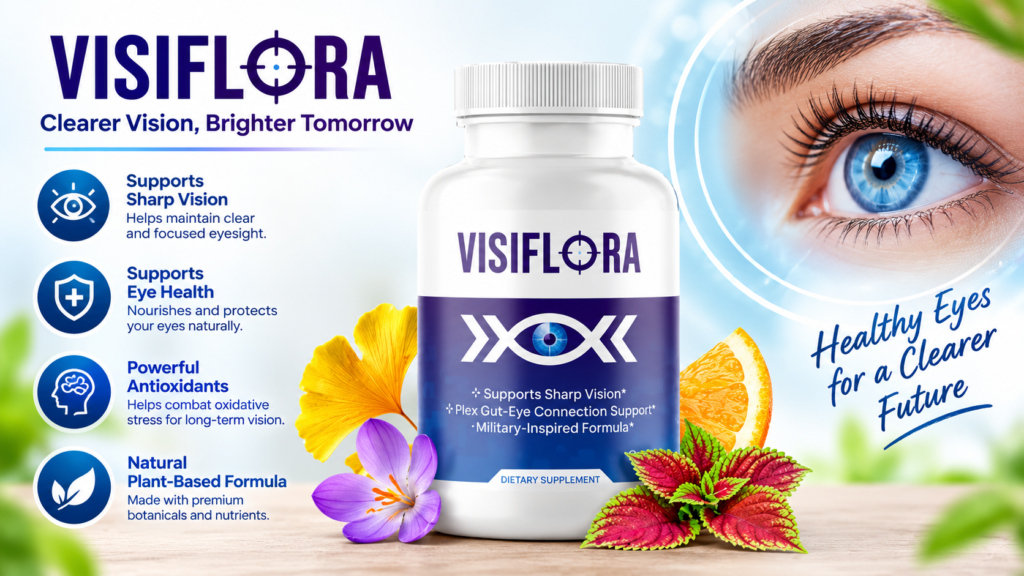
Introduction: Understanding VisiFlora
Eye health is an important part of overall well-being, but it is something many people overlook until they begin experiencing discomfort or changes in their vision. Long hours in front of computers, smartphones, televisions, and other digital screens can make everyday eye care feel more important than ever. Age, lifestyle, nutrition, and environmental conditions can also influence how comfortable our eyes feel.
This growing interest in eye wellness has encouraged many people to explore nutritional supplements that contain vitamins, minerals, antioxidants, and plant-based ingredients. One product attracting attention in this category is VisiFlora.
If you have been searching for VisiFlora Reviews, you probably want to understand what this supplement contains, how it is supposed to work, what benefits its manufacturer claims, and whether it is worth considering.
VisiFlora is marketed as a daily eye-health supplement featuring a combination of nutrients and botanical extracts. Its promotional material describes a formula containing 22 ingredients, including lutein, zeaxanthin, bilberry, vitamin A, astaxanthin, and several antioxidant compounds. The product also emphasizes the relationship between digestive wellness and eye health, sometimes described as the gut-eye connection.
However, it is important to separate marketing descriptions from established scientific evidence. An ingredient appearing in an eye-health supplement does not automatically mean the finished product has been clinically proven to improve eyesight.
In this detailed review, we will examine the available product information, ingredient descriptions, potential benefits, recommended usage, possible precautions, pricing information, and customer feedback. We will also discuss the questions buyers should ask before making a purchase.
The goal is to provide a balanced overview so that readers can make an informed decision rather than relying entirely on promotional statements.
What Is VisiFlora?
VisiFlora is marketed as a dietary supplement designed to support general eye wellness through a combination of vitamins, minerals, antioxidants, and botanical ingredients.
Unlike traditional eye drops, which are applied directly to the eyes, VisiFlora is promoted as an oral nutritional formula. Its ingredients are intended to provide nutritional support from within the body.
The product’s marketing focuses on two main areas:
-
Eye nutrition: Providing nutrients commonly associated with normal retinal function, macular health, and antioxidant protection.
-
Gut-eye support: Promoting the idea that digestive health and nutrient absorption may influence overall eye wellness.
The manufacturer describes VisiFlora as a convenient daily supplement for adults interested in maintaining their eye health as part of a broader wellness routine.
According to the available promotional information, the product comes in capsule form, with one capsule recommended daily alongside food. A bottle is advertised as containing a 30-day supply.
It is important to understand that VisiFlora is a dietary supplement, not a prescription medicine or a replacement for professional eye care. It should not be considered a treatment for cataracts, glaucoma, macular degeneration, or other diagnosed eye conditions.
How Does VisiFlora Work?
The basic idea behind VisiFlora is to combine nutrients associated with eye health and antioxidants that help protect cells against oxidative stress.
The manufacturer promotes a gut-eye support approach. This concept is based on the possibility that digestive health, inflammation, and nutrient absorption may influence different parts of the body, including the eyes.
Let’s examine the main mechanisms described in its promotional material.
1. Providing Antioxidant Support
The eyes are exposed to light, oxygen, and environmental factors throughout the day. These factors can contribute to oxidative stress, which occurs when free radicals exceed the body’s natural antioxidant defenses.
VisiFlora includes ingredients such as vitamin C, vitamin E, selenium, and astaxanthin. These nutrients and compounds are associated with antioxidant activity.
Their inclusion is intended to support normal cellular protection. However, the actual contribution of the product cannot be established without knowing the amount of each ingredient.
2. Supporting Macular Health
The macula is a small but important part of the retina responsible for central vision and detailed activities such as reading and recognizing faces.
Two carotenoids frequently discussed in eye nutrition are lutein and zeaxanthin.
These compounds are naturally found in the macula, where they contribute to macular pigment. Research has investigated their potential role in maintaining macular health.
VisiFlora includes both ingredients in its advertised formula. However, the manufacturer does not clearly disclose their individual quantities in the available product information.
3. Supporting Normal Retinal Function
The retina contains light-sensitive cells that allow the brain to process visual information.
Certain nutrients, including vitamin A and zinc, contribute to normal visual function. Vitamin A is particularly important for the visual cycle, including the ability to see in low-light conditions.
VisiFlora includes these nutrients as part of its broader nutritional formula.
This does not mean taking the supplement will automatically improve night vision or reverse existing vision problems. Its potential nutritional value depends on the formulation, dosage, and individual nutritional needs.
4. Exploring the Gut-Eye Connection
One of the product’s main marketing features is its focus on the gut-eye connection.
Researchers are investigating how the gut microbiome, immune responses, and inflammation may relate to eye health.
Some early research suggests that changes in gut bacteria could be associated with certain inflammatory eye conditions. However, this is still an developing area of science.
The presence of antioxidants such as quercetin, rutin, and grape seed extract does not establish that VisiFlora improves gut bacteria or treats digestive problems.
Therefore, the gut-eye concept should be understood as the manufacturer’s proposed approach rather than a clinically demonstrated effect of the finished supplement.
VisiFlora Ingredients: What’s Inside the Formula?
Ingredients are one of the most important things to examine before purchasing any dietary supplement.
According to the available promotional ingredient information, VisiFlora is advertised as a formula containing 22 ingredients. These include vitamins, minerals, carotenoids, amino acids, and botanical extracts.
However, there is an important transparency issue: an independent product review reports that only the zinc quantity, listed as 11 mg, is disclosed, while the individual amounts of most other ingredients are unavailable.
This makes it difficult to determine whether the formula provides meaningful quantities of the nutrients used in research.
CapsReview+1
Here is an overview of the named ingredients.
1. Astaxanthin
Astaxanthin is a naturally occurring carotenoid found in certain algae and seafood.
It is known for its antioxidant properties and has been investigated for its potential role in eye comfort and visual fatigue.
It is included in VisiFlora to provide antioxidant support for eye tissues.
However, research involving isolated astaxanthin does not establish that the amount present in VisiFlora produces the same effects.
2. Vitamin C
Vitamin C is an essential nutrient involved in several normal body functions.
It contributes to collagen formation and antioxidant protection. The eyes contain tissues that depend on proper nutritional support, making vitamin C relevant to general eye nutrition.
VisiFlora includes vitamin C as part of its antioxidant combination.
3. Vitamin E
Vitamin E is a fat-soluble antioxidant that helps protect cell membranes against oxidative damage.
It is commonly included in nutritional formulas designed to support general cellular health.
In VisiFlora, vitamin E is marketed as one of the ingredients that contributes to antioxidant protection.
4. Copper
Copper is an essential trace mineral involved in connective tissue formation, iron metabolism, and several enzyme functions.
It also contributes to normal antioxidant defense systems.
The product includes copper as part of its mineral combination.
5. Selenium
Selenium supports normal thyroid function, immune activity, and antioxidant enzyme systems.
The body needs it in relatively small quantities, which is why excessive supplementation should be avoided.
VisiFlora includes selenium to complement its other antioxidant ingredients.
6. Chromium
Chromium is a trace mineral commonly associated with normal nutrient metabolism.
It is sometimes included in supplements marketed toward people interested in maintaining healthy blood sugar levels.
VisiFlora includes chromium, although its presence should not be interpreted as evidence that the supplement prevents or treats diabetes or diabetes-related eye complications.
7. Grape Seed Extract
Grape seed extract contains plant compounds called polyphenols, including proanthocyanidins.
These compounds have antioxidant properties and have been studied for their potential cardiovascular and circulatory effects.
The manufacturer includes grape seed extract as part of its proposed gut-eye support combination.
8. Rutin
Rutin is a naturally occurring flavonoid found in several plants and foods.
It has been studied for antioxidant activity and possible effects on blood vessel function.
Its inclusion in VisiFlora is intended to complement other plant-based antioxidant ingredients.
9. Quercetin
Quercetin is a plant flavonoid found in foods such as onions, apples, and certain berries.
It has attracted scientific interest because of its antioxidant and anti-inflammatory properties.
However, findings from laboratory research do not necessarily translate into proven benefits from oral supplements.
10. Taurine
Taurine is an amino acid-like compound found naturally in various body tissues.
It is particularly relevant to eye biology because it is present in relatively high concentrations in the retina.
It plays several roles in normal cellular function. However, there is limited evidence that additional taurine supplementation improves eyesight in otherwise adequately nourished individuals.
11. Alpha Lipoic Acid
Alpha lipoic acid is a naturally occurring compound involved in energy metabolism.
It has antioxidant properties and has been researched in several areas of health.
VisiFlora includes it as part of its broader antioxidant approach, although direct evidence for its ability to improve vision through this product is lacking.
12. Ginkgo Biloba
Ginkgo biloba is a botanical ingredient traditionally used in supplements related to circulation and cognitive wellness.
Researchers have investigated its possible effects on blood flow and different health conditions.
However, there is not enough reliable evidence to conclude that taking ginkgo biloba improves vision.
It can also interact with blood-thinning medications, making medical advice important before use.
13. Eyebright
Eyebright, also known as Euphrasia, is a traditional herbal ingredient associated with eye wellness.
It has historically appeared in preparations intended for eye comfort.
However, scientific evidence supporting the effectiveness of oral eyebright supplements remains limited.
Its traditional use should not be confused with established clinical effectiveness.
14. Vitamin A
Vitamin A is essential for normal vision, particularly in low-light conditions.
It supports the production of visual pigments needed by the retina.
A deficiency can affect eyesight, but additional vitamin A does not necessarily improve vision in someone who already receives enough.
The product’s promotional information identifies vitamin A as one of its important ingredients.
15. Lutein
Lutein is a carotenoid found in leafy green vegetables such as spinach and kale.
It accumulates in the macula and contributes to the protective macular pigment.
Lutein is one of the more recognizable ingredients in eye-health supplements because it has been investigated in relation to age-related macular degeneration.
The amount provided by VisiFlora is not clearly disclosed.
16. Zeaxanthin
Zeaxanthin is another carotenoid naturally present in the macula.
It works alongside lutein as part of the eye’s macular pigment.
It is found in foods such as corn, peppers, and egg yolks.
VisiFlora includes zeaxanthin to complement its lutein content.
17. Zinc
Zinc is an essential mineral involved in immune function, cell growth, and normal visual processes.
It also plays a role in vitamin A metabolism.
The available product review identifies 11 mg of zinc per capsule as the only clearly disclosed individual ingredient quantity.
CapsReview
18. Bilberry Extract
Bilberry is a dark-colored berry containing anthocyanins, which are plant pigments with antioxidant properties.
It is frequently used in supplements marketed for eye wellness and night vision.
Although some studies have explored bilberry’s effects on eye fatigue and visual function, the available evidence is not strong enough to establish that it improves eyesight in the general population.
19. Lycopene
Lycopene is a carotenoid found in tomatoes and other red-colored fruits.
It is known for its antioxidant properties and has been investigated for its potential role in cellular protection.
Its inclusion adds another plant-derived antioxidant to the VisiFlora formula.
20. Saffron Extract
Saffron is a spice obtained from the Crocus sativus flower.
Its active compounds have attracted scientific interest, including research involving visual function and retinal health.
Some small clinical studies have investigated saffron in people with particular eye conditions. However, this does not prove that VisiFlora provides equivalent benefits.
Important Ingredient Transparency Note
The promotional pages advertise a 22-ingredient formula, but the independent review identifies only 21 individually named ingredients in the ingredient groups it examined.
It also reports that most individual ingredient quantities are not disclosed.
Before purchasing, readers should request the complete Supplement Facts panel and confirm the actual ingredient amounts.
CapsReview+1
Potential VisiFlora Benefits: What Can You Realistically Expect?
VisiFlora is promoted as an all-in-one nutritional supplement for people interested in supporting their eyes.
Its potential benefits are primarily based on the general nutritional roles and preliminary research associated with its ingredients.
It is important to distinguish between supporting normal body functions and treating an existing medical condition.
Let’s examine the main benefits associated with its formula.
1. General Eye Nutritional Support
The combination of vitamin A, zinc, lutein, and zeaxanthin makes the formula relevant to general eye nutrition.
These nutrients have recognized roles in normal visual function and retinal health.
People who do not obtain sufficient nutrients through their regular diet may have different nutritional needs from those who already eat a balanced diet.
2. Antioxidant Protection
VisiFlora contains several ingredients associated with antioxidant activity.
These include vitamin C, vitamin E, astaxanthin, selenium, grape seed extract, and lycopene.
Antioxidants help the body manage oxidative stress, although the exact effect of this particular combination has not been established through published product-specific clinical trials.
3. Support for Macular Nutrition
Lutein and zeaxanthin are naturally present in the macula.
They are among the best-known carotenoids used in nutritional products designed for eye wellness.
Research into these nutrients is relevant, particularly for understanding age-related macular degeneration. However, a supplement should not automatically be considered equivalent to a clinically studied AREDS2 formulation.
4. Nutritional Support for Normal Night Vision
Vitamin A contributes to normal vision in dim lighting.
Zinc is also involved in normal visual processes.
These nutrients are important for people who are not receiving adequate amounts through their diets.
However, VisiFlora should not be purchased with the expectation that it will eliminate nighttime glare or correct difficulty seeing in the dark.
5. Support for Everyday Eye Wellness
Some adults experience eye fatigue after spending long periods reading, working, or using digital devices.
A balanced diet, appropriate screen habits, regular breaks, and adequate sleep are important parts of maintaining eye comfort.
The antioxidants and nutrients in VisiFlora are marketed to complement these habits, but the product has not been independently demonstrated to eliminate digital eye strain.
6. Interest in the Gut-Eye Relationship
The gut-eye connection is an emerging research area.
The digestive system and immune system interact in complex ways, and scientists continue to investigate how these relationships may influence different organs.
VisiFlora uses this concept as part of its product positioning.
Nevertheless, there is no established evidence that the supplement can remove toxins from the eyes, restore damaged retinal cells, or reverse vision loss.
Setting Realistic Expectations
A nutritional supplement may help fill certain dietary gaps, but it cannot replace a balanced diet, eye examinations, or medical treatment.
The most important point is that VisiFlora’s potential benefits depend on its actual ingredient quantities, product quality, and the user’s nutritional status.
Anyone experiencing persistent blurry vision, sudden visual changes, flashes, or new floaters should seek appropriate eye care instead of relying on supplements.
How to Use VisiFlora
According to the promotional product information, the suggested serving is one capsule daily with food.
Taking a supplement with a meal can be convenient and may help reduce stomach discomfort for some people.
Here are some general considerations:
Follow the Recommended Serving
Do not take more capsules than the manufacturer recommends.
Increasing the serving does not guarantee better results and may increase the risk of unwanted effects.
Take It Consistently
If a healthcare professional determines that the formula is appropriate, follow the recommended routine rather than taking it irregularly.
Consistency is useful when following any nutritional plan, but it does not guarantee improvements in eyesight.
Read the Product Label
Check the Supplement Facts panel, serving instructions, warnings, and storage information before beginning.
Because several ingredient quantities are not clearly available online, obtaining the complete label is particularly important.
Store It Properly
Keep the bottle in a cool, dry location and follow the storage instructions printed on the packaging.
Keep supplements away from children and avoid using products beyond their expiration dates.
Do Not Replace Medical Treatment
If you already use prescribed eye medication or have a diagnosed eye condition, do not stop your treatment because of a supplement.
Discuss any proposed changes with your healthcare professional.
Who May Consider Using VisiFlora?
VisiFlora is marketed toward adults interested in maintaining general eye wellness.
However, not everyone needs an additional eye supplement.
The following groups may be interested in learning more about the product.
Adults Interested in Nutritional Eye Support
People who want to understand their intake of nutrients associated with normal visual function may find the ingredient combination worth examining.
A healthcare professional or registered dietitian can help identify whether supplementation is necessary.
People With Busy Screen-Based Routines
Office workers, students, and individuals who spend considerable time using computers may be interested in nutritional approaches to general eye wellness.
However, screen-related discomfort is not necessarily caused by nutritional deficiencies.
Regular breaks, appropriate lighting, screen positioning, and blinking regularly remain important.
Adults Interested in Age-Related Eye Wellness
As people grow older, maintaining a balanced diet and attending regular eye examinations become increasingly important.
Some adults explore supplements containing lutein and zeaxanthin because these nutrients are associated with macular health.
However, people with age-related macular degeneration should ask their eye specialist whether a specific AREDS2 formulation is appropriate.
People Reviewing Their Daily Nutrition
Individuals whose diets lack a variety of vegetables, fruits, and other nutrient-rich foods may benefit from reviewing their nutritional habits.
A supplement may be appropriate in certain situations, but it should not become a replacement for healthy eating.
Who Should Avoid Taking It Without Medical Advice?
People taking prescription medicines, pregnant or breastfeeding women, individuals with chronic health conditions, and those with known ingredient allergies should consult a qualified healthcare professional before using VisiFlora.
The product’s full ingredient quantities should be reviewed before deciding whether it is suitable.
Possible VisiFlora Side Effects and Precautions
Safety is an important consideration when evaluating any dietary supplement.
VisiFlora contains several vitamins, minerals, and botanical ingredients. Although many of these ingredients are commonly used in nutritional products, natural ingredients are not automatically safe for everyone.
There is also limited publicly available information about the finished product’s safety testing.
An independent review notes that no product-specific published safety studies were identified and that the undisclosed ingredient quantities make it difficult to assess the formula fully.
CapsReview
1. Digestive Discomfort
Some people may experience mild digestive symptoms when starting a new supplement.
These can include:
-
Nausea
-
Stomach discomfort
-
Bloating
-
Digestive irritation
Individual responses can vary depending on the ingredients and personal sensitivity.
2. Possible Medication Interactions
Some VisiFlora ingredients deserve particular attention.
Ginkgo biloba: May increase bleeding risk, particularly when combined with anticoagulant or antiplatelet medicines.
Chromium: May affect blood sugar levels and could complicate blood glucose management when combined with diabetes medications.
Alpha lipoic acid: May also influence blood glucose levels in some individuals.
Coleus forskohlii: Has potential medication-interaction concerns, including effects on drug-metabolizing pathways.
Vitamin A as beta-carotene: High supplemental beta-carotene intake is a particular concern for people who smoke or have a history of smoking.
These considerations make it important to review the complete formula with a healthcare professional before use.
3. Pregnancy and Breastfeeding
Pregnant and breastfeeding women should not assume that an herbal eye supplement is automatically suitable for them.
The safety of the complete VisiFlora formula has not been established for these groups.
Medical advice is recommended before considering it.
4. Existing Medical Conditions
People with diabetes, liver disease, kidney problems, bleeding disorders, or other chronic conditions should seek medical advice before starting the supplement.
The combination of multiple ingredients can make individual safety assessments more complicated.
5. Allergies and Sensitivities
Always check the complete ingredient list for substances that may trigger an allergic reaction.
Stop taking the product and seek appropriate medical advice if you experience an unexpected reaction.
6. Do Not Delay Eye Treatment
This is especially important.
New flashes, sudden floaters, a curtain-like shadow, sudden blurry vision, or sudden vision loss may indicate a serious eye problem.
These symptoms require urgent professional assessment.
A supplement should never be used as a substitute for an eye examination or appropriate medical treatment.
VisiFlora Customer Reviews and Feedback
Customer feedback is often one of the first things people look for when researching a supplement.
People want to know whether others have found the product useful, whether it is easy to take, and whether there have been any problems with purchasing or using it.
When examining VisiFlora customer reviews, however, it is important to distinguish between testimonials published by the seller and independently collected customer experiences.
What Does the Promotional Website Say?
One promotional sales page displays several five-star testimonials.
The testimonials describe experiences such as:
-
Feeling more comfortable while reading.
-
Experiencing less eye fatigue.
-
Feeling more confident about nighttime driving.
-
Noticing changes in perceived visual clarity.
These are claims presented by the seller. They should not be treated as independently verified customer experiences or proof that VisiFlora produces these results.
The page does not provide enough independent verification to establish whether the testimonials represent a typical customer experience.
Official Website
What Should Buyers Look for in Customer Feedback?
Rather than relying on a few positive comments, readers should look for detailed feedback that addresses several practical questions.
1. Ease of use
Does the customer find the capsule easy to include in a daily routine?
2. Packaging quality
Did the bottle arrive sealed, properly packaged, and with readable product information?
3. Ingredient transparency
Was the complete ingredient list available before purchase?
4. Customer service
Could buyers contact the seller easily when they had questions?
5. Refund experience
Were customers able to understand and follow the refund process?
6. Recurring payment concerns
Did the checkout process clearly explain whether the order involved a one-time payment or recurring charges?
These details can help prospective buyers understand the purchasing experience beyond promotional claims.
Are There Verified Independent Reviews?
An independent supplement review published in October 2026 examined VisiFlora’s product information, ingredients, pricing, and refund conditions.
It identified several transparency concerns, particularly the lack of disclosed ingredient quantities and the absence of a complete Supplement Facts panel in the online material it examined.
The reviewer also stated that it had not tested the product on people.
CapsReview
This is an important distinction: an independent analysis of a product’s label and marketing is not the same as an independent clinical trial or a collection of verified user experiences.
VisiFlora Reviews and Complaints: What Are the Main Concerns?
A balanced review should consider possible disadvantages as carefully as potential benefits.
Although the promotional material presents VisiFlora positively, some aspects deserve closer attention.
Here are the main concerns identified in the available product information.
1. Undisclosed Ingredient Quantities
This is arguably the biggest concern.
A supplement may contain several promising ingredients, but their individual amounts matter.
For example, research involving lutein, zeaxanthin, and saffron generally uses specific quantities.
If the manufacturer does not disclose those quantities, customers cannot easily compare the formula with the amounts used in published research.
2. Questions About the Gut-Eye Formula
VisiFlora promotes the gut-eye connection as one of its main features.
However, the ingredient list examined by the independent reviewer does not contain probiotics, prebiotic fibre, or digestive enzymes.
This raises reasonable questions about how the formula supports digestive health compared with products specifically designed for the gut microbiome.
3. Marketing Claims May Be Too Strong
Some promotional materials make claims about clearer vision, reduced floaters, and improved night vision.
These claims should be treated cautiously.
There is no established product-specific clinical evidence showing that VisiFlora can reverse vision problems, remove eye floaters, or restore eyesight.
4. Price and Package Requirements
The product is marketed through package-based offers.
Some buyers may prefer to purchase a single bottle before committing to a longer supply.
However, the independent review reports that the sales arrangement it examined required a minimum purchase of two bottles.
CapsReview
5. Refund Conditions
A money-back guarantee may provide additional purchasing reassurance, but buyers should understand its actual conditions.
The independent review reports that shipping fees are deducted from refunds and that return postage is the buyer’s responsibility.
Customers should read the complete policy before ordering.
6. Limited Product-Specific Research
There is a difference between research on individual ingredients and research on a finished supplement.
Even when an ingredient has been studied, its effects cannot automatically be applied to a formula containing multiple ingredients in undisclosed quantities.
A lack of product-specific clinical evidence does not automatically prove that a product is fraudulent, but it does limit what can reasonably be claimed about its effectiveness.
How Should You Evaluate Negative Reviews?
Not every negative review means that a product is unsafe or illegitimate.
Some complaints may relate to shipping delays, packaging, customer service, or individual expectations.
A useful approach is to look for repeated, detailed complaints supported by evidence rather than making a decision based on one isolated comment.
VisiFlora Price, Offers, and Value for Money
Price is another important factor when considering VisiFlora.
The promotional pages advertise different package-based discounts. However, online product information can change, and not every page displays the same pricing.
An independent review published on October 30, 2026, reports the following package prices for the sales arrangement it examined:
| Package | Total price | Price per bottle |
|---|---|---|
| 2 bottles | $158 | $79 |
| 3 bottles | $177 | $59 |
| 6 bottles | $294 | $49 |
CapsReview
These figures should be treated as reported promotional prices rather than guaranteed current checkout prices.
Two-Bottle Package
The reported two-bottle package costs $158.
This provides a 60-day supply when following the advertised one-capsule-per-day serving.
It may involve a smaller initial commitment than purchasing a larger package, although the upfront cost is still worth considering.
Three-Bottle Package
The reported three-bottle package costs $177.
The listed per-bottle price is lower than the two-bottle package.
However, customers should consider whether they genuinely want a longer supply before spending more.
Six-Bottle Package
The reported six-bottle package costs $294.
This package has the lowest listed price per bottle.
However, purchasing a larger quantity is not necessarily the best decision, especially when the buyer has not yet checked the full ingredient label or determined whether the product is appropriate.
Is VisiFlora Worth the Price?
Value for money depends on several factors:
-
Whether the full ingredient quantities are disclosed.
-
Whether the formula meets your nutritional needs.
-
Whether independent quality testing is available.
-
Whether the seller provides clear refund conditions.
-
Whether comparable products offer greater ingredient transparency.
A lower price per bottle does not automatically make a supplement a better purchase.
Before placing an order, compare the actual formula, serving size, total cost, shipping charges, and refund conditions.
Is VisiFlora a Scam or Legit?
This is an important question for anyone considering an online supplement.
Based on the available information, there is not enough evidence to declare VisiFlora a scam. However, there are also important unanswered questions that prospective buyers should investigate.
It is more reasonable to evaluate the product using several practical factors.
1. Does It Have a Clearly Described Formula?
The product’s promotional material identifies several recognizable vitamins, minerals, and botanical ingredients.
This provides some information about what the formula is intended to contain.
However, the lack of complete individual ingredient quantities is a significant transparency limitation.
2. Are Its Health Claims Supported?
Some ingredients have been studied for their roles in normal visual function and antioxidant protection.
Nevertheless, evidence involving individual ingredients does not establish that the complete VisiFlora formula improves eyesight.
Be particularly cautious about advertisements promising to eliminate floaters, reverse vision loss, or restore perfect eyesight.
3. Is the Manufacturing Information Clear?
Some promotional pages claim that the product is manufactured in the United States and produced in an FDA-registered facility.
It is important to understand that FDA facility registration is not the same as FDA approval of a dietary supplement.
The FDA does not approve dietary supplements for effectiveness before they are marketed.
Customers should request relevant manufacturing and independent quality-testing documentation rather than relying exclusively on promotional badges.
4. Is There a Refund Policy?
The available sales information advertises a 60-day money-back guarantee.
However, the independent review reports certain restrictions involving shipping deductions and return postage.
Read the actual refund terms carefully before making a purchase.
5. Are There Multiple Online Sales Pages?
Yes. Searches for VisiFlora produce multiple websites with different spellings, product descriptions, and promotional claims.
This makes it especially important to confirm the seller’s identity and the exact product being offered.
Do not assume that every website using a similar product name is an authorized seller.
Our Assessment
VisiFlora appears to be marketed as a real dietary supplement with a recognizable collection of eye-health-related ingredients.
However, the available information raises concerns about ingredient transparency, product-specific research, and the strength of some marketing claims.
We would not recommend purchasing it solely because of dramatic testimonials or promises of improved eyesight.
Prospective buyers should first obtain the complete label, verify the seller, review the refund terms, and discuss potential medication interactions with a healthcare professional.
VisiFlora Pros and Cons
Before making a final decision, it helps to consider the advantages and limitations together.
Pros
-
Contains several recognizable nutrients associated with normal eye health.
-
Includes lutein and zeaxanthin, which are important macular carotenoids.
-
Combines vitamins, minerals, antioxidants, and botanical extracts.
-
Advertised as a convenient once-daily capsule.
-
Includes ingredients such as vitamin A and zinc that contribute to normal visual function.
-
Promotional information advertises a 60-day money-back guarantee.
-
Provides an alternative format for people who prefer capsules over eye drops.
Cons
-
Most individual ingredient quantities are not clearly disclosed.
-
No established product-specific clinical trial demonstrating its effectiveness was identified.
-
Some promotional claims appear stronger than the available scientific evidence.
-
The gut-eye marketing approach is not clearly supported by the disclosed formula.
-
Certain ingredients may interact with prescription medications.
-
Package-based purchasing may require a higher initial payment.
-
Refund conditions may include shipping deductions and return postage.
-
Multiple similarly named websites make seller verification important.
Where to Buy VisiFlora Safely?
When researching where to buy VisiFlora, customers should pay attention to the seller’s identity.
The promotional material describes an official online sales channel, but several websites with similar product names appear in search results.
This can make it difficult to identify the correct seller.
Before purchasing, consider the following steps:
1. Verify the Seller
Confirm that the website belongs to the actual seller and that its business and customer support information are available.
Do not assume that a similar-looking domain is automatically authorized.
2. Check the Product Label
Look for a complete Supplement Facts panel showing:
-
Individual ingredient quantities.
-
Serving size.
-
Other ingredients and capsule materials.
-
Manufacturer or distributor details.
-
Safety warnings and storage instructions.
3. Review the Total Cost
Check the final checkout price rather than relying on advertised discounts.
Look for additional shipping charges, package requirements, and possible recurring payment conditions.
4. Understand the Refund Policy
Read the return instructions before purchasing.
Check the return period, shipping deductions, product-condition requirements, and customer service contact details.
5. Avoid Unsupported Claims
Be careful with advertisements promising instant improvements, restored eyesight, or guaranteed removal of eye floaters.
These claims should not replace professional medical advice.
Our recommendation: Verify the seller and obtain the full product label before placing an order. The manufacturer’s promotional website should not be treated as independent evidence of product effectiveness.
Frequently Asked Questions About VisiFlora
1. What is VisiFlora used for?
VisiFlora is marketed as a dietary supplement intended to support general eye wellness. Its advertised formula includes vitamins, minerals, antioxidants, and botanical extracts associated with normal visual function and cellular protection. It is not a medicine or an established treatment for eye diseases.
2. What are the main VisiFlora ingredients?
The advertised ingredients include lutein, zeaxanthin, bilberry extract, saffron, astaxanthin, vitamin A, vitamin C, vitamin E, zinc, selenium, copper, taurine, ginkgo biloba, and other botanical compounds. Individual quantities for most ingredients are not clearly disclosed in the available product information.
3. How do you take VisiFlora?
The promotional instructions recommend taking one capsule daily with food. Always check the latest product label for the correct serving instructions and consult a healthcare professional if you take medication or have an existing health condition.
4. How long does VisiFlora take to work?
There is no reliable product-specific clinical evidence establishing how long VisiFlora takes to produce results. Individual experiences may vary, and there is no guarantee that users will notice improvements in eyesight or eye comfort. Avoid relying on advertised timelines as proven outcomes.
5. Does VisiFlora help improve eyesight?
VisiFlora contains ingredients associated with normal eye nutrition, but there is insufficient evidence to establish that the finished product improves eyesight. Nutritional supplements cannot reliably correct refractive errors, reverse vision loss, or replace appropriate eye treatment.
6. Are there any VisiFlora side effects?
Possible concerns depend on the ingredients and individual sensitivity. Some people may experience digestive discomfort or other unwanted reactions. Ginkgo biloba may increase bleeding risk, while chromium and alpha lipoic acid may affect blood sugar. Consult a healthcare professional before use, particularly if you take prescription medicines.
7. Is VisiFlora suitable for older adults?
Some older adults may be interested in its nutritional ingredients, particularly lutein and zeaxanthin. However, suitability depends on individual health, existing medications, and nutritional needs. People with diagnosed age-related macular degeneration should ask their eye specialist whether an AREDS2 supplement is appropriate.
8. What is the price of VisiFlora?
An independent review reported promotional package prices of $158 for two bottles, $177 for three bottles, and $294 for six bottles. These prices may change, so customers should verify the final amount, shipping fees, and package requirements before ordering.
9. Is VisiFlora a scam or legitimate?
There is insufficient evidence to label the product a scam. It is marketed as a dietary supplement containing recognizable eye-health ingredients. However, concerns about undisclosed ingredient quantities, limited product-specific research, and promotional claims mean buyers should investigate carefully before purchasing.
10. Does VisiFlora come with a money-back guarantee?
The promotional sales information advertises a 60-day money-back guarantee. However, the applicable conditions should be checked before ordering. An independent review reports that shipping deductions and return postage may apply. Keep your purchase confirmation and review the seller’s refund instructions.
Final Thoughts: Is VisiFlora Worth Considering?
After examining the available information, VisiFlora appears to be a nutritional supplement marketed toward adults interested in supporting their general eye wellness.
Its advertised formula includes several recognizable ingredients, including lutein, zeaxanthin, vitamin A, zinc, bilberry extract, saffron, and astaxanthin. These ingredients have attracted scientific interest because of their potential roles in normal visual function, macular nutrition, and antioxidant protection.
The product also uses the gut-eye connection as a central part of its marketing approach. Although this is an interesting area of scientific research, it is important not to confuse emerging research with proven benefits from a particular supplement.
There are also some limitations worth considering.
The most important concern is the lack of clearly disclosed individual ingredient quantities. Without this information, it is difficult to determine whether the formula provides meaningful amounts of the nutrients used in scientific research.
Similarly, customer testimonials and manufacturer statements cannot establish that VisiFlora improves eyesight, eliminates floaters, or prevents age-related eye conditions.
For anyone considering this supplement, our advice is to take a careful approach.
First, review the complete ingredient label. Second, check the seller’s identity and refund conditions. Third, discuss possible interactions with a healthcare professional, particularly if you take medication or have an existing medical condition.
Remember that maintaining healthy eyesight involves much more than taking a supplement. A balanced diet, regular eye examinations, adequate sleep, appropriate screen habits, and timely medical attention are all important.
If you are interested in VisiFlora, check the manufacturer’s official sales information for the latest product details, ingredient disclosures, pricing, package options, and availability before making a purchase.
The final decision should be based on ingredient transparency, realistic expectations, personal suitability, and value for money rather than promotional promises alone.
Disclaimer: This article is for informational and educational purposes only. It does not constitute medical advice, diagnosis, or treatment. Consult a qualified healthcare professional or eye specialist before starting any dietary supplement.


