It often starts with something small. A faint water stain spreads across the ceiling. The water bill climbs for no clear reason. Or you hear a soft hiss behind the bathroom wall late at night when the house is quiet.
Most homeowners ignore these signs for a while, and that delay is where the real trouble begins. Knowing when to bring in a water leak repair plumber in Madison TN can mean the difference between a simple fix and a costly rebuild. Leaks rarely fix themselves, and the damage they cause tends to grow out of sight.
Why Hidden Leaks Cause So Much Damage
Water is patient. A pipe that drips a few drops a minute can soak subflooring, drywall, and insulation for months before anyone notices. By the time a stain appears, the problem underneath is usually much larger.
Mold is one of the biggest concerns. It can begin to grow on damp building materials within a day or two. Wood framing can also weaken over time, and soaked insulation loses much of its ability to keep a home comfortable.
Then there’s the cost of wasted water. A running toilet or slow supply-line leak can quietly add a noticeable amount to a monthly bill. Over a year, that adds up to real money spent on water nobody used.
Common Sources of Household Leaks
Many homes in the Nashville area were built decades ago. Older homes often still have galvanized steel or aging copper pipes. Over time, these materials corrode from the inside, which leads to pinhole leaks and weak joints.
Seasonal shifts in Middle Tennessee add another layer of stress. Hot, humid summers and the occasional hard freeze cause pipes to expand and contract. Exposed lines in crawl spaces and exterior walls are especially vulnerable when temperatures drop suddenly.
Other common culprits include:
- Worn-out water heater tanks and loose connections
- Cracked supply lines under sinks and behind toilets
- Failing shut-off valves
- Slab leaks beneath concrete foundations
- Damaged sewer or drain lines in the yard
Some of these are easy to spot. Others, like slab leaks, may only show up as warm spots on the floor or the sound of running water when every faucet is off.
What a Professional Leak Repair Actually Involves
Many people picture a plumber showing up with a wrench and getting to work. Modern leak repair is often more precise than that, especially when the leak is hidden.
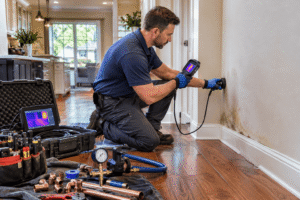
Experienced plumbers frequently use acoustic listening devices, thermal imaging cameras, and moisture meters. These tools help them find the exact location of a leak without tearing open large sections of wall or floor. That accuracy saves homeowners time, money, and a lot of mess.
Once the leak is found, the repair depends on the situation. A single bad fitting might take an hour to replace. A pipe system that’s failing in several places may call for partial or full repiping. A good water leak repair plumber in Madison TN will usually explain these options plainly so homeowners can weigh short-term fixes against long-term value.
The Real Benefits of Acting Early
Speed matters more than most people realize. Fixing a leak early limits how far water can travel through a structure. That keeps repairs focused on the pipe instead of on floors, cabinets, and drywall.
Early repair also protects indoor air quality. Damp spaces invite mold and mildew, which can trigger allergies and breathing problems. For families with young children, older adults, or anyone with asthma, that alone is a strong reason not to wait.
There’s also the insurance side to consider. Many homeowner policies cover sudden, accidental water damage but may push back on claims tied to long-term neglect. Prompt action and clear repair records can make a claim much easier to support.
Finally, early repair brings peace of mind. Knowing the plumbing is sound lets homeowners stop worrying every time they hear an odd noise in the walls.
When a Leak Turns Into a Sewage Problem
Not every leak involves clean water. When a drain or sewer line fails, the situation becomes a health concern, not just a repair job.
Sewage backups can happen after heavy rain, tree root intrusion, or a collapsed line in the yard. The signs are hard to miss: gurgling drains, foul smells, and wastewater coming up through floor drains, tubs, or toilets.
This kind of contamination carries bacteria and other harmful organisms. Cleaning it up safely calls for protective gear, proper disinfection, and correct disposal. That’s why many homeowners turn to sewage cleanup professionals in Madison TN instead of tackling it with a mop and household bleach.
Real-World Situations Homeowners Face
Consider a family that notices their hardwood floor near the kitchen starting to cup and warp. They assume it’s humidity. Weeks later, a plumber traces the cause to a slow leak in the dishwasher supply line. A small fix would have saved the floor if it had been caught sooner.
Or picture a retired couple returning from a holiday trip in January. A pipe in an exterior wall froze and split while they were away. Water ran for days. Their story is common across Middle Tennessee after a cold snap, and it’s why many plumbers recommend insulating exposed pipes before winter.
Another example involves a basement that smells musty no matter how often it’s cleaned. The owner finally learns that a cracked drain line under the slab has been leaking wastewater into the soil. In cases like this, both leak repair and sewage cleanup professionals in Madison TN may be needed to fully restore the space.
These situations share one thing in common. Each started with a small warning sign that was easy to overlook.
Choosing the Right Help
When it’s time to call someone, homeowners tend to look for a few key traits. Proper licensing and insurance come first. Clear, upfront pricing matters too, as does a willingness to explain the problem rather than simply quote a number.
Local experience also counts. Plumbers who work in the area every day understand the common pipe materials, soil conditions, and building styles found in older Nashville-area neighborhoods. Long-standing local outfits such as Dave’s Plumbing & Rooter are one example of the kind of community-based companies residents often consider alongside other licensed providers.
Reading reviews, asking neighbors for referrals, and getting more than one opinion on major repairs are all smart moves. A trustworthy plumber won’t rush a decision on a big job.
A Few Simple Prevention Habits
While no home is leak-proof, small habits can lower the risk. Checking under sinks every few months, watching the water bill for sudden jumps, and knowing where the main shut-off valve is can all help.
It’s also worth testing for silent leaks now and then. Turn off every fixture in the house and check the water meter. If the dial still moves, water is escaping somewhere.
Insulating exposed pipes before winter and having older water heaters inspected can prevent some of the most common emergencies. A little attention goes a long way.
Frequently Asked Questions
How do I know if I have a hidden water leak?
Common signs include a rising water bill, damp spots on walls or ceilings, musty odors, and the sound of running water when nothing is on. Checking your water meter with all fixtures off is a quick way to confirm a leak.
How long does a typical leak repair take?
Simple repairs, like replacing a supply line or fitting, often take an hour or two. Hidden leaks, slab leaks, or repiping projects can take a full day or longer depending on access and the extent of the damage.
Does homeowners insurance cover water leak damage?
Many policies cover sudden and accidental water damage, such as a burst pipe. Damage from slow, long-term leaks or poor maintenance is often excluded, so it’s wise to review your policy details.
Is it safe to clean up a sewage backup myself?
Sewage contains bacteria and other harmful contaminants, so DIY cleanup carries real health risks. Small, contained spills may be manageable with protective gear, but larger backups are best handled by trained professionals.
What causes pipes to leak in older homes?
Corrosion, aging materials, high water pressure, and temperature changes are the most common causes. Galvanized steel and older copper pipes tend to weaken over time and become more prone to pinhole leaks.