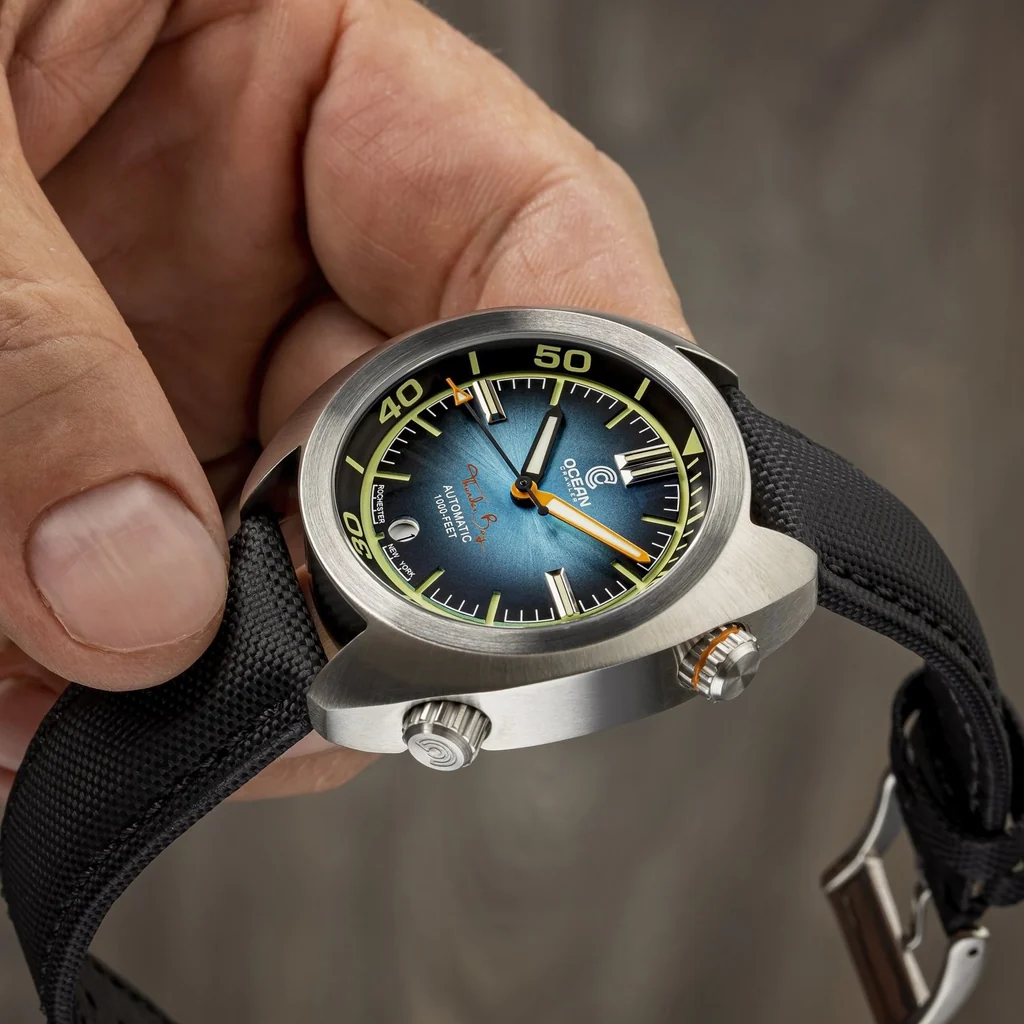
Have you ever imagined wearing a watch that changes color slowly with time? It starts golden, but after a couple of months, it acquires unique properties that no artificial polishing can provide.
In this article, you will learn why bronze ages so beautifully, as well as how to care for a bronze watch. You will discover the distinctive features of a Patina watch and why divers appreciate this kind of watch.
What Makes a Bronze Dive Watch So Different?
The design of most dive watches will not change after the first day. Steel will always be bright, titanium dull, and bronze unique since it gives a sense of life. Bronze is an alloy of copper, combined with either tin or aluminum.
Some common bronze alloys are CuSn8 phosphor bronze and CuAl8 aluminum bronze. The phosphor bronze alloy changes color faster and differently from the other, whereas aluminum bronze is tougher and brighter when polished. It also changes color evenly with time.
A genuine dive watch should meet ISO 6425 standards: it should be water-resistant up to 200 meters or higher, have a unidirectional bezel, have luminous markings, and be shock-resistant. Bronze can easily meet these standards and keep changing with time.
Why a Patina Watch Changes Over Time
Patina is not dirt. Patina is a stable coating of copper, oxygen, water, and salt. In the first stage, there is oxidation, which results in copper oxide, and then the material turns dark-brown. In the second stage, copper chloride and copper carbonate appear, producing green and blue colors, named verdigris. Unlike rust, patina protects the metal.
In the end, the appearance will depend on the chemical composition of your body, the level of moisture, light, and the wear of your jewelry. The friction of the bracelets will make the jewelry bright.
How Patina Protects Your Watch
Once the oxide layer develops, it protects the surface and prevents further oxidation. That’s why bronze continues to be a preferred metal for making ship propellers.
A genuine patina is tough and stable. If there is any deep pitting on the surface that is spreading rapidly, clean and dry the surface.
Living With Bronze Month by Month
Fresh out of the box, bronze is pinkish gold. In the first weeks, it starts to mute. After one to three months of daily wear, brown tones deepen and shine turns satin.
After six months, most aluminum bronze is settled. Phosphor bronze keeps evolving longer. High contact areas like lugs stay brighter. Recessed areas turn darker, adding contrast.
You may notice faint green on skin early on. This is common while the stable layer builds and usually fades. A steel case back reduces staining.
How to Care for Bronze and Control the Look
Should you fancy vivid bronze, polish it with a microfiber cloth. Wash using warm water, mild soap, and a soft-bristled toothbrush to remove oils and salts.
If you need to get rid of the patina, use a mild acid such as lemon juice. Scrub carefully and rinse the surface thoroughly with soap and water, because residual acid will encourage further patination.
To add even more character to your piece, wear it often. It helps the reactions to occur quicker thanks to heat and light exposure. There are also those who use ketchup and salt baths to achieve verdigris.
Why a Limited Edition Dive Watch in Bronze Feels Special
Bronze invites small runs because patina makes each watch one-of-a-kind. When a maker releases only 50 pieces per color, you get two layers of rarity.
Collectors value that story. A limited-edition dive watch records where you have been. Beach days and humid summers leave a trace.
Is Bronze Practical for Real Diving?
Only when built correctly. Aluminum bronze is resistant to saltwater and also has a similar hardness as steel. However, phosphor bronze is soft and hence wears out faster.
Go for sapphire crystals and screw-down crowns and test for solid water resistance. Bronze will age to match, but steel case backs provide extra comfort.
Rinse after saltwater dives and dry thoroughly before storage. Avoid using perfumes and lotions on your watch.
Final Verdict: Why Bronze Only Gets Better
Bronze rewards time. Instead of fighting age, it uses it. The case builds a protective layer, gains depth, and tells your story without losing strength.
A bronze dive watch is not about pristine shine. It is about a living finish that improves with wear and travel. That is why enthusiasts keep reaching for bronze.
If you want something personal, consider a limited-edition dive watch in bronze. Small runs plus your own patina mean no one else has the same piece.
Ocean Crawler offers bronze bezel and crown options in its Core Diver family, with small 50-piece runs per color. Each is built as a true 600-meter tool watch and pressure tested beyond rating.
Frequently Asked Questions
What Is Patina on a Bronze Watch?
Patina is a stable layer of copper oxides and salts that forms when bronze reacts with air, moisture, and skin chemistry. It darkens the case from gold to brown.
Will Bronze Patina Damage the Watch?
No. Normal patina protects metal underneath. It differs from bronze disease, which causes pitting from chlorides. Clean and dry the watch if you see pitting.
How Long Does It Take to Develop Patina?
You see change in weeks. Most watches show brown tones in one to three months. A full patina appears around six months.