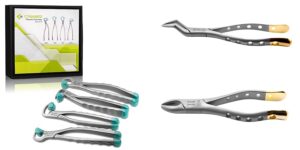
In order for a surgery to be successful it needs two things to work together: the room and the tools. The room has to be clean, controlled, and well planned. The tools need to be appropriate for the procedure and available when the surgeon needs them. If you are building or upgrading a theatre, knowledge of both a modular OT and the main types of surgical instruments will help you make better decisions.
What Is a Modular Operation Theatre?
A modular operating room is made from prefabricated panels, usually in stainless steel or powder-coated steel, assembled on site. Walls, ceilings, doors, and flooring join in smooth, sealed seams. There are no crevices for dust or microbes to lodge and all surfaces are easy to clean.
The grout lines, corners and joints of traditional brick-and-tile theatres are difficult to clean and disinfect. Such problems are avoided with a modular design, which is typically quicker to erect, so your theatre can open sooner.
Why a Modular OT Is Worth Considering?
- Hygiene: Smooth, non-porous surfaces can be rigorously cleaned.
- Faster Installation: Panels are pre-made, reducing on-site time.
- Consistent quality: Factory parts fit right.
- Easy upgrades: Change or add to layout later without major demolition.
- Better integration: Planning starts with joint design of lighting, air handling, pendants and control panels.
How to Select a Modular OT Manufacturer in India?
The theatre’s performance for years to come will be affected by the modular ot manufacturer in India, so compare them carefully.
- Healthcare experience. Ask whether they have done hospital projects, and know the infection-control needs.
- Customisation. Every theatre is different in size, speciality and budget. Find a manufacturer who designs for you.
- Materials and build quality. Check panel material, finish, door quality and sealing methods.
- Full range. A good manufacturer can coordinate the airflow system, OT lights, control panel, pendants and floor.
- Installation and tests. The work shall be undertaken by trained teams and tested before handover.
- Aftersales service. Daily equipment needs timely maintenance support.
- Quote clearly. A detailed breakdown allows you to compare offers fairly.
Types of Surgical Instruments: A Simple Guide
The theatre is ready; now the question is what goes on the instrument tray. Surgical Instrument types are commonly classified according to use.
Dissecting and cutting instruments
They are separate or cut tissue. Examples: scalpels with blades, surgical scissors, dissecting scissors. Different blade shapes and scissor sizes are suitable for different layers of tissue.
Holding and using instruments
They keep organs, tissue or other instruments still. Typical examples are tissue forceps, dressing forceps and towel clamps.
Hemostatic devices
These stop bleeding by pinching off the blood vessels. A classic example is the artery forceps, also called haemostats.
Retractors :
Retractors are used to hold back skin, muscle or organs so the surgeon has a good view of the area. Some are handheld, others are self-retaining and hold themselves open.
Suturing tools
The cuts and the closed wounds. These are the needle holders, the suture needles and the suture scissors.
Suction and irrigation equipment
They suction blood and fluids away from the surgical field so visibility is good.
Probes and dilators
These widen openings or search cavities. They include dilators, probes and specula.
Laparoscopic and endoscopic instruments
These are used in minimally invasive surgery. They are slim tools that are passed through small incisions and guided by a camera.
Instruments Care and Handling
Good instruments require good care. Clean them after use, check for damage, autoclave them using approved methods and store them in a dry, organised area. With good design this can be achieved with a modular OT having sufficient storage, clean work surfaces and a smooth flow between sterile and non-sterile areas.
Putting It All Together
Theatre and instruments are related. A modular OT provides a clean and controlled environment and the right instruments allow the surgical team to work with precision. Planning from the beginning means you don’t get caught out and have a theatre that is ready to go from day one.
Concluding Thoughts
Choosing a reliable modular OT manufacturer in India is a long-term decision. Look for experience, quality, customisation, and good after-sales support. Add to that a good understanding of types of surgical instruments and you will be in a better position to outfit a theatre that serves both patients and surgeons well.
Are you planning a new operation theatre? Call Gaddiel Industries today for a free consultation and quote to suit your facility’s needs.