What Is Auto Sales CRM Software? A Complete Guide for Car Dealerships
Managing customer relationships, tracking sales leads, and closing deals are essential tasks for every automotive business. However, handling these activities manually can lead to missed opportunities, delayed follow-ups, and poor customer experiences. This is where Auto Sales CRM Software becomes valuable. It helps car dealerships organize customer information, manage sales pipelines, automate follow-ups, and improve communication with potential buyers.
Whether you operate a small used-car dealership or a large automotive showroom, understanding how auto sales CRM solutions work can help you streamline daily operations and build stronger customer relationships. In this guide, we will explore what auto sales CRM software is, its key features, benefits, and how to choose the right solution for your dealership.
What Is Auto Sales CRM Software?
Auto Sales CRM Software is a customer relationship management system designed to help automotive businesses manage customer interactions and sales activities throughout the vehicle-buying journey. It allows dealerships to store customer details, track inquiries, manage leads, schedule appointments, and monitor sales performance from a centralized platform.
Unlike general customer management tools, automotive CRM solutions are tailored to dealership workflows. They can help sales teams manage vehicle inquiries, follow up with interested buyers, organize test drives, and maintain communication with customers after a purchase.
By bringing essential sales information into one system, dealerships can improve team coordination and make more informed business decisions.
How Does Auto Sales CRM Software Work?
Auto sales CRM software collects and organizes customer information from different communication channels, such as website forms, phone calls, emails, and showroom visits. Sales representatives can access this information to understand customer requirements and determine the next steps in the sales process.
For example, when a potential buyer submits an online inquiry about a vehicle, the CRM can record the lead, assign it to a sales representative, and help schedule a follow-up. The representative can update the lead status, record conversations, and track progress until the customer purchases a vehicle.
This structured process helps dealerships reduce manual work, improve response times, and maintain consistent communication with potential buyers.
Key Features of Auto Sales CRM Software
1. Lead Management
Lead management is one of the most important features of automotive CRM software. It allows dealerships to capture inquiries, organize prospects, assign leads to sales representatives, and monitor their progress.
Sales teams can identify which prospects require immediate attention and which customers need additional information before making a purchase decision.
2. Sales Pipeline Management
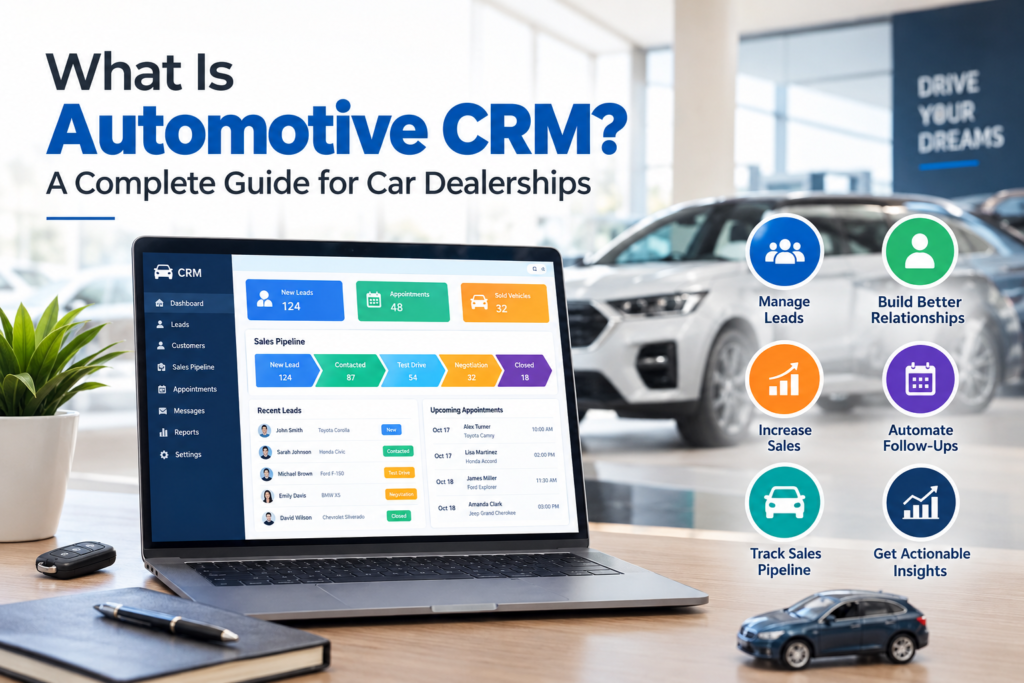
A sales pipeline provides a clear overview of every opportunity, from the initial inquiry to the final sale. Dealerships can track stages such as new lead, contacted, appointment scheduled, test drive completed, negotiation, and deal closed.
This visibility helps managers identify delays and support sales representatives who need assistance moving opportunities forward.
3. Automated Follow-Ups
Following up with potential buyers at the right time can make a significant difference in automotive sales. Auto sales CRM software can help schedule reminders and automate selected communications through supported channels.
These tools help sales teams maintain consistent contact with prospects without relying entirely on manual reminders.
4. Customer Database Management
A centralized customer database stores important information, including contact details, vehicle preferences, inquiry history, appointment records, and previous interactions.
Having this information readily available allows sales representatives to provide more personalized service and avoid asking customers to repeat information they have already shared.
5. Appointment and Test Drive Scheduling
Managing showroom appointments and test drives can become challenging when a dealership receives multiple inquiries each day. CRM software helps sales teams schedule appointments, record customer preferences, and track upcoming meetings.
This feature supports better time management and helps dealerships deliver a more organized customer experience.
6. Sales Reporting and Analytics
Reporting tools provide insights into lead conversion rates, sales performance, follow-up activities, and team productivity. Managers can use these reports to identify successful sales practices and areas that require improvement.
Data-driven decisions can help dealerships refine their sales strategies and allocate resources more effectively.
7. Integration With Other Business Tools
Many automotive CRM platforms offer integrations with websites, marketing tools, communication systems, inventory platforms, or dealership management systems. Available integrations depend on the software provider.
Connecting these systems can reduce duplicate data entry and help teams access relevant information more efficiently.
Benefits of Auto Sales CRM Software for Dealerships
Improved Lead Conversion
When sales representatives can track every inquiry and follow up consistently, fewer opportunities are overlooked. CRM software helps teams prioritize promising leads and guide potential buyers through the purchasing process.
Better Customer Experience
Customers expect timely responses and relevant information when researching vehicles. A CRM helps representatives understand customer needs and maintain a consistent communication history, making interactions more convenient and personalized.
Increased Sales Team Productivity
Automating repetitive tasks, organizing customer records, and scheduling reminders allows sales representatives to spend more time communicating with prospects and closing deals.
Better Sales Performance Tracking
Dealership managers can review sales activities and performance metrics to understand how effectively their teams handle inquiries and convert leads into customers.
Stronger Customer Retention
The relationship with a customer does not have to end when a vehicle is sold. Dealerships can use CRM records to support service reminders, maintenance follow-ups, customer feedback requests, and future vehicle upgrade opportunities, subject to customer consent and applicable privacy requirements.
Auto Sales CRM Software vs. Traditional Sales Management
Traditional sales management often relies on spreadsheets, paper records, and individual follow-up reminders. Although these methods may work for a small number of customers, they can become difficult to manage as inquiry volumes increase.
Auto sales CRM software centralizes customer information, provides a structured sales pipeline, and helps teams coordinate their activities. It also offers reporting capabilities that are more difficult to maintain consistently with manual processes.
The right approach depends on dealership size and operational needs, but a dedicated CRM can be particularly useful when multiple sales representatives handle leads across different channels.
How to Choose the Right Auto Sales CRM Software
Selecting the right CRM requires an understanding of your dealership’s goals, team structure, and daily sales processes.
Consider the following factors before making a decision:
- Ease of use: Choose software that your sales team can learn and use comfortably.
- Lead tracking: Make sure the platform supports lead capture, assignment, follow-ups, and pipeline management.
- Automation: Look for useful reminders and communication automation that match your workflow.
- Reporting: Check whether the system provides clear sales reports and performance metrics.
- Integration options: Confirm compatibility with your existing website, inventory tools, and communication channels.
- Scalability: Consider whether the software can support your business as the number of leads and sales representatives grows.
- Data security: Review access controls, data protection practices, and available backup options.
- Pricing and support: Compare subscription costs, implementation requirements, training, and customer support.
Before committing to a platform, request a demonstration and test the features your team will use most frequently.
Who Should Use Auto Sales CRM Software?
Auto sales CRM software can benefit different types of automotive businesses, including:
- New-car dealerships managing high volumes of customer inquiries.
- Used-car dealerships handling multiple vehicle listings and buyer conversations.
- Automotive sales teams that need centralized lead tracking.
- Multi-location dealerships coordinating sales activities across branches.
- Automotive businesses that want to improve follow-up consistency and customer retention.
The most suitable solution depends on the complexity of your sales process and the features your business requires.
Common Challenges When Implementing Automotive CRM Software
Although CRM software offers several advantages, successful implementation requires planning. One common challenge is incomplete or inaccurate customer data. Dealerships should establish clear procedures for entering, updating, and maintaining records.
Another challenge is low employee adoption. Sales representatives may resist changing familiar processes, so practical training and a simple implementation plan are important.
Dealerships should also define measurable objectives before introducing the system. For example, they may monitor lead response time, appointment booking rates, follow-up completion, and lead-to-sale conversion rates to evaluate whether the CRM is delivering value.
Conclusion
Auto Sales CRM Software helps car dealerships organize customer information, manage sales opportunities, automate follow-ups, and monitor team performance. By centralizing sales activities, it can reduce administrative work, improve communication, and support a more consistent buying experience.
When choosing a CRM, dealerships should evaluate usability, lead management capabilities, reporting, automation, integrations, and data security. The right solution should fit the business’s existing workflow while supporting future growth.
For automotive businesses looking to improve sales operations, investing in a suitable CRM can be an important step toward building stronger customer relationships and managing the sales process more effectively.
Frequently Asked Questions (FAQs)
1. What is Auto Sales CRM Software?
Auto Sales CRM Software is a customer relationship management solution designed for automotive businesses. It helps dealerships manage leads, organize customer information, track sales opportunities, schedule follow-ups, and monitor sales performance.
2. How does auto sales CRM software help car dealerships?
It helps dealerships centralize customer records, improve lead tracking, automate reminders, manage appointments, and analyze sales activities. These capabilities support better organization and more consistent communication with potential buyers.
3. What features should automotive CRM software include?
Important features include lead management, sales pipeline tracking, automated follow-ups, customer database management, appointment scheduling, reporting, and integrations with relevant dealership tools.
4. Is auto sales CRM software suitable for small dealerships?
Yes. Small dealerships can use CRM software to organize inquiries, maintain customer records, and establish consistent follow-up processes. The best option depends on the dealership’s budget, team size, and operational requirements.
5. Can automotive CRM software improve sales?
CRM software can support sales improvement by helping teams respond to leads, track opportunities, and maintain follow-ups. Actual results depend on lead quality, staff performance, business processes, and how effectively the software is used.
6. What is the difference between automotive CRM and dealership management software?
Automotive CRM focuses primarily on customer relationships, leads, and sales activities. Dealership management software typically covers broader dealership operations, which may include inventory, vehicle purchasing, accounting, and service management. Some platforms combine both sets of capabilities.
7. How much does auto sales CRM software cost?
Pricing varies by provider, number of users, available features, integrations, and implementation requirements. Dealerships should compare subscription fees and any additional costs for training, support, or customization before selecting a platform.
8. How can I choose the best auto sales CRM software?
Start by identifying your dealership’s main challenges. Compare platforms based on lead management, automation, reporting, integrations, usability, security, and pricing. A product demonstration can help you determine whether a system meets your requirements.